How Much It Costs to Charge an EV at Home in Indonesia
Home charging in Indonesia runs about Rp1,190 per kWh overnight with PLN's discount — a full 50 kWh charge costs roughly Rp68,000, far below the price of the petrol it replaces.
The short answer
If you can charge at home, an EV in Indonesia is dramatically cheaper to run than a petrol car. PLN's household tariff for the R-2 (3,500–5,500 VA) and R-3 (6,600 VA+) bands is Rp1,699.53 per kWh for the July–September 2026 quarter, and the government confirmed no increase for Q3 2026. Join PLN's Home Charging Service (HCS) and you get a 30% discount between 22:00 and 05:00 WIB, dropping the effective rate to about Rp1,190 per kWh through 31 December 2026.
Account for ~15% charging loss and a 50 kWh battery needs about 57.5 kWh from the grid: roughly Rp98,000 at the normal rate, or Rp68,000 overnight. A typical 1,000 km per month at 15 kWh/100 km costs about Rp293,000 normally, or Rp205,000 on the night rate.
Cost breakdown
| Item | Cost | Notes |
|---|---|---|
| Home tariff (R-2/R-3) | Rp1,699.53 / kWh | Q3 2026, no increase |
| Night discount (HCS, 22:00–05:00) | Rp1,190 / kWh | 30% off, valid to 31 Dec 2026 |
| Full charge, 50 kWh (with 15% loss) | Rp68,000–98,000 | Depends on time of day |
| Monthly, 1,000 km | Rp205,000–293,000 | At 15 kWh/100 km |
| HCS install package | from Rp11.7 million | Promo to 31 Dec 2026, includes charger + standard install + up to Rp1.3 million voucher |
| Public SPKLU fast charge | Rp2,466–2,475 / kWh + session fee | Up to Rp25,000 (fast) / Rp57,000 (ultra-fast) per session |
| Petrol equivalent | ~Rp60,000–75,000 per "50 kWh" of distance | At Rp15,950/L Pertamax, ~12 km/L |
Public charging costs well over twice as much per kWh as overnight home charging, so it is best reserved for long trips. PLN and partners operated about 5,016 SPKLU at 3,132 locations by June 2026, with Jakarta's DC stalls above 4,500.
How to set it up
- Check your power connection. Many homes run 900 VA–2,200 VA — too small for a 7 kW wallbox. PLN recommends roughly 7,700 VA for comfortable home charging, and offers power-upgrade (tambah daya) promos.
- Apply for HCS via the PLN Mobile app. PLN handles the charger supply, certified installation and activation.
- Install and activate. Budget for the package plus any power upgrade; some dealers bundle free basic installation with a new EV.
- Set a timer for 22:00–05:00 to capture the 30% discount automatically.
Common mistakes
- Assuming your existing connection is enough. A 900–2,200 VA home cannot run a 7 kW wallbox; you will need a power upgrade first.
- Forgetting the night window. Charging at 18:00 instead of 23:00 nearly doubles your per-kWh cost.
- Connector mismatch. Indonesian public DC follows the CCS2 mandate (MEMR 13/2020) with AC Type 2; many Chinese cars ship with GB/T DC sockets and need an adapter or dual-standard charger at the SPKLU.
- Renting or living in an apartment with no wallbox. If you cannot modify the building's electrical system, you will rely on public SPKLU and lose most of the cost advantage.
FAQ
- Is home charging really cheaper than petrol? Yes. A 50 kWh overnight charge costs about Rp68,000 and covers roughly the distance a petrol car would need Rp60,000–75,000 of fuel for — and the gap widens as you drive more.
- Do I need a special electricity plan? Not a separate plan, but you need enough VA (around 7,700) for a wallbox; the HCS discount applies to your normal household tariff during night hours.
- Can I install a wallbox in an apartment? Only if the building management allows modification of the electrical system; otherwise you rely on shared or public chargers.
- What if my car has a GB/T socket? Use an adapter or a dual-standard charger at CCS2 SPKLU; confirm compatibility before you buy.
- Does the night discount last? The current 30% HCS discount is confirmed through 31 December 2026; check PLN for extensions.
China Angle
Chinese brands now dominate Indonesia's mainstream EV market — BYD, Chery, GAC Aion, Geely, Changan and Wuling — and their scale keeps home-charger hardware and installation competitive. The practical catch for buyers is the connector: many Chinese models ship with GB/T DC sockets, while Indonesia mandates CCS2 for public fast charging (MEMR 13/2020). That mismatch means some owners need an adapter or a dual-standard charger at the SPKLU, a friction Chinese makers are gradually resolving with dual-standard ports. The trade-off is real but balanced: Chinese EVs bring low purchase prices and a fast-growing service network, while buyers should verify TKDN incentive eligibility, battery warranty terms (typically 8 years / 160,000 km), and after-sales coverage before signing.
中文简报
在印尼家充电动车远比汽油便宜:PLN 家庭电价 R-2/R-3 档为 Rp1,699.53/kWh(2026 年第三季度不涨价),加入 PLN Home Charging Service(HCS)后 22:00–05:00 WIB 享 30% 折扣,低至 Rp1,190/kWh(有效期至 2026-12-31)。计入约 15% 损耗,50 kWh 满电夜间约 Rp68,000;月行 1,000 公里约 Rp205,000。
HCS 安装套餐从 Rp11.7 million 起(含充电桩+标准安装+最高 Rp1.3 million 电费券,促销至 2026-12-31)。注意:多数住宅 900–2,200 VA 带不动 7 kW 壁挂桩,需增容至约 7,700 VA。许多中国车出厂带 GB/T 直流口,在印尼强制 CCS2(MEMR 13/2020)的公共快充站需转接头或双标准充电桩。
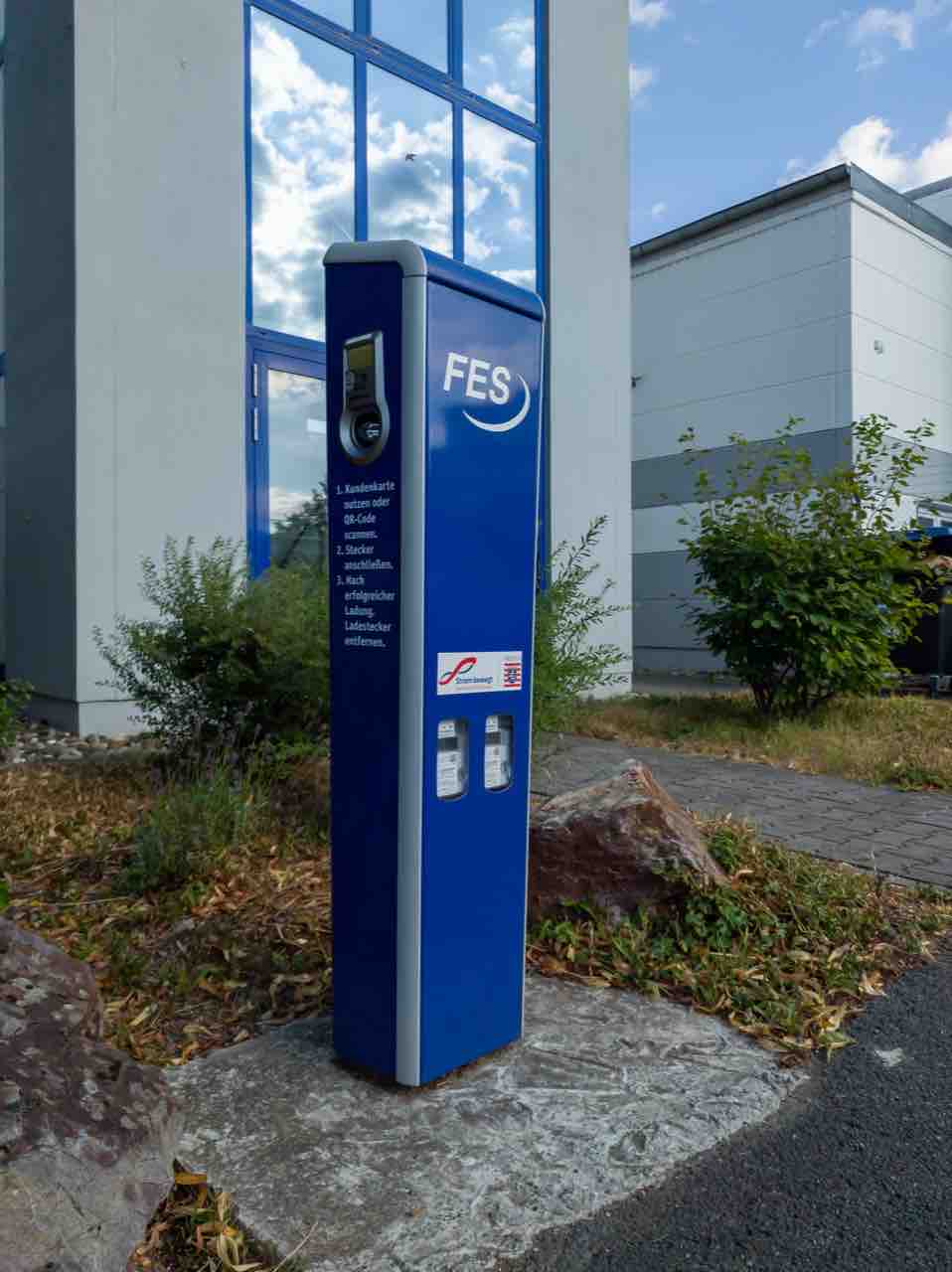
Image credits: EV charging station via Wikimedia Commons (CC).
Sources
- Jawawa — Home EV charging cost calculation, PLN HCS tariff and discount (Aug 2026): https://jawawa.id/newsitem/how-much-does-it-cost-to-charge-an-electric-car-at-home-heres-the-calculation-1787842256
- IndoEVs — Indonesia EV running costs: home, SPKLU, tax and petrol compared (Oct 2026): https://indoevs.com/ev-running-costs-indonesia-charging-tax-petrol-guide
- IndoEVs Guides — Household tariffs, HCS promotion, connector types, SPKLU count: https://indoevs.com/category/guides
- evandauto.com — Buying Your First EV in Indonesia 2026 (incentive map, home charging reality): https://evandauto.com/article/4733636
Back to all articles · View comments & share on the interactive page