A Practical Guide to Public EV Charging in Indonesia in 2026
Owning an EV in the world's largest archipelago means your charging life is shaped by two things most overseas guides never mention: a state-utility-run public network (PLN) and the simple fact that your "road trip" may involve a ferry. This guide is written for people who already own — or are about to buy — an EV in Indonesia, and focuses on the public charging you will actually use day to day.
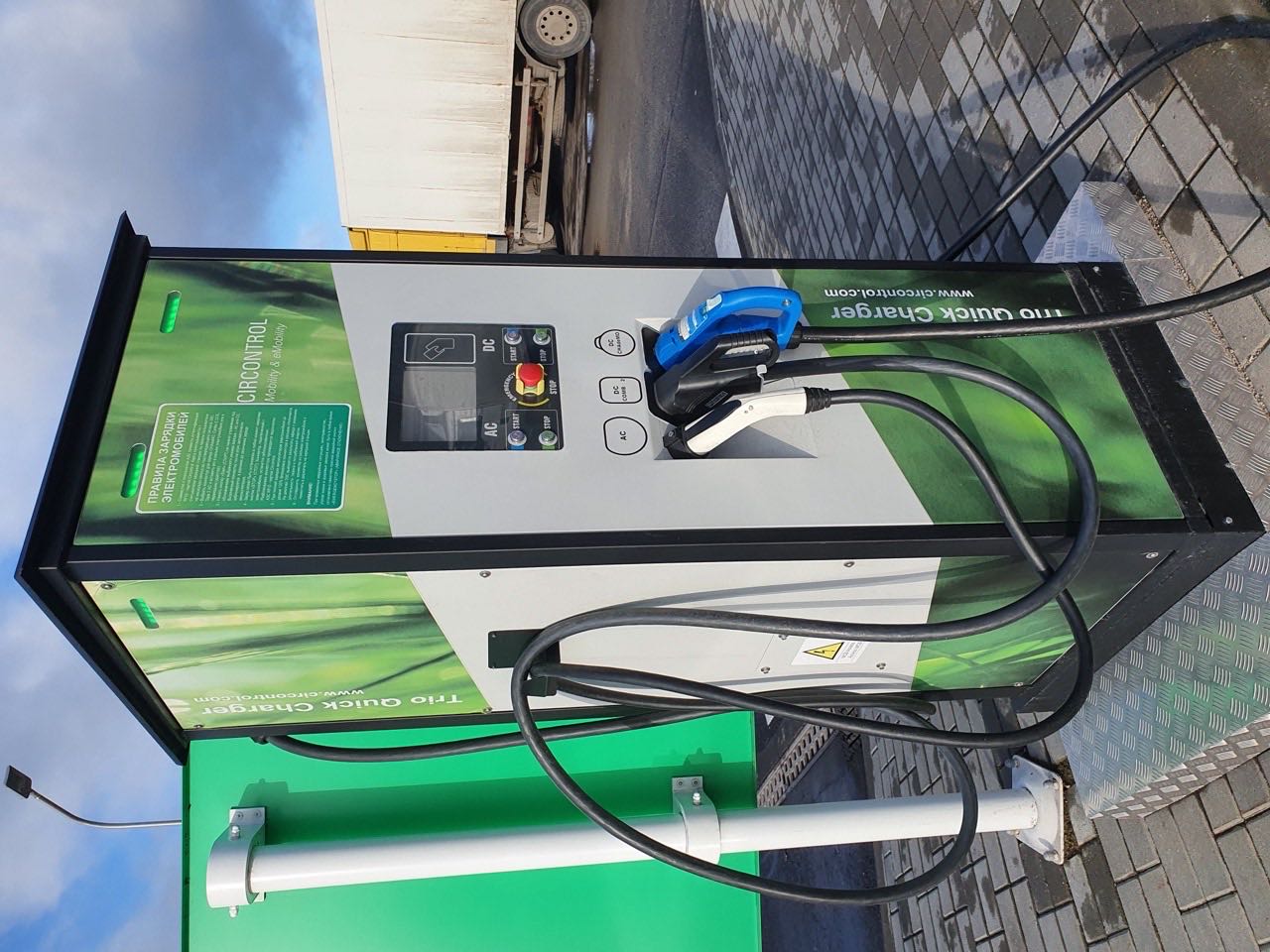
The backbone: PLN's SPKLU network
- SPKLU (Stasiun Pengisian Kendaraan Listrik Umum) is the official Indonesian term for a public charging station — when locals say "colokan" (plug), they usually mean an SPKLU.
- As of June 2026, PLN reported 5,016 SPKLU units across 3,132 locations nationwide. With about 223,000 electric cars on the road (April 2026: roughly 468,000 EVs total including motorcycles), that's close to 1 public charger for every 44 cars — against an ideal ratio near 1:10, so queues at peak times are a real possibility. (Indonesia-specific)
- Coverage is lopsided: roughly two-thirds of SPKLU sit on Java and in major cities, and a large share are still "medium" AC units needing 2–4 hours to reach 80%. Outside Java–Bali, chargers thin out fast. (Indonesia-specific)
- PLN keeps scaling the high-power end — for Lebaran 2026 it fielded 1,681 SPKLU at 994 points along the Sumatra–Java–Bali corridors and added 149 new 180–200 kW units.
Finding a charger: the apps you actually need
- PLN Mobile (official, free) — the must-have. Open the app → "Electric Vehicle" → "SPKLU" to see the nearest live stations on a map/list, with availability and QR-code payment at the charger. The app also bundles EVDS (Electric Vehicle Digital Services) with a Trip Planner that maps optimal charging stops for long drives. (Indonesia-specific)
- Third-party locator/aggregator apps are handy for finding and paying at stations run by private operators that PLN's app may not list.
- Google Maps indexes many SPKLU under its "SPKLU" category as a quick backup.
- Private operators worth knowing: Volta Indonesia, Charge+, Shell Recharge Indonesia, Starvo, Voltron, and Electrum (a GoTo–Pertamina joint venture also building battery-swap points for scooters).
Mall charging and where owners top up
- A large share of public AC charging lives in malls, toll rest areas, transit terminals and government-office compounds — many run 24 hours. In Jakarta alone PLN lists around 108 SPKLU. (Indonesia-specific)
- Practical tip: plug in while you shop or watch a film. Mall AC chargers are usually cheaper and gentler on the battery than DC. Some hotels and malls still offer free or very cheap (up to ~Rp3,000/kWh) charging as a perk. (Indonesia-specific)
- Apartment and rental dwellers without a wallbox will lean on these — ask building management about shared chargers before you sign a lease. (Indonesia-specific)
What it costs: home vs public AC vs DC
All figures are 2026 Indonesia numbers; always re-check the live rate in the app before you plug.
| Option | Typical rate | Notes |
|---|---|---|
| Home (PLN tariff) | Rp1,444–1,700/kWh | Cheapest; PLN gives a 30% night discount (22:00–05:00 WIB), promo valid to 31 Dec 2026 |
| Public AC (SPKLU) | ~Rp2,475/kWh | Slower, easiest on the battery |
| Public DC fast | ~Rp2,466–2,475/kWh + service fee | ESDM reg. 182/2023 caps extra fees at Rp25,000/session (25–50 kW) and Rp57,000/session (>50 kW) |
Worked example: a 50 kWh battery filled at the public rate is about Rp123,750 in electricity, plus up to Rp25,000–Rp57,000 if you use fast/ultra-fast. The same fill at home overnight with the night discount can be roughly half that. By contrast, a petrol car on Pertamax (~Rp15,950/L from 1 Sep 2026 in Java–Bali) costs well over Rp1.3 million for comparable distance — public charging is still far cheaper than fuel, even before the home discount. (Indonesia-specific)
Caveat: private/non-PLN operators sometimes add app or service fees that push the effective cost much higher (one reported case reached ~Rp6,000/kWh). Prefer PLN or check the total in-app price before you plug. (Indonesia-specific)
Connectors: what actually plugs in
- Indonesia follows regional norms: CCS2 and CHAdeMO for DC, AC Type 2 for AC. Most modern EVs sold locally — especially Chinese and Korean brands — use CCS2/Type 2 and plug in without drama.
- Tip: confirm your car's port before a long trip, and carry the manufacturer's charging card/RFID if your model uses one.
The archipelago reality: ferries and range planning
This is the part no European or Chinese guide prepares you for. (Indonesia-specific)
- EVs are allowed on ASDP ferries (the state ferry operator) under SE-DJPL 12/2024. ASDP asks you to keep battery State-of-Charge around 30–50% while aboard, as a fire-mitigation measure, and places EVs in a designated, well-ventilated stowage area (usually the open upper deck) for easier monitoring. Ports on both ends increasingly have chargers. (Indonesia-specific)
- Plan charging around the main corridors: Java is densest, then Bali (Denpasar, Kuta, Seminyak, Sanur, Ubud, Nusa Dua all have multiple SPKLU), then Sumatra's toll-road spine. East of Java–Bali, and on the smaller islands, chargers get scarce — map your stops before you go. (Indonesia-specific)
- Rule of thumb for inter-island trips: arrive at the port with charge in the 30–50% window, top up on the destination side, and never assume a charger will be working — carry a backup plan (a 220V outlet + portable charger works at many villas and homestays). (Indonesia-specific)
- Housekeeping: many Indonesian homes run on 900–2,200 VA connections; a wallbox often needs a power upgrade (tambah daya) via PLN Mobile — budget for it if you'll charge at a relative's house upcountry. (Indonesia-specific)
China Angle
As a China-based outlet, the contrast is striking. China runs well over 3 million public charging points and treats home charging as the default — most owners plug in at their apartment or villa overnight and rarely think about public DC. Indonesia is the opposite: a sprawling archipelago where the state utility PLN is both the grid and the charging network, public SPKLU are still catching up to demand (≈1:44 cars vs a ~1:10 ideal), and a "long trip" can mean a ferry with its own battery-safety rules. The upside for buyers: Chinese brands — BYD, Wuling, Chery, Geely, Jaecoo — took roughly 90% of Indonesia's BEV segment in the first half of 2026 (BYD near 30% share), so the cars are familiar, competitively priced, and increasingly locally assembled, which is exactly what keeps them eligible for Indonesia's EV incentives.
Bottom line
Public charging in Indonesia in 2026 is workable and improving fast, but it rewards planning: install PLN Mobile on day one, charge at home or overnight wherever you can, use malls and rest areas for top-ups, watch the per-session DC fees, and treat inter-island travel as a charging puzzle solved before you leave. The network is young — your flexibility is the real range extender.
Sources:
- PLN / ESDM — SPKLU tariffs and service-fee caps (ESDM regulation No. 182.K/TL.04/MEM.S/2023); Lebaran 2026 deployment (1,681 SPKLU / 180–200 kW units): https://www.rctiplus.com/news/detail/okezone/5343306/segini-tarif-cas-mobil-listrik-di-spklu-tol-untuk-mudik-lebaran-2026
- PLN charging-network scale and Java concentration (June 2026: 5,016 SPKLU / 3,132 locations): https://inilahkalsel.com/rebutan-charger-spklu-berujung-laporan-polisi-ketika-populasi-mobil-listrik-tak-sebanding-colokan/
- PLN Mobile SPKLU finder + EVDS Trip Planner, 24h mall/transit stations (Jakarta ~108 SPKLU): https://akuratnews.co/pakai-mobil-listrik-saat-libur-idul-adha-siapa-takut
- ASDP ferry EV rules — SoC 30–50%, designated stowage, SE-DJPL 12/2024: https://www.koranmanado.co.id/asdp-izinkan-penyeberangan-kendaraan-listrik
Image credits: Public EV charging station — Wikimedia Commons, "Electric vehicle charging station--Minsk" (CC0 1.0). Self-hosted at evandauto.com/img/2026-indonesia-public-charging.jpeg.
中文简报
印尼 2026 年公共充电实用指南:以国电 PLN 的 SPKLU 网络为主,用 PLN Mobile App(含 EVDS 行程规划)找桩并扫码付费;家庭充电约 Rp1,444–1,700/kWh,夜间 22:00–05:00 打七折,公共直流快充约 Rp2,475/kWh 外加单次最高 Rp57,000 服务费。充电桩约三分之二集中在爪哇,跨岛渡轮(ASDP)要求上船时电量保持 30–50% 并停在上层通风区。中国品牌已占印尼 BEV 约九成,购车与用车逻辑与中国差异明显。
Back to all articles · View comments & share on the interactive page