Long-Distance EV Travel in Indonesia 2026: Java Highways, Island Ferries, and the Charging Gap Off-Java
Indonesia is not one country you drive across — it is thousands of islands, and that makes long-distance EV travel a different discipline from Europe or China. The good news: Java's expressways and the Jabodetabek metro are now well covered. The catch: step off Java and the map thins fast. Here is a practical 2026 playbook for taking an EV beyond your home charger in Indonesia.
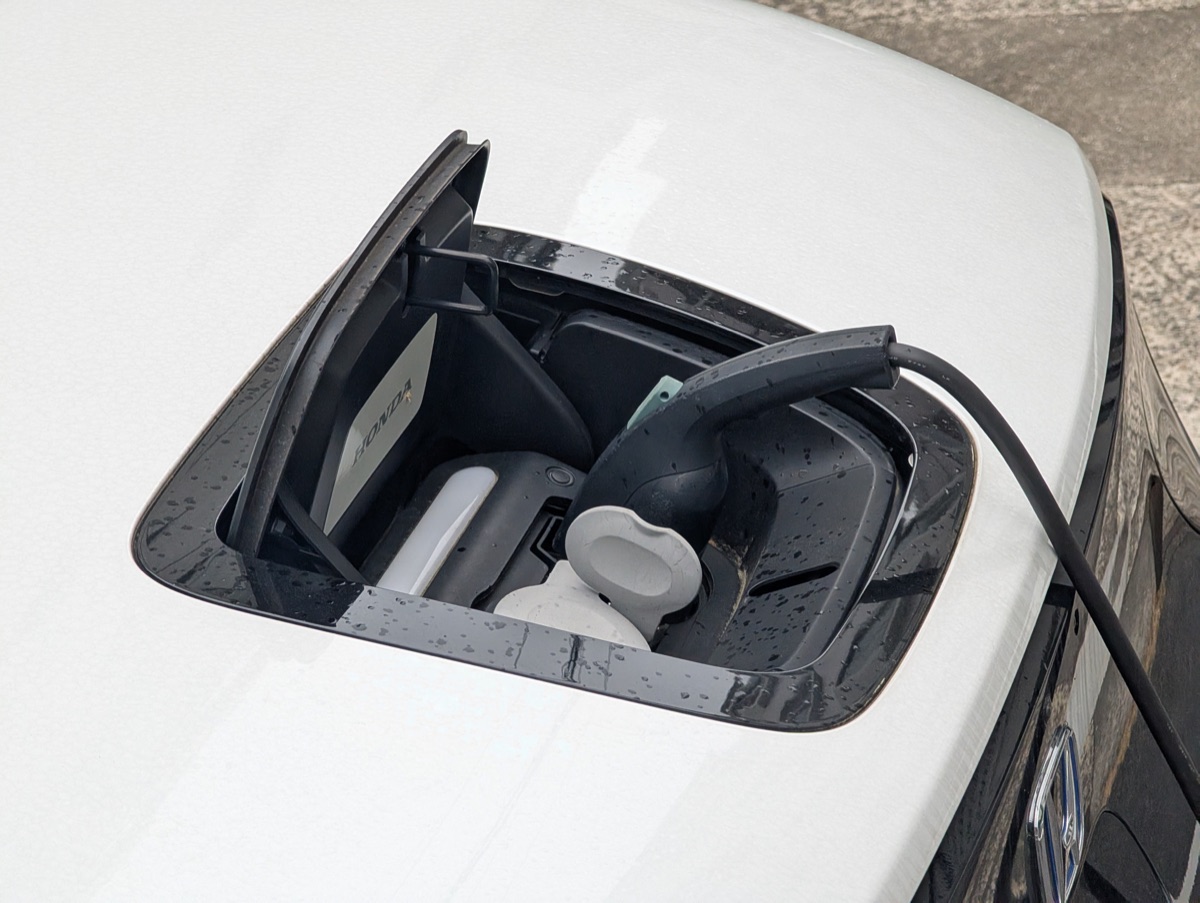
1. Map the network before you plan the route
PLN reported about 3,200 public charging stations (SPKLU) nationwide as of May 2026, with Jakarta's DC fast-charge stalls above 4,500 — dense across Jabodetabek but noticeably thinner off-Java. Use PLN's directory and apps such as PLN Mobile, Gojek/SPKLU aggregators and the IndoEVs directory to confirm live points along your corridor. The rule of thumb: assume chargers every 30–50 km on Java's main toll roads, but treat anything beyond the Jakarta–Bandung–Semarang–Surabaya spine as "verify before you rely on it."
2. Connector reality: CCS2 is mandatory, GB/T needs an adapter
Indonesia mandates CCS2 for public DC fast charging (MEMR regulation 13/2020) with Type 2 for AC. Many Chinese-built cars ship with GB/T DC sockets, so confirm whether your regular SPKLU needs an adapter or a dual-standard charger. Carry the adapter if your car is GB/T, and don't assume every highway stall supports it.
3. Java is doable; inter-island needs the ferry and a full battery
Java's toll network (Jakarta–Cikampek, Cipularang, Batang–Semarang, Solo–Ngawi, Surabaya) is the easy part. Crossing to Sumatra, Bali or elsewhere means an ASDP ferry — and there is no charging on board. Top up to ~100% (or as high as the tariff allows) before queuing, and budget waiting time at peak holiday periods. On Bali, the Denpasar–Gilimanuk corridor and southern tourist belt have the best coverage; the north and east are sparser.
4. Battery sizing and the 20–80% trip habit
For a Java end-to-end run you want real range of 350–450 km or a car that charges fast, because detours to a working stall cost hours. On trips, charge from ~20% to ~80% rather than waiting for 100% — the last 20% is slow and the time is better spent driving. A 45 kWh pack from 10% to 80% at a public fast charger costs roughly IDR 114,000 including the session fee and 11% VAT (Navigasi worked example), versus a fraction of that at home overnight.
5. Cost: home vs SPKLU on the road
Home charging via PLN's Home Charging Service (HCS) carries a 30% night discount (22:00–05:00 WIB) — about IDR 1,011/kWh for a 2,200 VA home and IDR 1,190/kWh for R-2/R-3, through 31 December 2026. Public SPKLU energy runs about IDR 2,466–2,475/kWh, plus a service fee of up to IDR 25,000 (fast) or IDR 57,000 (ultra-fast, >50 kW) per session. In short, public charging on a trip costs well over twice home rates — fine for occasional travel, ruinous as a daily habit if you have no home plug.
6. Heat, altitude and backup planning
Indonesia's heat is kinder to LFP packs than to NMC, but cabin pre-cooling and avoiding topping to 100% in direct sun still help longevity. On mountain routes (Bandung, Dieng, Bukittinggi) expect the usual elevation range dip. Always keep one backup plan — a mall, rest area or Pertamina site with a charger — and don't let the battery drop below 15% between known points off-Java.
China Angle
China's highway charging network shows what "dense" looks like at national scale. As of the latest Ministry of Transport figures, China's expressways have 98.8% charging coverage, with about 89,000 charging guns and 22,000 high-power chargers along highways; state broadcaster CCTV reported on 9 October 2026 that another 11,000 high-power chargers (up to 600 kW) were added in the prior year. The payoff is visible at the worst-case test — Spring Festival — where average queue time at service areas fell to about 10–15 minutes in 2025, down from 45 minutes a year earlier. Nationwide, China had about 5.16 million public charging points and 24.22 million total (including private) at the end of August 2026 (NEA / EVCIPA). Indonesia's network is far younger and smaller, but the Chinese experience is the blueprint: highways, not cities, are where EV adoption accelerates once the guns are there.
Image credits
- EV fast charging on a road trip: Wikimedia Commons, CC license.
- (Route/network context): PLN SPKLU directory and IndoEVs charging guide, 2026.
Sources
- Indonesia public charging count (3,200 SPKLU, May 2026; Jakarta DC >4,500), connector rules (CCS2 / MEMR 13/2020), HCS night discount, costs: IndoEVs charging and running-cost guides, Oct 2026 — https://indoevs.com/ev-running-costs-indonesia-charging-tax-petrol-guide ; PLN via IndoEVs and Jawawa, 2026.
- China highway charging coverage 98.8%, 89k guns / 22k HPC, CCTV 2026-10-09 +11k HPC / 600 kW, Spring Festival queue 10–15 min (2025 was 45 min): Ministry of Transport / CCTV via Sina, Oct 2026.
- China public chargers 5.16M / total 24.22M (end-Aug 2026): NEA / EVCIPA, Sept 2026.
中文简报
2026年10月21日 · 印尼长途EV出行实用指南:爪哇高速、跨岛渡轮与爪哇以外的充电缺口。
印尼由数千个岛屿组成,长途EV出行与中欧不同。爪哇高速与 Jabodetabek 都市圈覆盖良好,爪哇以外明显稀疏。
- 先规划网络:PLN 2026年5月约3200座公共充电站(SPKLU),雅加达 DC 快充车位超4500个;爪哇主干高速约30–50km一座,爪哇以外务必出行前核实。
- 接口现实:印尼强制 CCS2(MEMR 13/2020),AC 为 Type 2;许多中国车出厂 GB/T DC,确认常用 SPKLU 是否需转接头或双标桩。
- 爪哇可行,跨岛靠渡轮:ASDP 渡轮上无充电,上船前充满(~100%),节假日排队预留时间;巴厘南部覆盖较好,北部/东部较稀。
- 电池与20–80%习惯:爪哇纵贯需350–450km真实续航或快充能力;行程中20%→80%补能,勿等100%。45kWh电池10%→80%公共快充约11.4万印尼盾(含服务费与11%增值税)。
- 成本:PLN 家充夜间(22:00–05:00)七折,2200VA约1011印尼盾/kWh、R-2/R-3约1190印尼盾/kWh(至2026-12-31);公共 SPKLU 约2466–2475印尼盾/kWh + 单次服务费最高2.5万(快充)/5.7万(超快充>50kW),行程公共充电成本是家充两倍以上。
- 高温/海拔/备用:LFP 比 NMC 更耐热;山区里程略降;爪哇以外电量勿低于15%并设置备用充电点(商场/休息区/Pertamina)。
中国视角:中国高速充电覆盖率98.8%(交通运输部),高速约8.9万枪、2.2万高功率桩;央视2026-10-09报道上年新增约1.1万高功率桩(最高600kW);春运服务区平均排队降至约10–15分钟(2025年为45分钟);截至2026年8月底全国公共桩516万、总量2422万(NEA/EVCIPA)。印尼网络更年轻更小,但中国经验即蓝图:高速而非城市,才是充电枪铺到位后EV普及加速之处。
Back to all articles · View comments & share on the interactive page