How to Plan an EV Road Trip in 2026: Apps, the 20–80 Rule, and Overnight Hotel Charging
Long-distance EV travel is no longer an adventure — it is a planning exercise. The cars are ready; the difference between a smooth trip and a white-knuckle range gamble is almost always the route strategy. Here is the 2026 playbook that experienced EV road-trippers actually use, with the numbers that matter.
The three-app stack
No single tool covers everything, so pair them:
- A Better Routeplanner (ABRP) — the gold standard for route optimization. Enter your exact model, battery degradation, weather, and payload; it calculates charging stops accounting for elevation, speed, and real-world efficiency. Free for basics, ~$3–4/month for live car data.
- PlugShare — the human-intelligence layer. Before you commit to a stop, check recent check-ins. A station showing green on the network app can still be down; PlugShare's user reports catch that.
- Your car's built-in navigation — best for in-car execution and, critically, battery preconditioning before a DC fast charge. Use it to drive, not to plan the whole trip.
The 20–80 rule
DC fast chargers slow dramatically above 80% state of charge — the last 20% can take as long as the first 80%. On road trips, charge to ~80% and move on. For most 2026 EVs, a 20–80% session is 15–25 minutes, roughly the time for a restroom and coffee. Only charge to 100% at your final overnight stop.
Hotel charging is the secret weapon
The biggest mindset shift: EV trips work because hotels with overnight Level 2 charging let you start each day full. Instead of four fast-charge stops on a 600-mile day, you do one or two because you began at 100%. Hyatt Place, Hampton Inn, Marriott Element, and many Holiday Inn Express locations have L2 chargers. Filter for the amenity on Expedia, then verify the specific hotel's chargers on PlugShare before booking — hotel listings lie about working chargers more than they should.
Build a charging cushion
First-timers plan stops at exactly the chargers they need. Pros build buffers:
- Never plan to arrive below 15% — that is your emergency margin to reach an alternative.
- Identify a backup charger within 30 miles of every planned stop.
- Prefer sites with 6+ stalls across multiple networks; a single-stall site is a single point of failure.
- On long desert or mountain gaps, top up to 90–95% at your last reliable charger before the void.
Cold weather and elevation
Cold cuts EV range 20–40%, and highway speeds of 75–80 mph add another 20–25% over EPA ratings. In winter, plan charging stops 15–20% earlier than in summer, and precondition the battery while plugged in — it recovers most of the loss and speeds up charging. Mountain climbs burn extra energy; descents recover some through regen.
Speed discipline and small habits
Staying at or below ~70 mph (113 km/h) is the single biggest range lever on the highway. Use seat and steering-wheel heaters instead of full cabin heat in cold weather — they warm you with a fraction of the energy. Align charge stops with meal or sightseeing breaks so charging never feels like lost time.
Charging etiquette
- Do not park in a charging spot (or block a plug) when you are not charging — the "ICE-ing" problem angers everyone.
- Move your car the moment charging completes; others may be waiting.
- Never unplug another vehicle, even if its session looks finished, without the owner's okay.
Pre-trip checklist
Tire pressure checked · mobile charger/adapter in the car · network apps (Electrify America, EVgo, ChargePoint) with payment saved · ABRP route with backups · PlugShare verification of each stop · departure preconditioning enabled.
China Angle
China's charging landscape makes long EV road trips unusually practical, but with its own wrinkles. As of end-August 2026, China had about 5.16 million public charging points and 24.22 million chargers in total (China Charging Alliance / EVCIPA, with the National Energy Administration) — the world's largest such network (IEA, 2026), and highway service areas are almost universally covered. The distinctive local solution is battery swapping: NIO operates the world's largest swap-station network (NIO leads the industry on swap-station count, per Xinhua / 经济参考报, 2026), letting drivers exchange a depleted pack for a full one in a few minutes, a model rare outside China. The real friction is not availability but peak-period crowding — during the Spring Festival and National Day holidays, popular corridors and service areas see long queues — and payment fragmentation, where drivers once needed many regional apps, a gap the industry is still closing through unified national platforms. For a visitor, the takeaway is the same as anywhere: plan buffers, verify a station works before you rely on it, and expect holiday surges.
Image credits
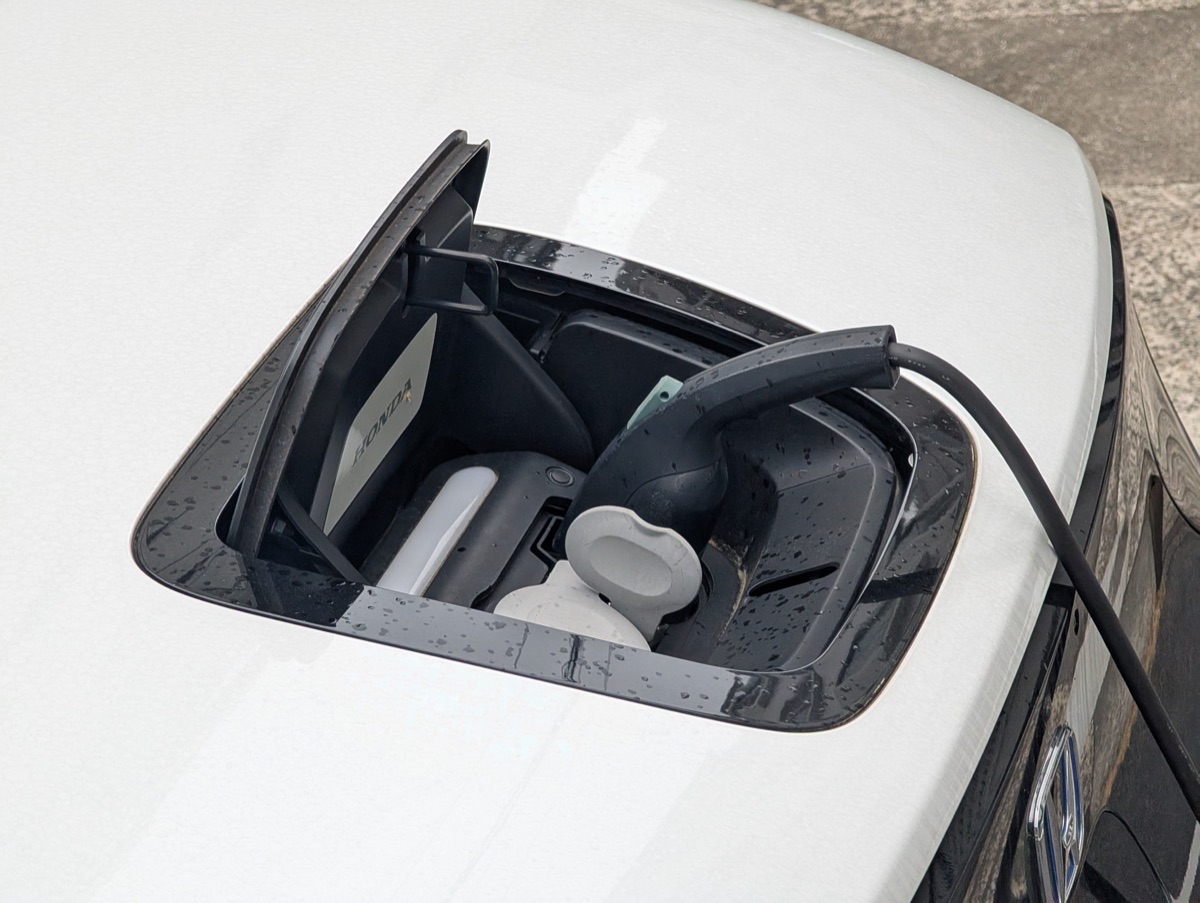
- Public EV charging station — photo via Wikimedia Commons, CC license.
Sources
- EV Quiz, "EV road trip planning, honestly": https://evquiz.com/ev-road-trip-planning
- MOTORWATT, "Best EV Road Trip Planning: 2026 Driver's Guide": https://motorwatt.com/ev-blog/howtos/ev-road-trip-planning
- Atomic Electric Vehicles, "Electric Car Road Trip Planner Essentials (2026)": https://atomicelectricvehicles.com/blog/electric-car-road-trip-planner-essentials-the-2026-guid-20260810
- EV Charge Savings, "EV Road Trip & Route Planner (2026)": https://www.evchargesavings.com/guides/road-trip-ev
- China Charging Alliance (EVCIPA) / National Energy Administration — public and total charger counts, as of end-August 2026.
- IEA, Global EV Outlook 2026 — China holds the world's largest public charging infrastructure stock (over 65% of global public chargers): https://www.iea.org/reports/global-ev-outlook-2026/electric-vehicle-charging-chap-6-and-10
- Xinhua / 经济参考报 (Sept 24, 2026) — NIO leads the industry on swap-station count (4,000+ stations as of Aug 2026): http://jjckb.xinhuanet.com/20260924/f8a2380ab7fc4bc1b7567446136d6140/c.html
中文简报
2026年电动车长途自驾已从"冒险"变成"做功课":核心是路线策略而非车辆本身。三件套组合——ABRP(路线规划)+ PlugShare(充电桩实况核查)+ 车机导航(含电池预热)。遵循"20–80"快充法则(充到约80%就走,20→80%约15–25分钟),用酒店夜间 L2 充电"睡醒满电"替代多次快充;每站预留 Plan B、到桩电量不低于15%、优先多桩站点。寒冷使续航降20–40%,高速70 mph以上再降20–25%,需提前15–20%规划并插电预热。充电礼仪:不占桩、充满即走、勿拔他人车。中国视角:截至2026年8月公共桩约516万、总量2422万(充电联盟/国家能源局),高速服务区基本全覆盖,蔚来换电网络全球最大;但节假日热门走廊排队与支付App碎片化仍是痛点。详见正文 China Angle。
Back to all articles · View comments & share on the interactive page