Charging at Home in Germany: The 2026 Wallbox Guide — What the Law, the Costs, and Your Landlord Actually Allow
Applies to: anyone in Germany who is buying an EV and wants to charge it at home — whether you own a house, rent a flat, or live in a condominium (WEG). The rules below are specific to Germany and differ sharply from the "plug it in and pay the same rate" experience in North America or Asia.
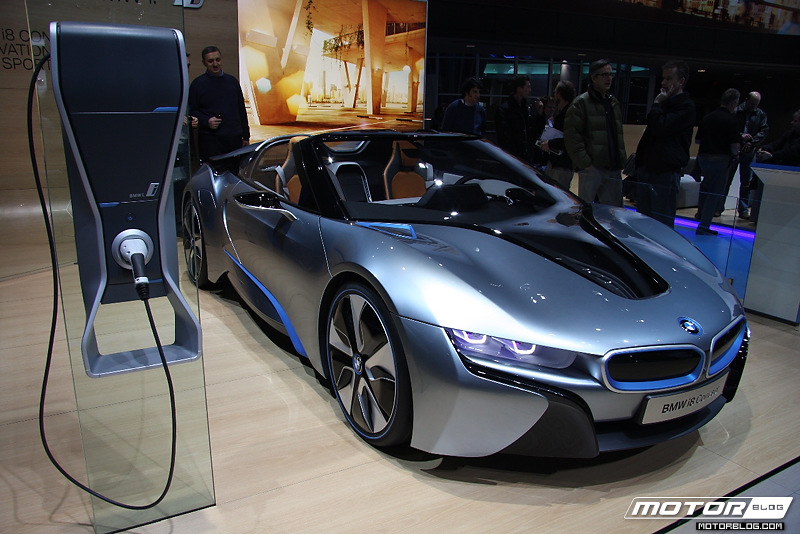 A typical home Wallbox (wall-mounted charging box) in Germany. Installing one legally means more than screwing it to a wall — it means meeting §14a EnWG, §13 NAV and, above 11 kW, §19 NAV. Photo: via Wikimedia Commons (CC license).
If you just moved to an EV in Germany, the biggest surprise is rarely the car — it is the paperwork and the bill that come with charging it at home. A Wallbox is not a consumer gadget you plug into a socket; it is grid-connected infrastructure with its own legal framework. Here is the practical breakdown for 2026.
First, the good news: you probably want 11 kW, not 22 kW
Most German homes are single-phase or three-phase with a limited house connection (Hausanschluss). A 11 kW (3 × 16 A) Wallbox is the sweet spot: it charges most EVs from ~10% to 80% overnight, and it sits under the threshold that triggers the heaviest approval burden. A 22 kW (3 × 32 A) box charges faster but needs a bigger house connection, a more expensive installation, and much more likely a §19 NAV approval. Unless you routinely arrive at empty with two EVs in the driveway, 11 kW is the rational choice.
The legal backbone: §14a EnWG, §13 NAV, §19 NAV
Three pieces of German energy law decide whether your Wallbox is legal and how much you pay for grid access.
- §14a EnWG (steuerbare Verbrauchseinrichtung): Your Wallbox can be registered with the grid operator as a "controllable consumption device." In exchange for letting the grid throttle or briefly interrupt it in rare scarcity situations, you get a reduced grid fee (reduziertes Netzentgelt). To qualify, the box must be §14a-capable and built from three modules: a Smart Meter Gateway (SMGW), a communication gateway, and a local energy-management system (HEMS). Modern §14a-ready boxes bundle all three; older ones need a retrofit module (€100–€400).
- §13 NAV (Niederspannungsanschlussverordnung): The installation and grid connection of any charging equipment must be carried out by a certified electrical professional (Elektrofachkraft) and reported to the grid operator (Anmeldung der Ladeinfrastruktur) before commissioning. DIY installation is illegal and voids your insurance.
- §19 NAV: For a charging capacity above 11 kW (or a larger connected load), you need explicit approval from the grid operator before you install. Skipping this is the fastest way to get your connection shut down.
What it actually costs in 2026
A realistic home-installation budget in Germany:
| Component | Typical cost (2026) |
|---|---|
| Wallbox hardware (11 kW, §14a-ready, load management) | €500 – €1,200 |
| Certified electrician installation (cable run, distribution-board work) | €700 – €1,500 |
| Smart Meter Gateway / §14a module (if not integrated) | €100 – €400 |
| Optional: longer trenching, 22 kW upgrade, MID meter | +€300 – €1,000 |
| All-in typical | €1,200 – €2,500 |
| Upper bound (complex / 22 kW) | up to €3,500 |
The single biggest variable is cable length and the state of your distribution board. A garage 40 m from the meter with an old fuse box will blow the budget; a carport next to the meter is cheap.
The electricity tariff trick most newcomers miss
Germany runs a three-tier network-charge model (Netzentgelte-Staffelmodell). Per-kWh grid charges fall as your household consumption rises — roughly €0.37 / kWh in the base tier, ~€0.276 in tier 1, and ~€0.22 in tier 2 (exact figures vary by grid zone). The practical effect: the more you charge at home, the lower your marginal grid rate, up to a point.
So two moves save real money:
- Sign up for a dedicated EV charging tariff (Zuhause-Laden / "Awattar", "E.ON Drive", "Tibber", or your local basic supplier's EV plan). These bill the Wallbox at a lower rate (often with cheap night-time windows), separate from your household tariff.
- Register the box under §14a EnWG to claim the reduced grid fee.
Combined, home charging in Germany typically lands around €0.25–€0.40 / kWh all-in, versus €0.39–€0.99 / kWh at public stations (see our companion piece on German public charging cards).
Subsidies in 2026: don't count on federal cash for a house
- Single-family homes: The federal KfW 442 "Wallbox" grant was closed in 2024 and has not reopened. As of 2026 there is no federal purchase subsidy for a private home Wallbox.
- Multi-family / rental ("Laden im Mehrparteienhaus"): A federal funding line for landlords installing shared Wallboxes ran through 2026-11-10; if your landlord is considering it, that deadline matters.
- State-level (Länder): A handful of states still offer grants — North Rhine-Westphalia (NRW) covers up to €1,500 for private Wallboxes, for example. Check your Bundesland before assuming nothing is available.
If you rent or own a flat (WEG): you have a right to charge
This is the part German EV-curious renters most fear, and the law is actually on your side:
- Tenants: Since the "Recht auf Wohnungs-Eigenversorgung" (2024 amendment to the German Tenancy Act / BGB §554), tenants have a basic right to install a charging facility at their own cost, subject to technical feasibility and the landlord's consent being not unreasonably withheld. Many landlords now offer a "Plug&Play" socket or a shared Wallbox instead.
- Condominium owners (WEG): The WEG Reform (2020) gives each owner a claim to a majority decision allowing them to install a private Wallbox at their own expense, even against the will of other owners in many cases, provided it is technically and economically reasonable.
A quick checklist before you buy
- Check your house connection capacity (Hausanschluss / Zählerplatz) — ask your grid operator.
- Decide 11 kW vs 22 kW (most choose 11 kW).
- Pick a §14a-ready box so you can claim the reduced grid fee later.
- Hire a certified electrician and file the §13 NAV Anmeldung.
- If > 11 kW, get §19 NAV approval first.
- Sign up for an EV charging tariff and register for the §14a reduced grid fee.
- Ask about state subsidies (e.g., NRW) and, if renting, your tenant/WEG right to charge.
A Note from China
From where I write this — in China — the idea of needing three laws, a certified electrician, and a grid-operator approval just to charge at home sounds almost exotic. Here, home charging (mostly 7 kW single-phase AC in apartments, or 11–21 kW in villas) is installed by the carmaker or a third-party service at low cost, and you simply scan a QR code with WeChat, Alipay, or a map app like Amap (Gaode) to pay — TELD (特来电), Star Charge (星星充电), or your carmaker's own app handles it across most of the country. There is no "grid-fee arbitrage" paperwork and no separate legal regime for a home box; the bigger headache is getting the property-management company's permission to pull a private cable in an older residential complex.
The flip side of Germany's heavy regulation is actually a consumer protection: the §14a framework and the three-tier grid charge quietly push German drivers toward off-peak, grid-friendly charging — something Chinese operators achieve instead through steep night-time (谷时) discounts baked into the per-kWh price. Different systems, same lesson: charge when the grid is cheap, and the bill takes care of itself.
Sources: German Energy Industry Act §14a EnWG (steuerbare Verbrauchseinrichtungen / reduced grid fee); NAV §13 (connection & certified-electrician rule) and §19 (approval above 11 kW); German Tenancy Act BGB §554 (tenant right to self-supply, 2024 amendment); WEG Reform 2020 (condominium owner charging claim); Bundesnetzagentur three-tier network-charge model (Netzentgelte-Staffelmodell, eff. 2025); KfW 442 status (closed); federal "Laden im Mehrparteienhaus" funding window to 2026-11-10; NRW state Wallbox grant (up to €1,500); GoingElectric.de / BDEW 2026 German charging-cost comparisons.
Back to all articles · View comments & share on the interactive page