The Mobile Home Goes Electric: How China's NEVs Are Quietly Redefining Camping
By the end of June 2026, China had 48.97 million new energy vehicles (NEVs) on the road. That is roughly one NEV for every 28 people in the country, and it is the starting point for a story that nobody on the engineering side of the auto industry really planned for. Millions of ordinary passenger cars, bought for commuting, started showing up at campsites — and people began sleeping in them.
Not in RVs. Not in modified vans. In ordinary family NEVs. The kind of car you would otherwise see in a school parking lot. A growing number of owners have discovered that, with a 50–80 kWh traction battery on board, the same car can also keep them cool through a summer night, run an induction hob, charge a laptop, and lay flat into a double bed at the press of a button. In the social-media vernacular, the trend is called "moving the home into the car" — and in 2026 it is no longer a niche experiment.
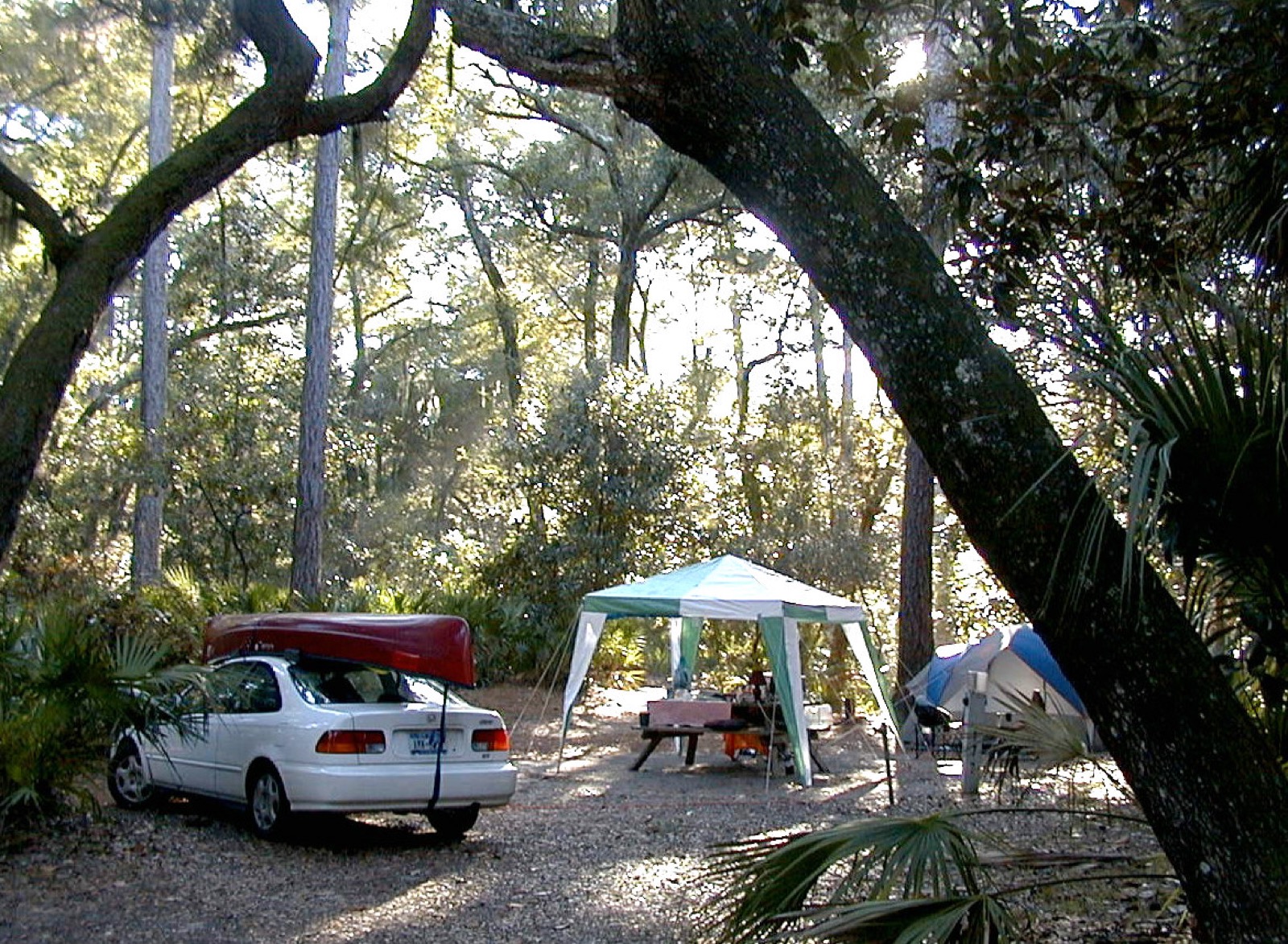 A car, a tent and a canopy at a forested campsite — the classic car-camping setup that the new generation of Chinese NEV owners is now reimagining, with the car itself doing much of the work a generator and an RV would once have done. (Image: Wikimedia Commons, CC BY-SA 3.0, Mwanner)
The number is a public-data milestone. According to the Ministry of Public Security's traffic management bureau, China registered 5.195 million new NEVs in the first half of 2026 alone — 49.42% of all new car registrations in the period. The cumulative fleet of 48.97 million is 13.19% of all motor vehicles in the country. That is a lot of cars with very large batteries, and a lot of owners who are, for the first time in automotive history, not afraid to idle the climate control overnight.
Three technology pillars that made it possible
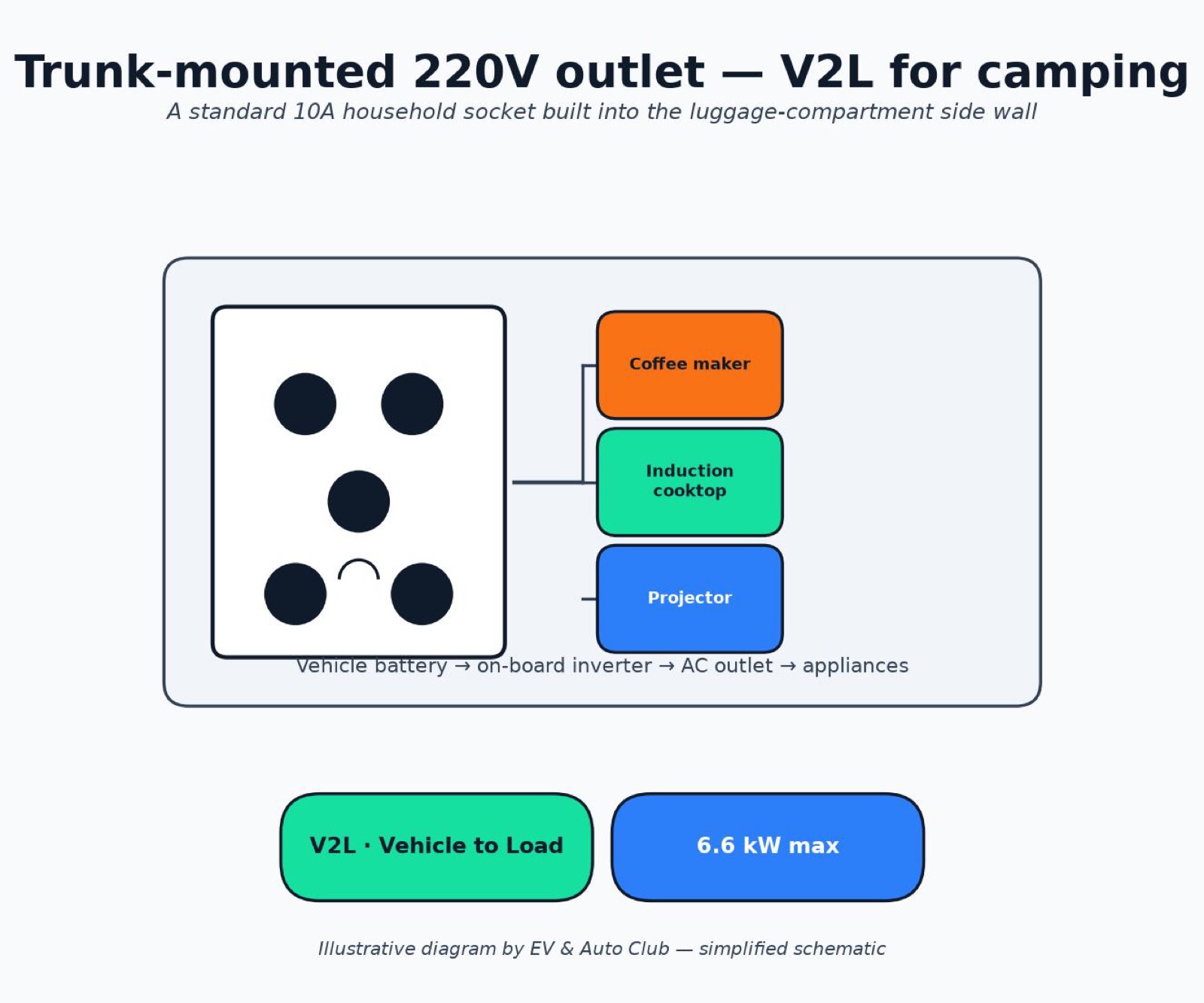 A standard 220V / 10A household socket mounted on the trunk side wall — the kind of V2L outlet that powers an induction cooktop, projector or coffee maker at the campsite. (Diagram: EV & Auto Club)
The "mobile home" lifestyle rests on three capabilities that an internal-combustion car simply cannot match, and that most ICE owners would never have considered using.
1. Parking air-conditioning, without an engine. A traditional car idling its engine to run the AC wastes fuel, risks carbon-monoxide poisoning, and is illegal in many places. A 50–80 kWh traction battery can run the cabin HVAC all night on a fraction of its capacity — typically 10–15% for eight hours — and wake up the next morning with hundreds of kilometres of range still in reserve. At popular Chinese camping spots such as Wugong Mountain and Baili Dujuan in Guizhou, it is now normal to see lines of cars with windows fogged by overnight AC.
2. V2L — the car as a power station. This is the feature that has made "EV camping" go viral. V2L (Vehicle-to-Load) turns the car's high-voltage battery into a 220 V / 50 Hz AC source through an external socket, with output ranging from 2 kW on entry-level cars to 6.6 kW on mid- and high-end ones. The 2026 Geely Galaxy V900, for example, ships V2L as standard on every trim — a 6.6 kW outlet that can run an induction hob, a projector, a coffee machine and a fan simultaneously. The Dongfeng eπ M8 (奕派M8) likewise makes V2L standard across both EREV and BEV variants, and adds a user-configurable minimum-battery threshold so the car will not let you drain the pack to a level that would strand you on the way home. In the Chinese market, V2L has effectively become the default expectation on any new family NEV.
3. A car interior that turns into a bed. The third pillar is the most visible one in marketing. Several Chinese OEMs now sell "one-touch bed" modes that turn the cabin into a flat double bed in 20 to 60 seconds. The NIO ES8 five-seat version folds the front two rows into a 1,939 mm flat surface. The Voyah Taishan X8 (岚图泰山X8) splits the second row, drops it into a sunken position and auto-inflates an integrated mattress, forming a 2.1 m flat bed in about a minute. The GAC × Huawei Qijing GX7 (启境GX7) goes one step further: in 20 seconds, the cushion, leg rest, headrest and side wing are electromechanically linked into a 1.8 m × 1.1 m flat surface without removing any headrest or pulling out any air mattress.
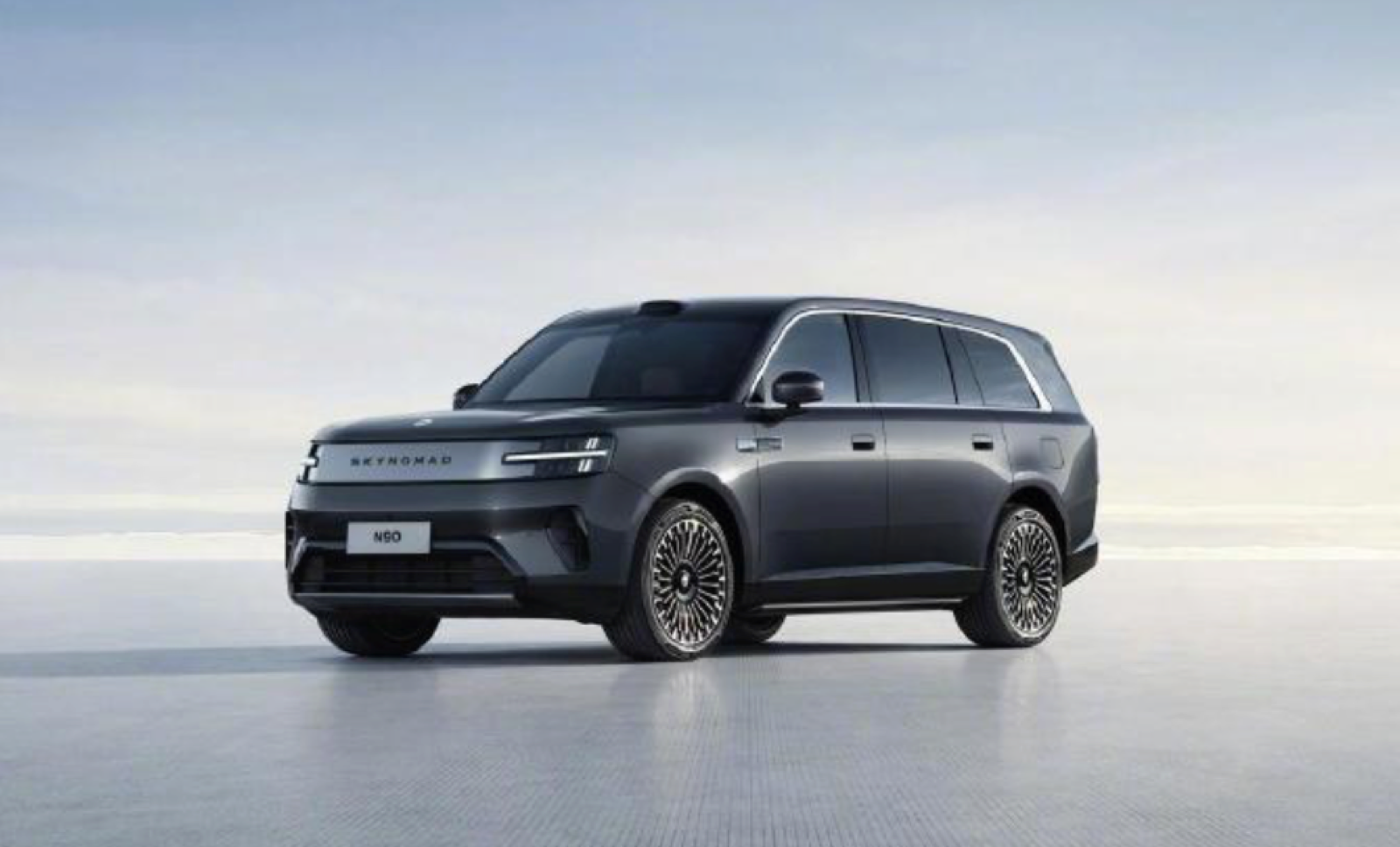 Xiaomi Pengcheng N90 Max — a 5.3-metre, 7-seat range-extender SUV that switches between 18 different interior layouts. (Image: Xiaomi Auto)
Xiaomi Pengcheng: a purpose-built showcase of the new logic
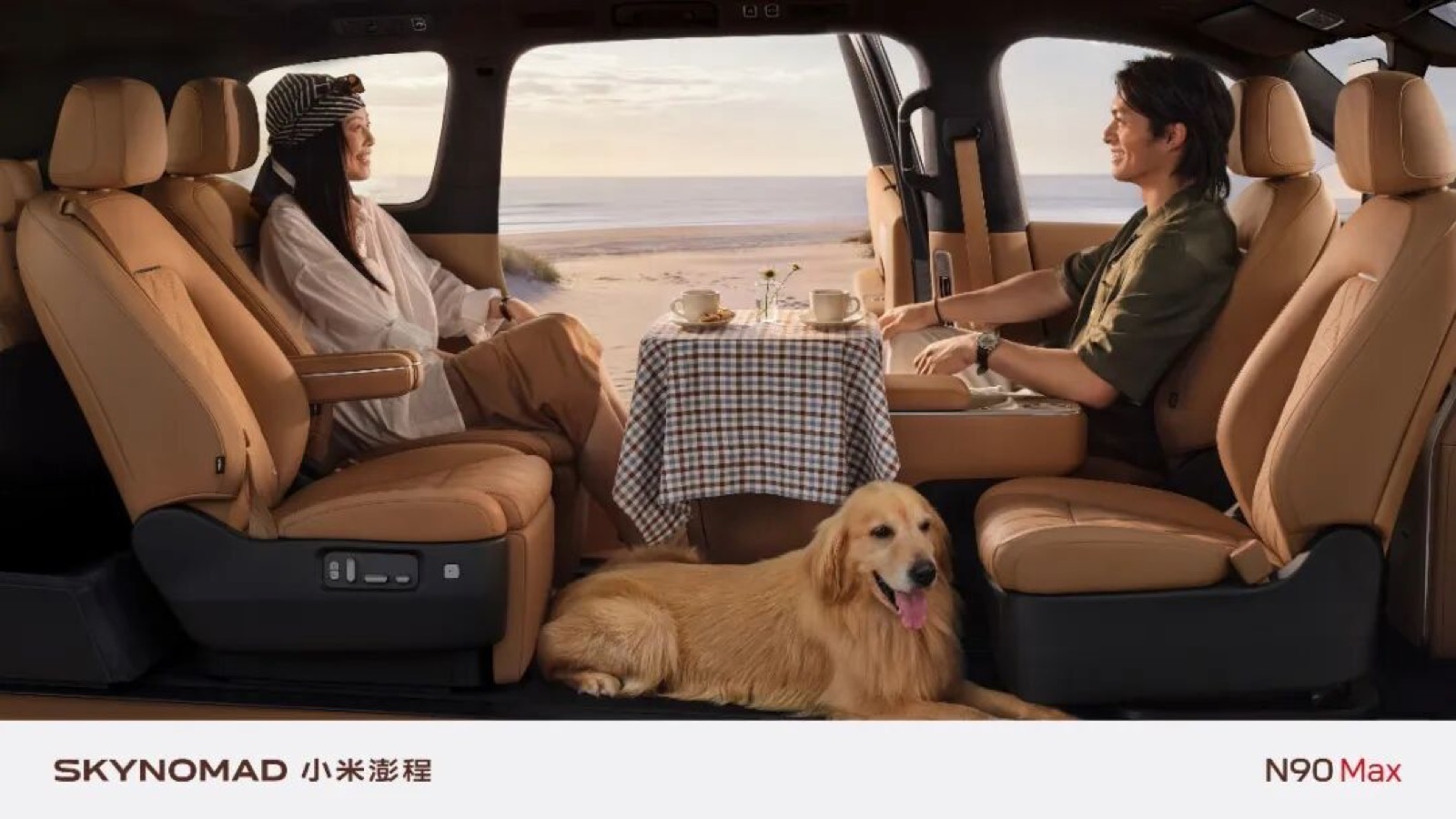 Xiaomi Pengcheng N90 Max in face-off layout: front seats rotated 180° to face the second row over a fold-out table, with the flat floor running continuously from the dashboard to the tailgate. (Image: Xiaomi Auto)
Of the new models built around the EV-camping use case, the Xiaomi Pengcheng (澎程, "SkyNomad") N70 / N90 — a mid- and full-size EREV SUV line built on Xiaomi's new "Kunlun" platform — is the most aggressive example. Pre-sales opened on 30 July 2026, with the N70 at 25.99万元 and the N90 at 29.99万元.
The headline numbers are unusual. The N90 is 5,285 mm long with a 3,080 mm wheelbase, and the floor is genuinely flat from the front footwell to the tailgate, with a longitudinal slope of only 2.95° — the result of rearranging the rear electric drive, battery and fuel tank so that no second- or third-row step is needed. Six aluminium rails, the longest of which is 1,938 mm, run the length of the cabin, so seats, the central island and even a small table can slide to any position along the floor. The front seats rotate 180° (in Park only) to face the second row and form a small "living room" with a table between them, or fold completely flat to form a bed. In total, the system supports 18 spatial modes — including a seven-seat layout, a grand-touring four-seat layout, a "meeting room", and a full-flat camping bed.
What the Pengcheng illustrates is that EV camping has stopped being an aftermarket trick. It is now a product-planning centre of gravity. Kunlun-platform models will increasingly be designed from a blank sheet around the assumption that the owner may, on a Saturday, sleep in the car — and will have the bed, the rails, the flat floor, the 6.6 kW V2L and the heat-pump HVAC to make that work without a Friday-night spreadsheet.
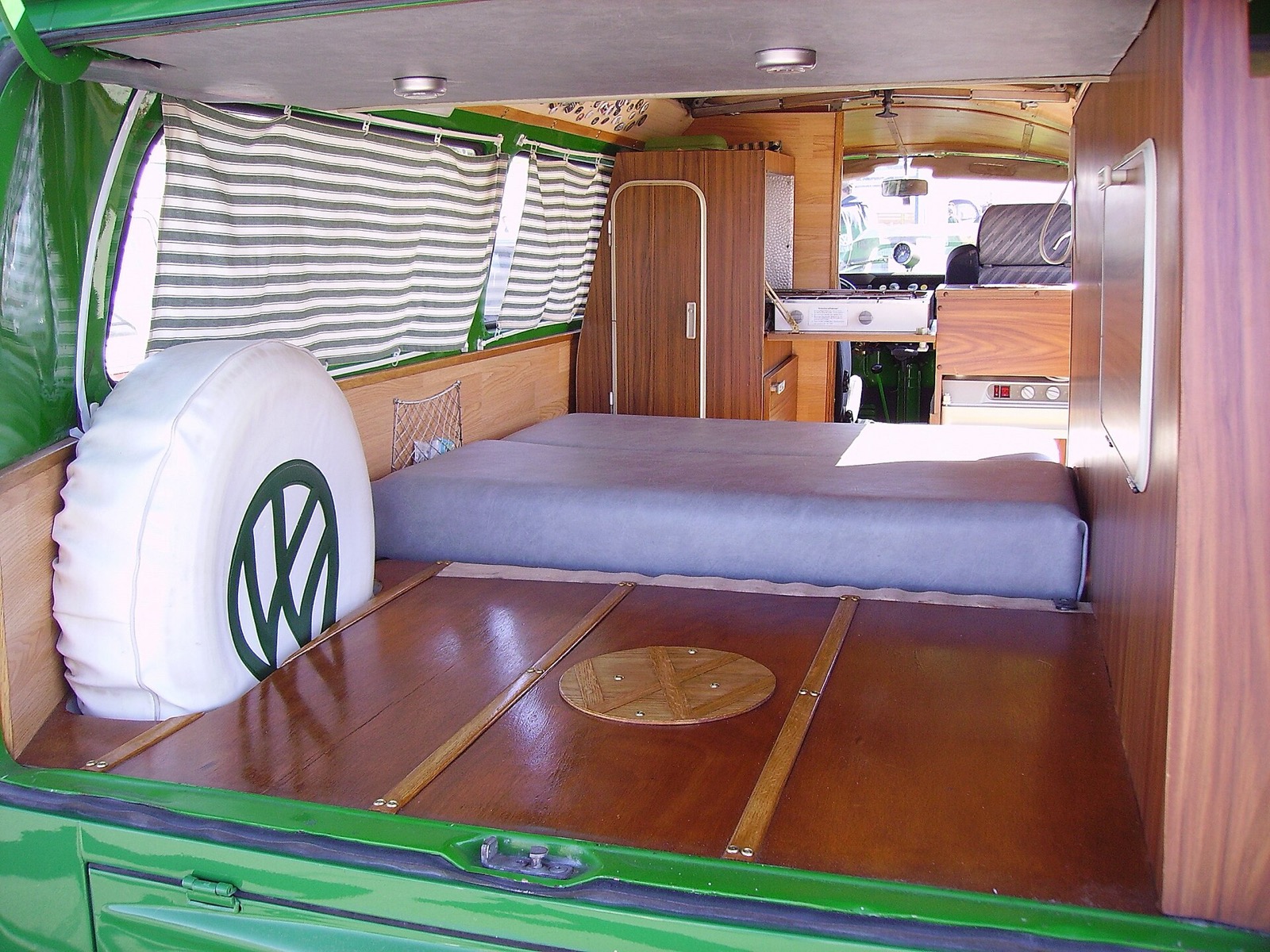 The classic answer to the question "can a car be a home" — a Westfalia-style fold-flat bed in the back of a Volkswagen Type 2 (T2) camper van. The 1960s T2 was the first mass-market car built around the idea that the cabin is also a bedroom. China's 2026 NEV boom is, in a sense, the first time a mass-market electric car has been designed around the same idea. (Image: Wikimedia Commons, CC BY-SA 3.0, Cjp24)
A whole accessory ecosystem is growing around the trend
The OEMs supply the hardware base. Around them, a Chinese aftermarket has been quietly building the rest of the kit. Self-inflating mattresses, privacy curtains, fold-flat tables, side awnings and pop-up shower tents — each of these is now a stable sub-category on Taobao and JD.com, with prices ranging from tens to a few thousand yuan. A typical Xpeng G9 owner, for example, can buy a self-inflating electric mattress for a few hundred yuan, inflate it in about 45 seconds, and store the deflated pad in the frunk. The combination of factory design (rails, flat floors, V2L) and third-party accessories is what has pushed EV camping out of the niche and into the mainstream.
The other side of the trend
It is not, of course, a perfect substitute for a hotel. Owners interviewed in Jiangxi and Xinjiang point to small bathrooms, condensation on cold nights, and the basic discomfort of car-camping with children. The local tourism authority at Wugong Mountain has framed it as competition for the most basic, homogeneous guesthouses, not for the family-resort segment.
The bigger question is whether EV camping will dent the Chinese hotel industry at all. So far, the honest answer is: only at the margin. The Xiaomi Pengcheng, the Voyah Taishan X8 and the Qijing GX7 are not selling on "we will replace hotels". They are selling on "we will let you do Saturday differently". The point is the freedom to park by a lake, run the AC, cook noodles, watch a film and sleep, and not have to plan around a check-in time. Whether that is a market or a movement, it is no longer a question of technology. The cars can already do it. The question is how many of China's 48.97 million NEV owners decide to use them this way.
China-only context: all brands, models, registration data and locations cited in this article are from the Chinese domestic market. The 48.97 million NEV fleet figure is from China's Ministry of Public Security, end of June 2026. V2L output and "one-touch bed" functionality described here are features of the China-market models listed, and may not be available on overseas variants of the same nameplate.
Back to all articles · View comments & share on the interactive page