BYD's "Active Brake": From Price War to Premium — Government Constraint or Corporate Discipline?
When a market leader, with the cost advantage to keep cutting, suddenly chooses not to — someone, somewhere, is reading the room.
In the middle of 2025, BYD was at the apex of its power. The company posted 4.6024 million new-energy vehicles sold for the year, up 7.73% — a fourth consecutive global NEV sales crown. Annual revenue crossed the RMB 800 billion mark for the first time. After two straight years of price war, BYD — armed with one of the most vertically integrated supply chains in the industry — was almost the only major automaker that could "afford to fight, and keep fighting."
It was at exactly this peak that market observers noticed an unusual signal: BYD suddenly stopped leaning on its elbows at the pricing counter. Aggressive promotions on its best-selling mass-market models evaporated, the cadence of headline-grabbing price cuts slowed visibly. Almost immediately, a rumor began circulating through the industry: BYD had been "summoned" by the central government and asked to "raise the muzzle a notch" — to stop using price warfare to squeeze competitors out of existence.
 BYD chairman Wang Chuanfu — the strategist behind the 2026 premium pivot. (Image: EV & Auto Club)
The Rumor and the Rebuttal: The Grey Zone of Truth
In May 2026, BYD published an official rebuttal, calling the rumors "BYD summoned / BYD placed under investigation" "entirely false rumors," stating the company had taken evidence and would pursue legal action against the originating parties.
An official rebuttal does not mean the rumor has no factual basis. A rebuttal can only deny a specific legal procedure ("summoned," "placed under investigation"). It cannot, in law, deny the possibility that the government expressed concerns through informal channels. In Chinese industrial governance, window guidance and policy signaling are routine, non-procedural ways of steering outcomes. The government does not need to send a formal "summons letter" — a quiet word through an industry association, a friendly editorial line in the state press, or a remark at a senior-level meeting is often enough to convey the message to a leading firm. Even more importantly, a denial of "being summoned" does not deny the underlying observable behavior change — BYD did in fact shift strategy.
Stronger Evidence: BYD's 2026 Strategic Pivot
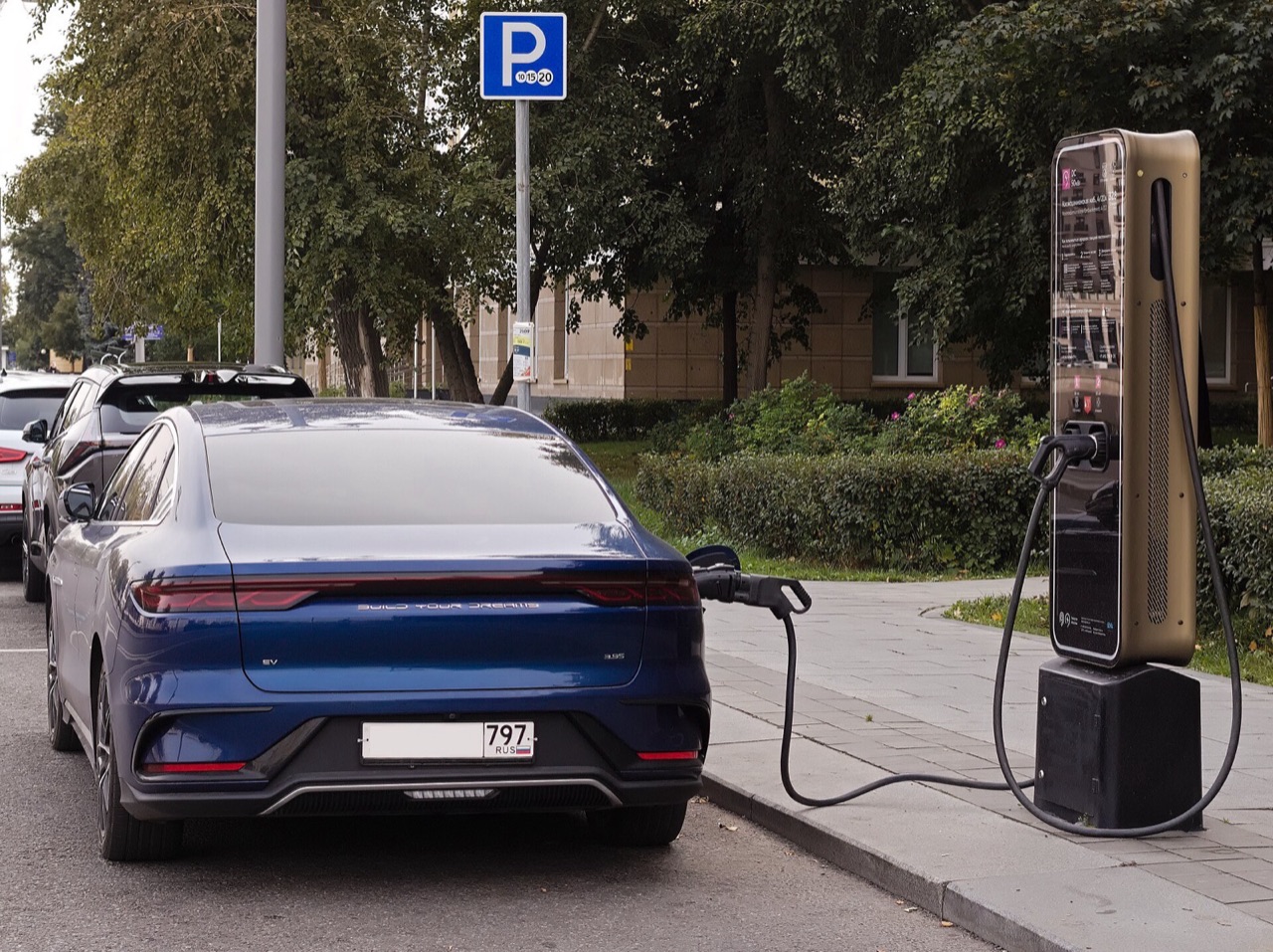 The BYD Han flagship sedan — emblematic of BYD's move upmarket. (Image: Wikimedia Commons, CC0)
Setting aside the rumor, the more telling evidence is what BYD is actually doing.
Into 2026, BYD did not restart the price war in the mid-to-entry segments. Its strategic center of gravity moved decisively toward the RMB 200,000+ mid-to-high-end market — exactly the direction "raise the muzzle a notch" implies. Rather than pressing harder on competitors with lower prices, BYD is opening a new frontier with higher-spec products.
At the August 2026 Chengdu Auto Show, the BYD Dynasty Network unveiled the new D+ class flagship sedan "Da Han EV" ("Great Han EV"), with a pre-sale price of RMB 249,900 to 299,900. This car measures 5,256 mm in length with a 3,130 mm wheelbase, runs the second-generation Blade Battery across the lineup, delivers a CLTC range of 1,008 km, and supports a flash-charge function that takes the pack from 10% to 70% in 5 minutes. Standard equipment includes rear-wheel steering and the DiSus-A dual-chamber air suspension. Earlier in the cycle, Dynasty had also pushed the flagship SUV "Da Tang EV" ("Great Tang EV") into the same RMB 200,000+ tier.
Meanwhile, BYD's overseas business is now doing structural work for the strategy. In 2025, BYD overseas sales broke the 1 million mark for the first time, reaching 1.0496 million vehicles, up 145% year-on-year. Overseas segment gross margin reached 19.46% — notably higher than the domestic 16.66%. In Q1 2026, overseas sales accounted for about 45% of total volume. The shift is structural: BYD is intentionally diversifying away from dependence on China's mid- and entry-level markets, and on the competitive pressure that segment produces.
Why "Raising the Muzzle a Notch" Is a Reasonable Inference
From the perspective of industrial policy, Beijing's posture toward BYD has always been a balance of "support" and "constraint."
Support has been durable. BYD started in Shenzhen in 1995, helped by the city's policy of unsecured loans for small and medium firms. In 2009, Shenzhen became one of the first Chinese cities to roll out NEV adoption incentives, and BYD leveraged that lead into public-fleet deployments. Subsequent Shenzhen "20+8" industrial cluster policies, automotive export promotion programs, and Hunan provincial government's repeated working meetings with BYD have all been quietly supportive.
But constraint is just as necessary. When a single firm becomes the dominant player, an unchecked price war can hollow out the broader industry: small and medium suppliers shut down, dealership networks collapse, and the country ends up with a de facto monopoly in its flagship industry. China's goal for the NEV sector is a vibrant ecosystem of competitive firms, not a single winner-take-all outcome. From the policymaker's perspective, BYD's success is the showpiece, but a healthy industry is the building. Letting the showpiece absorb the rest of the building would defeat the purpose.
Viewed in this light, "raising the muzzle a notch" — even if no formal summons was issued — is a reasonable inference that fits the logic of Chinese industrial governance. BYD had every cost advantage in the world to keep the price war going. It chose not to. That choice demands an explanation.
Conclusion: The Real Lesson From BYD's Pivot
BYD's 2026 pivot is not a story about a company that suddenly grew a conscience. It is a story about a company operating inside a state-shaped industrial policy environment, having correctly read the new signals. The lesson is not "the government tells you what to do" — it is that government, market, and the dominant firm now actively co-evolve the rules of competition, and the firms that thrive are the ones that can read that conversation accurately.
For the rest of China's NEV industry, the implication is more interesting: if BYD will not use price to crush everyone below it, the room for mid-tier and premium differentiation just got larger. Geely, Great Wall, Changan, NIO, Xpeng, Li Auto and others — all of them are now operating in a market where the dominant firm has voluntarily stepped back from the cheapest end of the table. Whether they can fill that room is the next question. BYD has opened the door.
Sources: BYD 2025 annual report (revenue RMB 803.965 billion, net profit RMB 32.619 billion, total NEV sales 4.6024 million units, overseas sales 1.0496 million units, overseas margin 19.46% vs domestic 16.66%); BYD official statement dated May 9, 2026 denying "summoned / investigated" rumors (via Sina, CNR and China News Service); August 21, 2026 Chengdu Auto Show coverage of Da Han EV pre-sale (RMB 249,900–299,900, 5,256 mm length, 3,130 mm wheelbase, second-generation Blade Battery, CLTC range 1,008 km, 5-minute 10–70% flash charging, rear-wheel steering and DiSus-A dual-chamber air suspension) — via Sina, iFeng, QQ News; industry reporting on BYD Q1 2026 overseas share (≈ 45–46%); central government policy references to Shenzhen's NEV cluster support and provincial-level working engagement with BYD. Cover image: BYD Da Han EV official front-face press shot, via iFeng.
Back to all articles · View comments & share on the interactive page