NACS vs CCS in 2026: What the Connector War Actually Means for EV Buyers
If you follow EV communities, you have seen the fights. On r/cars the single most dominant thread of 2026 is "The Great Charging Debate: NACS Supremacy vs. Real-World Reliability," and a recent viral Reddit post about a 2026 Toyota bZ owner who couldn't charge near a campsite because local stalls weren't NACS-compatible — and had to drive to the next town — shows the transition is still messy on the ground. This guide cuts through the plug-shape noise to what actually matters.
What NACS and CCS actually are
NACS (North American Charging Standard) is the connector Tesla designed and used exclusively for years. In 2022 Tesla opened the standard, and in 2024–2025 it was formalized as SAE J3400, turning a proprietary plug into a published standard.
CCS (Combined Charging System) comes in two regional flavors: CCS1 in North America (built on the J1772 AC inlet with added DC pins) and CCS2 in Europe (built on the Type 2/Mennekes inlet). The "combined" name refers to the DC fast-charge pins sitting below the AC inlet.
Why everyone is switching to NACS in North America
Since Ford and GM led the move in 2023–2024, a long list of brands — Rivian, Volvo, Polestar, Mercedes-Benz, Hyundai, Kia, Honda, Acura, Toyota, Lexus, Volkswagen Group, Nissan, Subaru, Mazda, and BMW among them — have committed to NACS for their North American EVs from 2025–2026.
The reason is not the plug shape. It is access to the Tesla Supercharger network, which owners consistently rate as the most reliable and easiest to use. As one industry summary put it, the Supercharger network "just works" — the single biggest real-world advantage even Tesla critics concede.
The adapter situation (the part that trips up new owners)
This is where the Reddit BZ story comes from. The transition is asymmetric:
- CCS1 → NACS adapters (for existing CCS cars to reach Superchargers) are mature and widely distributed. Ford alone has handed out 140,000+ free adapters, and Hyundai, Honda, and others run similar programs.
- NACS → CCS1 adapters (for a NACS-equipped non-Tesla to use CCS stations) are not widely available as of 2026. If your new EV only has NACS, your fallback to third-party CCS networks depends on dual-cable stations or Tesla's Magic Dock (which adds a CCS handle at select Superchargers).
Practical takeaway from the community: carry one DC fast-charge adapter and one AC adapter (~$200–250 total) rather than buying one for every connector — but check your specific car's port first.
NACS is NOT faster than CCS
The most common misconception, repeated across forums, is that "NACS charges faster." It does not. Charging speed is set by the vehicle's onboard architecture and the station's power output, not the connector. An 800V or 900V platform charges quickly whether it plugs into a NACS stall natively or a CCS stall through an adapter, assuming comparable station power. The plug is the easiest part of the system to change; your home 240V circuit is the part worth getting right.
CCS isn't disappearing
Federally funded NEVI charging stations in the U.S. are required to include CCS connectors, and most major networks (Electrify America, EVgo, ChargePoint) are deploying dual-cable stalls with both CCS and NACS side by side. Expect a multi-year coexistence window (roughly 2025–2027) where both standards remain usable.
Regional note: this is a North America story
The entire NACS-vs-CCS1 debate is North-American specific. In Europe, Tesla Superchargers use CCS2, not NACS, and the EU effectively mandates CCS2. China uses its own GB/T standard. So if you are shopping in Europe or Asia, the "which plug should my next car have" question has a different, local answer — don't import North American advice.
Bottom line for buyers
If you are buying a new EV in North America in 2026, it will almost certainly have NACS (native or via adapter) — that aligns you with where the network is heading. If you already own a CCS car, you are fine: adapters, dual-cable stations, and NEVI commitments keep you charging for years. Either way, don't overthink the connector — optimize your home charging setup instead.
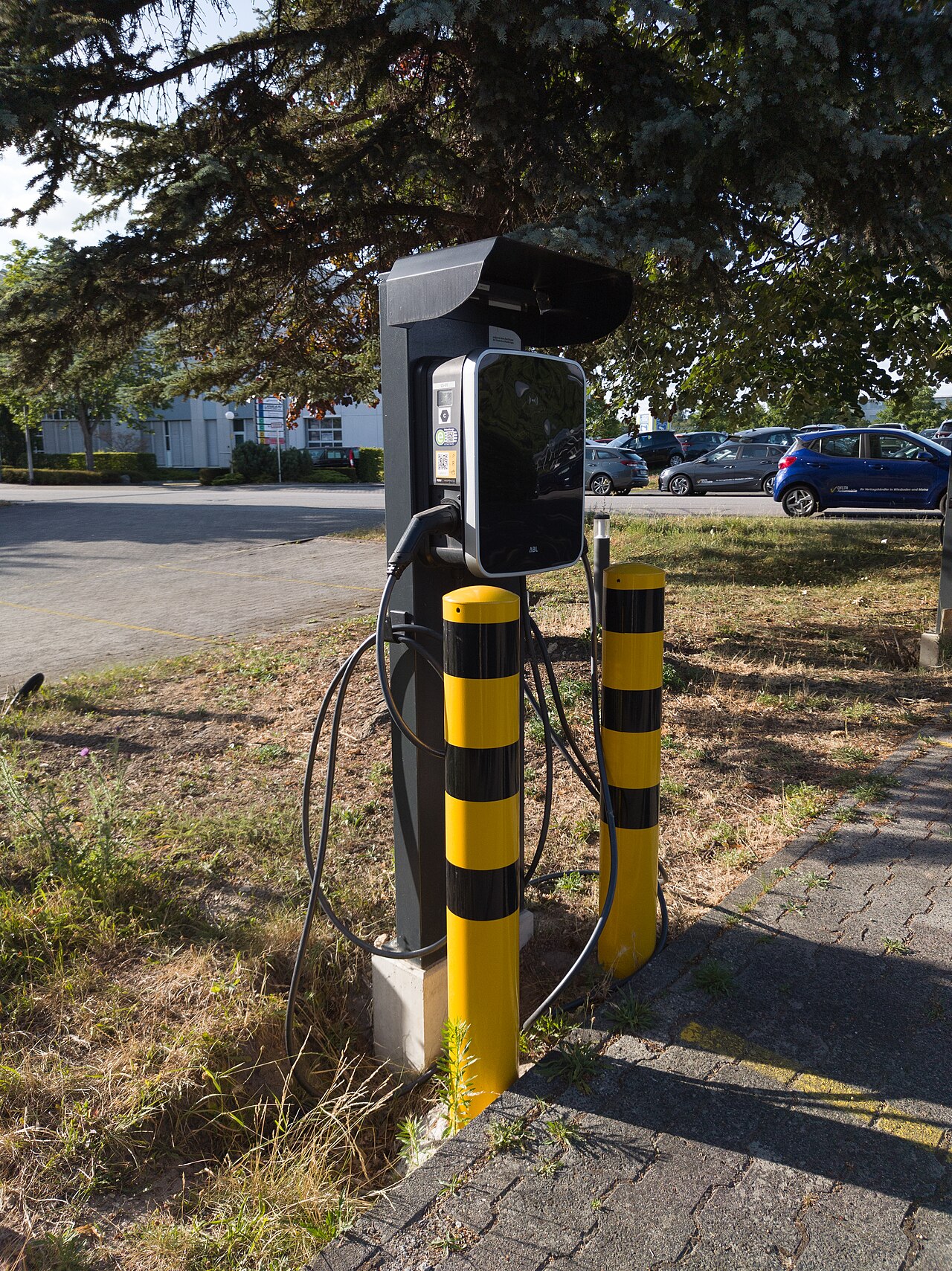
Image: Electric vehicle charging station, Wiesbaden — photo by Matti Blume, CC BY-SA 4.0, via Wikimedia Commons.
Back to all articles · View comments & share on the interactive page