Japan's 200-Point Subsidy Scorecard: BYD's RACCO Opens With a ¥430,000 Deficit vs Homegrown Kei EVs
When BYD launched the RACCO on July 28 — the first kei EV ever engineered by a non-Japanese automaker, and BYD's first car built for a single overseas market — the spec sheet was unambiguous: 320 km of WLTC range, standard ADAS, twin power sliding doors and OTA updates, priced from ¥2.145 million. But in Japan's kei-car segment, the sticker is not the number that matters. Under the METI subsidy scoring system, homegrown rivals qualify for up to ¥580,000 in national incentives while the RACCO gets a flat ¥150,000 — a ¥430,000 handicap that leaves the cheapest-claimed kei EV among the most expensive on the road.
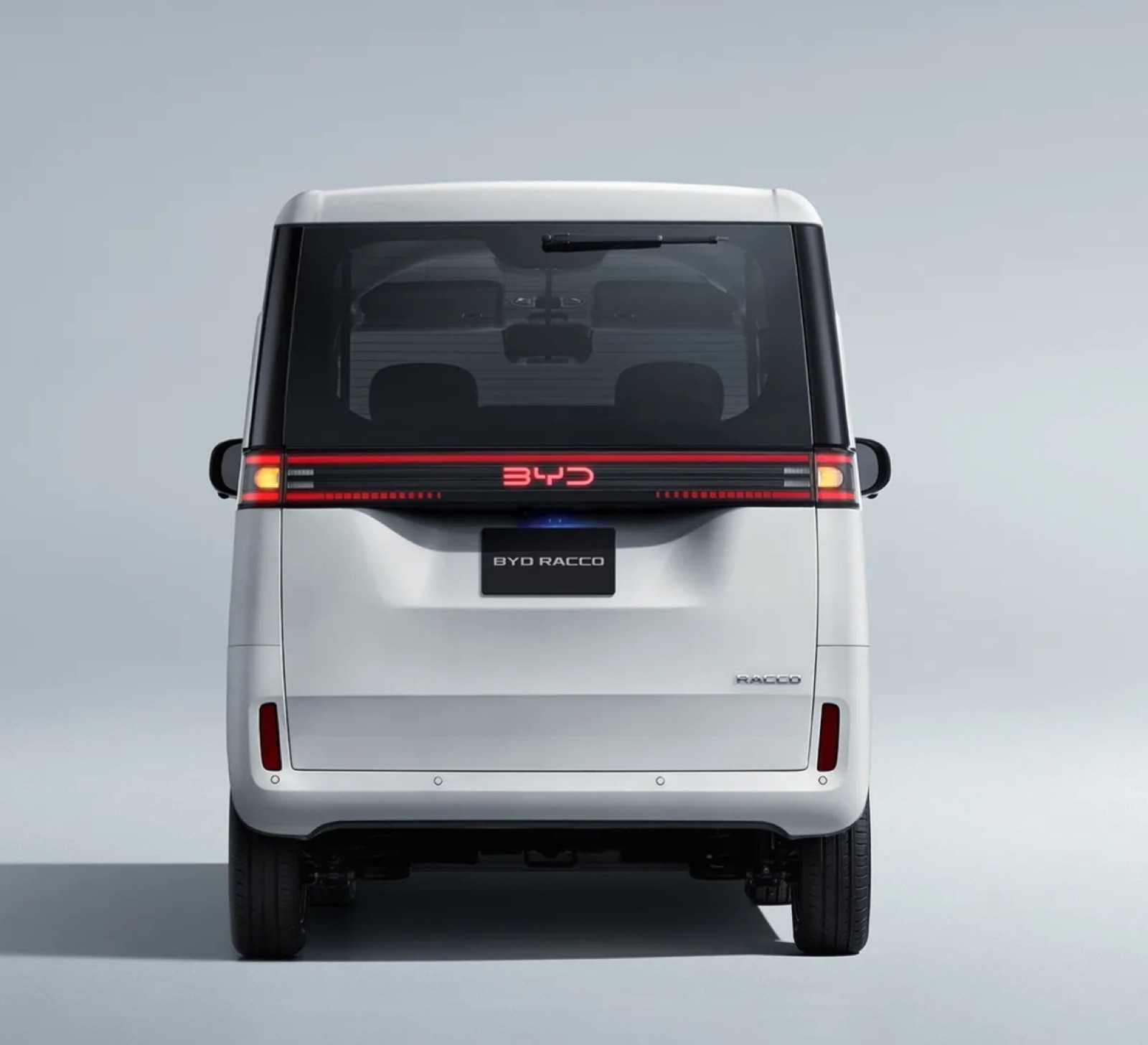
BYD RACCO — Japan's first foreign-developed kei car (image: BYD official)
The kei-car fortress
Kei cars — capped at 3.4 m in length and 660 cc of engine equivalent — account for roughly 40% of Japan's ~4.5 million annual new-vehicle sales, and the segment has long been the most closed part of the world's most closed car market: Suzuki, Daihatsu and Honda alone hold around 80% of it. No foreign brand has ever fielded a kei vehicle. The RACCO, built at BYD's Changzhou plant and sold through 77 Japanese dealerships, is the first attempt.
A spec-sheet win, a price-sheet loss
On paper the RACCO beats the segment's EV leader — Nissan's Sakura — decisively: 320 km vs 180 km WLTC range, four-wheel disc brakes, six airbags and full ADAS as standard (most kei cars offer screens only on upper trims), and a taller, wider cabin with dual sliding doors. It undercuts the Sakura's ¥2.4486 million and the Mitsubishi eK X EV's ¥2.4464 million sticker by ¥300,000-plus.
Then the subsidies land. Japan's METI (Ministry of Economy, Trade and Industry) evaluates every BEV on a 200-point scoring system that weighs local manufacturing, battery supply-chain participation, domestic charging-network investment and disaster-support commitments alongside vehicle performance. Japanese-built EVs like the Sakura and Honda's N-ONE e: qualify for the ¥580,000 maximum national grant; imported Chinese EVs get only the basic ¥150,000. Stack Tokyo's municipal top-up and the on-the-road math flips: a Tokyo buyer pays about ¥1.545 million for a RACCO versus ¥1.299 million for a Sakura or ¥1.296 million for an eK X EV.
The scorecard's optics have not gone unnoticed. BYD's Japan chief, Atsuki Tofukuji, told the Nikkei in March: "We're at an overwhelming disadvantage. If the reason is just because we're a Chinese manufacturer, then I want them to say so." Tesla, notably, received a ¥400,000 subsidy increase under the same 2026 revision despite its own imported status — a discrepancy widely attributed to US–Japan trade dynamics rather than charging infrastructure, on which BYD has scored zero points despite installing fast chargers at its own dealerships.
Early market reaction
Demand has nonetheless been strong for what BYD calls Japan's first software-defined kei vehicle. Within two weeks of the July 28 launch, orders surpassed 1,000 units — roughly three-quarters for the top Premium grade — against a target of 10,000 orders by the end of 2026. The context flatters the newcomer: Sakura sales fell about 60% year-on-year in January–May 2026 (3,059 units) as the segment's EV leader lost momentum, while BYD's total Japan deliveries had reached just 2,334 units in H1 2026 (+43% YoY) — meaning the RACCO's early order book nearly matched BYD's entire previous Japanese volume.
More Chinese pressure is coming: EMTA, a Chery-backed joint venture with Autobacs Seven, plans its own kei EV next year, leveraging Autobacs' 1,200+ retail outlets.
China angle
China's own incentive system is almost the mirror image of Japan's. Chinese purchase-tax policy and (pre-2026) subsidies are tiered by vehicle type, range and price — not by brand nationality or where the pack is built. As a Chinese writer, the RACCO episode reads as a deliberate industrial-policy countermove: Japan uses scoring criteria that structurally reward domestic manufacturing and battery localization, and it is transparent about doing so. The irony is that BYD's domestic weakness in 2026 is the same Blade Battery ramp that makes RACCO's 320 km possible — and its export boom (792,000 units in H1 2026, +67.8%) is precisely the success Japan's subsidy wall is designed to slow. Whether the RACCO's feature-led pitch can outrun a ¥430,000 price gap is the most interesting experiment in Japanese consumer behavior this year.
Sources
- Automotive World — BYD goes live with debut kei EV, Japan subsidy wall remains
- Carscoops — BYD's Kei EV has the lowest sticker in Japan and the highest price on the road
- Nikkei Chinese / Xinhua Finance (via auto-media reports, July 2026) — Sakura sales trend and subsidy detail
- Baidu Baike — 比亚迪RACCO
Back to all articles · View comments & share on the interactive page