Why Spain Has Some of Europe's Cheapest EV Charging: Solar Overgeneration, the Iberian Market, and PVPC
Applies to: Spain (Iberian Peninsula). Charging economics described here are specific to the Spanish electricity market and do not apply to Germany, France, or the Nordics without local tariffs.
If you charge an EV at home in Spain, you can drive for the equivalent of a few euros per month — and in summer, sometimes for almost nothing. That is not because Spanish utilities are generous. It is because Spain's grid is one of the most solar-saturated in Europe, and its regulated electricity tariff tracks the wholesale market hour by hour. This is a structural difference worth understanding if you compare charging costs across countries.
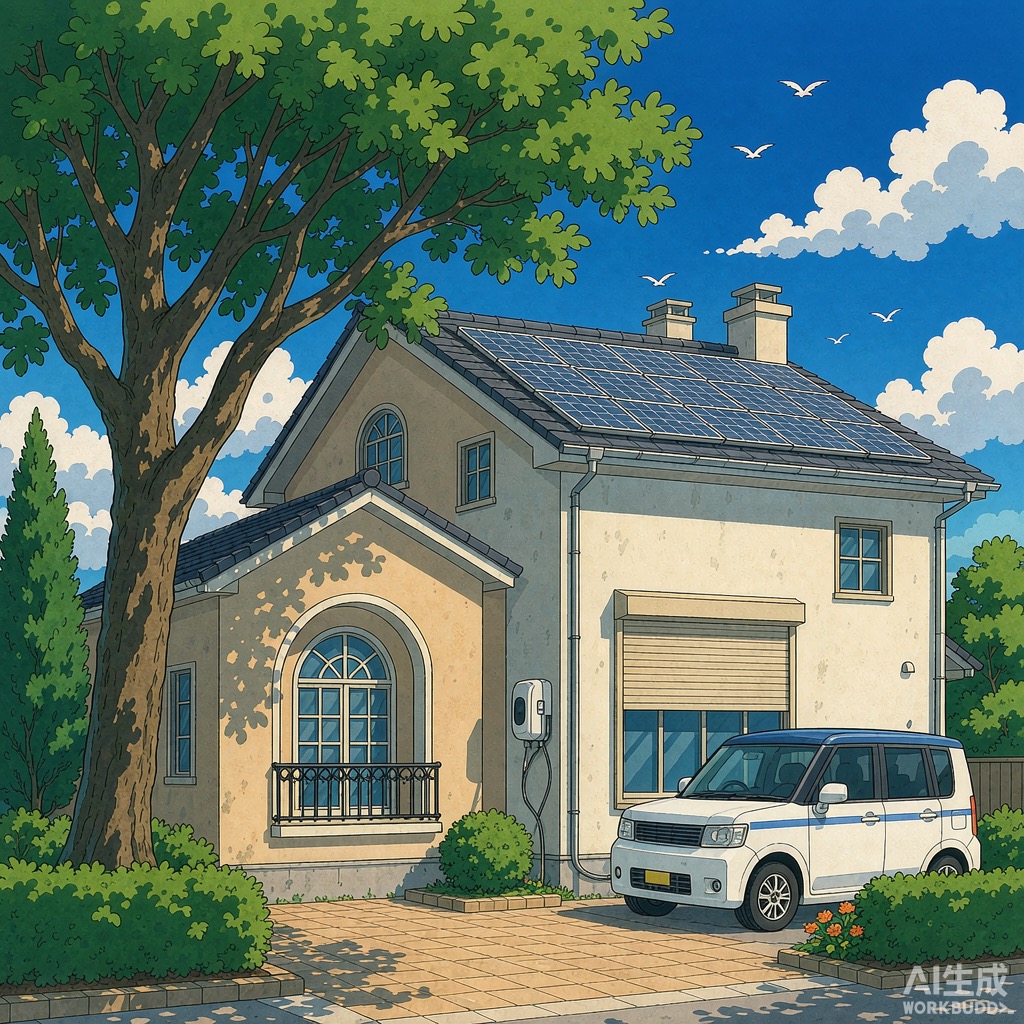
Spain's grid is unusually sunny — and increasingly solar
Spain crossed a quiet milestone in 2024: solar PV became the single technology with the most installed capacity in the country, reaching roughly 32 GW by year-end, with renewables making up about two-thirds of total installed capacity (Red Eléctrica de España). On bright summer days, solar alone can cover a large share of national demand during midday hours.
The consequence is predictable: when the sun is high, the wholesale price of electricity collapses. In spring and summer 2026, midday day-ahead prices on the Iberian market frequently fell to a few euros per MWh — sometimes near zero — precisely when rooftop solar is flooding the grid.
The wholesale market: OMIE and the PVPC tariff
Most Spanish households on the regulated tariff pay the PVPC (Precio Voluntario al Pequeño Consumidor), which is indexed hourly to the OMIE day-ahead wholesale market. That means your per-kWh price changes every hour, following supply and demand.
In practice this creates a wide spread:
- Off-peak (roughly 00:00–08:00, and increasingly midday in summer): around €0.06–0.12/kWh all-in.
- Peak (typically 10:00–14:00 and 18:00–22:00): often €0.12–0.18/kWh or more.
Some suppliers offer EV-specific dynamic plans. Octopus Energy's "Intelligent Octopus Go" in Spain, for example, advertises a flat €0.068/kWh rate for scheduled car charging. The key point: a time-differentiated tariff rewards drivers who can shift charging to cheap hours.
Summer midday: when charging is nearly free
Because Spain's solar generation peaks at midday, the cheapest charging window is no longer only at night. In summer 2026, smart-charging apps reported that combining free rooftop solar surplus with the lowest wholesale hours produced the biggest savings of the year — often 30–40% below unoptimized charging.
If you have rooftop panels, the math is striking:
- A typical Spanish home solar array (5–8 kWp) produces about 7,500–12,000 kWh/year.
- An EV driven 15,000 km uses roughly 2,400 kWh/year.
- Charge during the day on sunshine and your "fuel" cost is effectively zero; top up at night on the PVPC valley rate (~€0.08–0.12/kWh) and annual electricity cost stays under €150 — versus roughly €1,600 for an equivalent gasoline car.
How to actually capture the cheap rates
- Get a time-differentiated tariff. PVPC 2.0TD (the regulated option) or a supplier dynamic/EV plan. You do not necessarily need a second meter — a time-of-use rate on your existing meter is enough.
- Schedule charging for valley / midday-solar hours. Most modern cars and wallboxes support scheduled charging; set it for 00:00–08:00 or, if you have solar, for midday surplus.
- Add a smart wallbox + home battery if you can. A wallbox that prioritizes solar surplus (e.g., Fronius Wattpilot, SolarEdge, go-e with an energy manager) maximizes self-consumption. A ~10 kWh home battery (€5,000–8,000 installed) lets you charge the car at night on stored sun.
- Use surplus compensation wisely. Spain's simplified surplus compensation pays only about €0.05–0.08/kWh for grid export — far less than you pay to buy grid power — so it is almost always better to soak up your own solar with the car (or battery) than to export it.
How this differs from the rest of Europe
Spain's model is the opposite of, say, Germany's. In Germany, public charging is fragmented across dozens of roaming networks and RFID cards, with per-kWh prices that vary wildly by location and often include session fees — which is why German drivers carry a "wallet of charging cards" (see our earlier piece on German charging). Spain's home-charging advantage comes from the wholesale market structure and abundant solar, not from public-network simplicity. Public charging in Spain still varies by operator, but the home tarifa is where the real saving lives.
France cut small-rooftop feed-in payments at the end of 2025, pushing French owners toward self-consumption via the car. Spain never paid much for surplus either, so the Spanish playbook was always: generate, self-consume, charge the car.
A Note from China
From where I write this, in China, the charging story is different again. China's grid is also renewable-heavy in places, but home charging is rarely billed on an hourly wholesale market. Instead, most private-car owners charge at home or at public stations and pay through operator apps — 特来电 (TELD), 星星充电 (Star Charge), 国家电网 (State Grid) — with flat or time-of-use residential rates set by the utility, and Alipay/WeChat scan-to-pay. Rooftop residential solar exists but is far less universal than in Spain, so the "drive on sunshine" economics are less automatic. The shared lesson: in both countries, shifting charging to off-peak or solar-rich hours is the single biggest lever on cost — only the market mechanism differs.
Sources:
- Red Eléctrica de España — https://www.ree.es/
- weSwitch Spain (PVPC & EV tariffs 2026) — https://weswitch.energy/en/best-tariff-for-solar-owners-in-spain
- Granfield Estate (solar + EV economics in Spain) — https://granfield-estate.com/blog/electric-cars-spain-guide
- Gridio (spot prices & solar surplus charging, EU) — https://www.gridio.io/es/blog/solar-panels-and-spot-prices-how-ev-owners-are-charging-for-almost-nothing
Back to all articles · View comments & share on the interactive page