Vehicle-to-Grid in Thailand: How EGAT Wants Your EV Battery to Balance the Grid
Thailand's power grid is solar-rich but storage-poor. Midday rooftop and farm generation frequently floods the network, while evening demand spikes still lean on expensive fossil peakers. The country's state utility sees an unusual fix hiding in plain sight: the batteries already sitting in driveways. With more than 200,000 EVs registered by early 2026, Thailand is moving from trial concepts to concrete vehicle-to-grid (V2G) pilots — and the technology could turn a fast-growing car fleet into a distributed power plant.
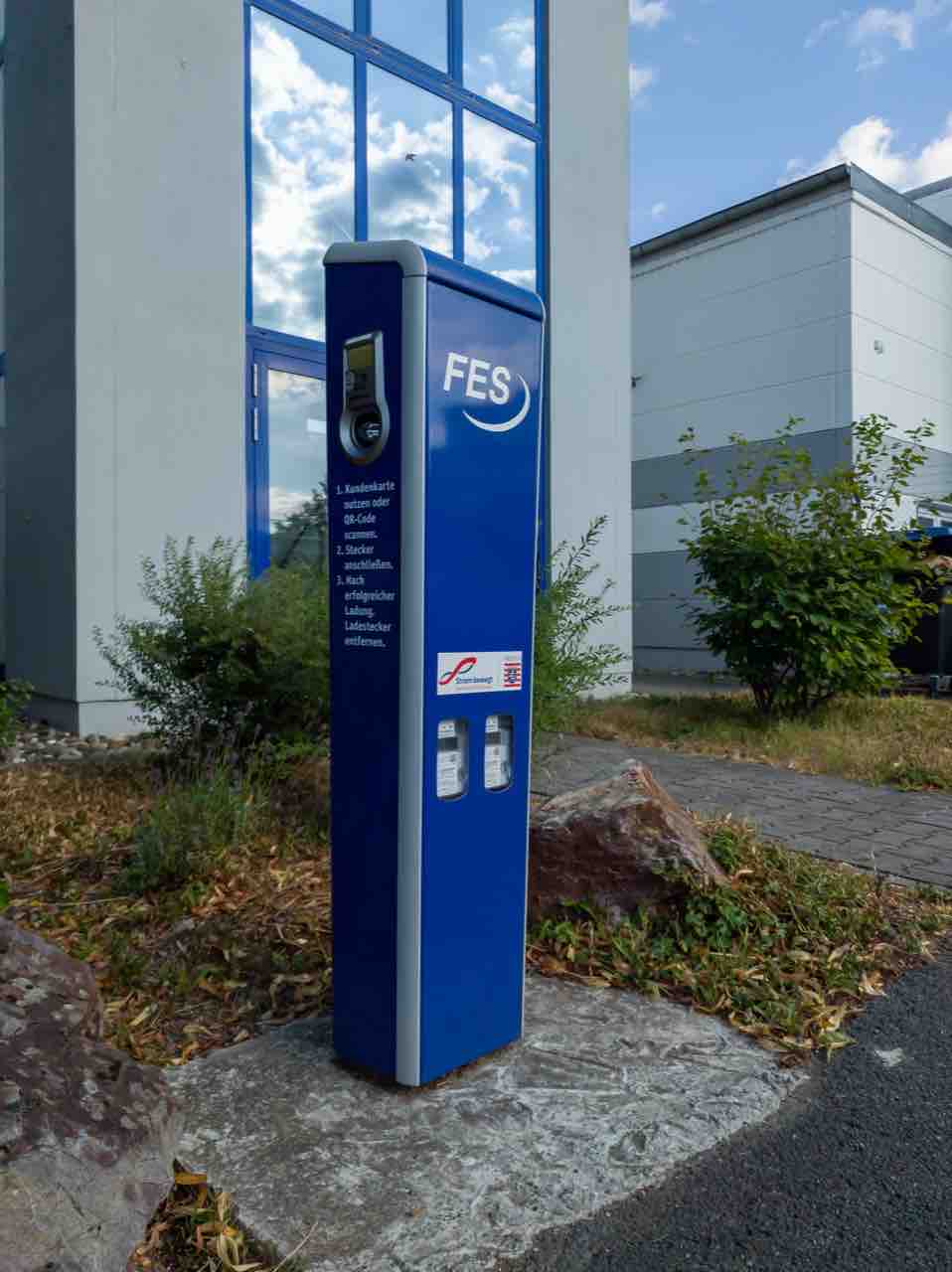
What V2G actually does
Vehicle-to-Grid lets an EV's battery charge when power is cheap and clean, then push energy back to the grid (or a home, in V2H form) when demand peaks. The car stops being a one-way load and becomes a mobile storage unit. For a grid operator, millions of parked cars are a vast, distributed battery that charges and discharges on a predictable daily rhythm.
Thailand is a natural fit. EGAT's own analysis notes that with over 200,000 registered EVs — each carrying roughly 40–80 kWh of battery — even 10% of owners participating in V2G for four hours a day would unlock an estimated 800–1,600 MWh of distributed storage, comparable to a mid-sized grid battery. The country also needs to build on the order of 12,000 MW of new storage capacity over the next 11 years, according to Green Energy Thailand's 2026 grid guide, so every flexible resource counts.
EGAT's smart-grid push
The Electricity Generating Authority of Thailand (EGAT) is accelerating development of a Virtual Power Plant (VPP) and V2G system under its Smart Grid Plan 2022–2031. In EGAT's design, distributed energy resources — solar farms, small wind, biomass, rooftop solar and battery systems — are tied into one AI-and-IoT-controlled network that the National Control Center can dispatch like a single large plant. V2G is the consumer-facing edge of that network: EVs charge normally, then discharge back to the grid during peak demand.
EGAT has already run an early proof of concept: a bidirectional Nissan LEAF paired with a Wallbox Quasar charger at EGAT headquarters, feeding energy back into the building and onward to EGAT's Demand Response Control Center. That pilot ran under the Energy Regulatory Commission's (ERC) Sandbox Phase 2 framework, which lets new energy tech be tested outside normal licensing rules.
The 2026 pilot and the models that can do it
EGAT is planning a 1,000-unit V2H pilot in 2026, built around Thailand's existing time-of-use (TOU) tariffs. Owners of properly equipped cars would charge overnight at cheap rates and discharge to cover household demand during afternoon and evening peaks. The Asian Development Bank (ADB) is supporting EGAT's Vehicle-Grid Integration (VGI) strategy and pilot through technical assistance, including knowledge exchange with V2G programs in the UK, US and Australia.
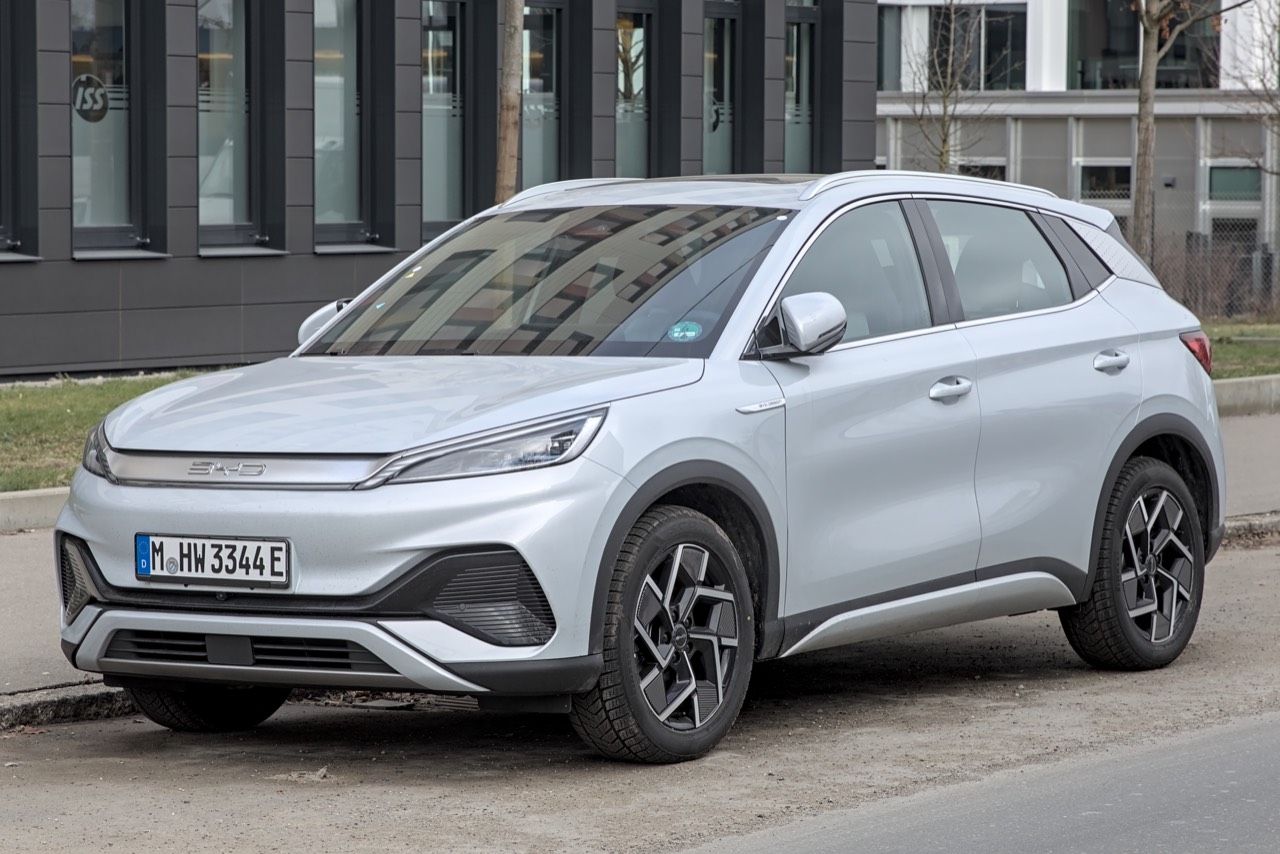
Crucially, the hardware is already on sale. EGAT's engagement with Thai OEMs has surfaced a growing list of bidirectional-capable models available locally, including the BYD Dolphin and Atto 3, MG4, Hyundai Ioniq 6 and Kia EV9. Thailand's Ministry of Energy also backs adoption with subsidies on charging equipment and preferential off-peak electricity tariffs for EV charging.
The real barriers
V2G in Thailand is still a pilot, not a product. The blockers are familiar everywhere the technology has been tried: bidirectional chargers cost more than standard units; owners worry about extra battery cycling and degradation; and there is no established mechanism to pay participants for the energy and grid services they provide beyond sandbox testing. Coordinating the rush of new EV load with intermittent solar and wind also demands advanced metering and demand-response programs EGAT is only now rolling out.
None of that changes the arithmetic. A country adding EVs by the hundreds of thousands each year is also adding gigawatt-hours of mobile storage — and Thailand's grid planner is explicitly treating that as the cheapest battery it will ever build.
China Angle
China, the world's largest EV market, is running its own V2G program on a comparable pilot-to-scale trajectory — useful context for how a policy framework can move the technology from demonstration to everyday use.
- Late 2023: China's National Development and Reform Commission (NDRC) and National Energy Administration (NEA), with other ministries, issued Opinions on Strengthening the Integration and Interaction of New Energy Vehicles with the Power Grid (《关于加强新能源汽车与电网融合互动的实施意见》, 发改能源〔2023〕1721号). It set 2025 targets of building 5+ demonstration cities and 50+ bidirectional charging demonstration projects to validate EVs as mobile electrochemical storage.
- August 2024: the NDRC and partners released the Notice on Promoting Pilot Work for Scaled V2G Application (《关于推动车网互动规模化应用试点工作的通知》, 发改办能源〔2024〕718号), calling for expanded V2G projects and city-level policy mechanisms, with participating V2G projects required to discharge at no less than 500 kW total and at least 100,000 kWh per year.
- April 2, 2025: the first batch of scaled V2G pilots was announced — 9 cities (Shanghai, Changzhou, Hefei, Huaibei, Guangzhou, Shenzhen, Haikou, Chongqing, Kunming) and 30 projects. The 2030 goal is scaled, market-based V2G providing tens of millions of kilowatts of bidirectional flexibility.
- Local price signal: in May 2025 Guangdong province set V2G discharge tariffs — peak around 0.77 yuan/kWh and valley around 0.17 yuan/kWh — creating a clear "charge cheap, discharge dear" arbitrage window for private owners.
The reality is still pilot-scale, not a national rollout. Chinese industry analyses note persistent bottlenecks: an immature tech stack, missing standards, incomplete time-of-use tariff coverage, and weak supporting market mechanisms. Like Thailand, China's grid also faces pressure from intermittent renewables — V2G is positioned as one flexibility tool among many, not a silver bullet.
Sources
- EGAT — VPP and V2G system development: https://www.egat.co.th/home/en?p=20357
- Green Energy Thailand — Energy Storage and Grid in Thailand 2026: https://www.greenenergythailand.com/posts/energy-storage-grid-thailand
- Asian Development Bank — EGAT Vehicle-Grid Integration (VGI) Strategy and Pilot (TA-10759): https://www.developmentaid.org/tenders/view/1612314/ta-10759-reg-accelerating-deployment-of-smart-energy-systems-and-grid-integration-infrastructure-sub
- ASEAN NCAP — EV Adoption and Infrastructure (Thailand V2G pilots): https://www.aseanncap.org/automotive-industry-asean/ev-adoption-and-infrastructure
- China News Service — first batch of V2G pilots (2025-04-02): https://m.chinanews.com/wap/detail/cht/zw/10393193.shtml
- People's Daily / China Energy News — V2G pilot cities and 2030 targets: https://paper.people.com.cn/zgnyb/pad/content/202504/07/content_30067393.html
- China Energy News — V2G bottlenecks and Guangdong tariff (2025): https://www.cnenergynews.cn/article/4OMF3EDMrnn
Image credits: Charging-station and BYD Atto 3 photos — EV & Auto Club archive.
中文简报
泰国正把电动车电池变成「移动储能」来平衡电网。EGAT(泰国国家电力局)在 2022–2031 智能电网计划下推进虚拟电厂(VPP)与 V2G 系统:用 AI/IoT 把分布式光伏、风电、储能聚合成「一个大型电厂」统一调度,电动车平时充电、高峰反送电。早期概念验证用日产 LEAF + Wallbox Quasar 双向桩接入需求响应中心,走 ERC 沙盒二期框架。EGAT 计划在 2026 年做 1000 辆 V2H 试点,依托现有分时电价(夜间充电、午后/晚峰放电);亚开行(ADB)提供技术援助。泰国在售已支持双向充电的车型包括比亚迪海豚/元 PLUS(Atto 3)、MG4、现代 Ioniq 6、起亚 EV9。障碍仍在:双向桩更贵、车主担心电池衰减、缺乏参与方补偿机制。截至 2026 年初泰国注册电动车已超 20 万辆(单车 40–80kWh),若 10% 参与每日 4 小时 V2G,可得约 800–1600 MWh 分布式储能;全国未来 11 年还需新建约 12,000MW 储能。
中国视角:中国是全球最大电动车市场,V2G 同样处于「试点→规模化」路径。2023 年底发改委、能源局等发布《关于加强新能源汽车与电网融合互动的实施意见》(发改能源〔2023〕1721号),提出 2025 年建成 5 个以上示范城市、50 个以上双向充放电示范项目;2024 年 8 月发布《关于推动车网互动规模化应用试点工作的通知》(发改办能源〔2024〕718号);2025 年 4 月 2 日公布首批试点——上海、常州、合肥、淮北、广州、深圳、海口、重庆、昆明 9 城及 30 个项目,2030 年目标规模化、提供千万千瓦级双向灵活性;2025 年 5 月广东出台 V2G 放电电价(峰约 0.77 元/kWh、谷约 0.17 元/kWh)。但中国仍处试点阶段,技术体系与标准、分时电价覆盖、市场机制仍待完善,且同样面临新能源间歇性带来的电网压力。
Zurück zu allen Artikeln · Kommentare auf der interaktiven Seite