Charging an EV in Spain Without a Home Charger: A 2026 Practical Guide
Most Spanish EV drivers do not have a driveway. Apartment living is the norm in Madrid, Barcelona and Valencia, and that means no wallbox by the door and no cheap overnight fill-up. The good news: Spain's public network is large and getting smarter, and new rules are forcing chargers into flat blocks and workplaces. Here is how to run an EV in Spain in 2026 when your only plug is a public one.
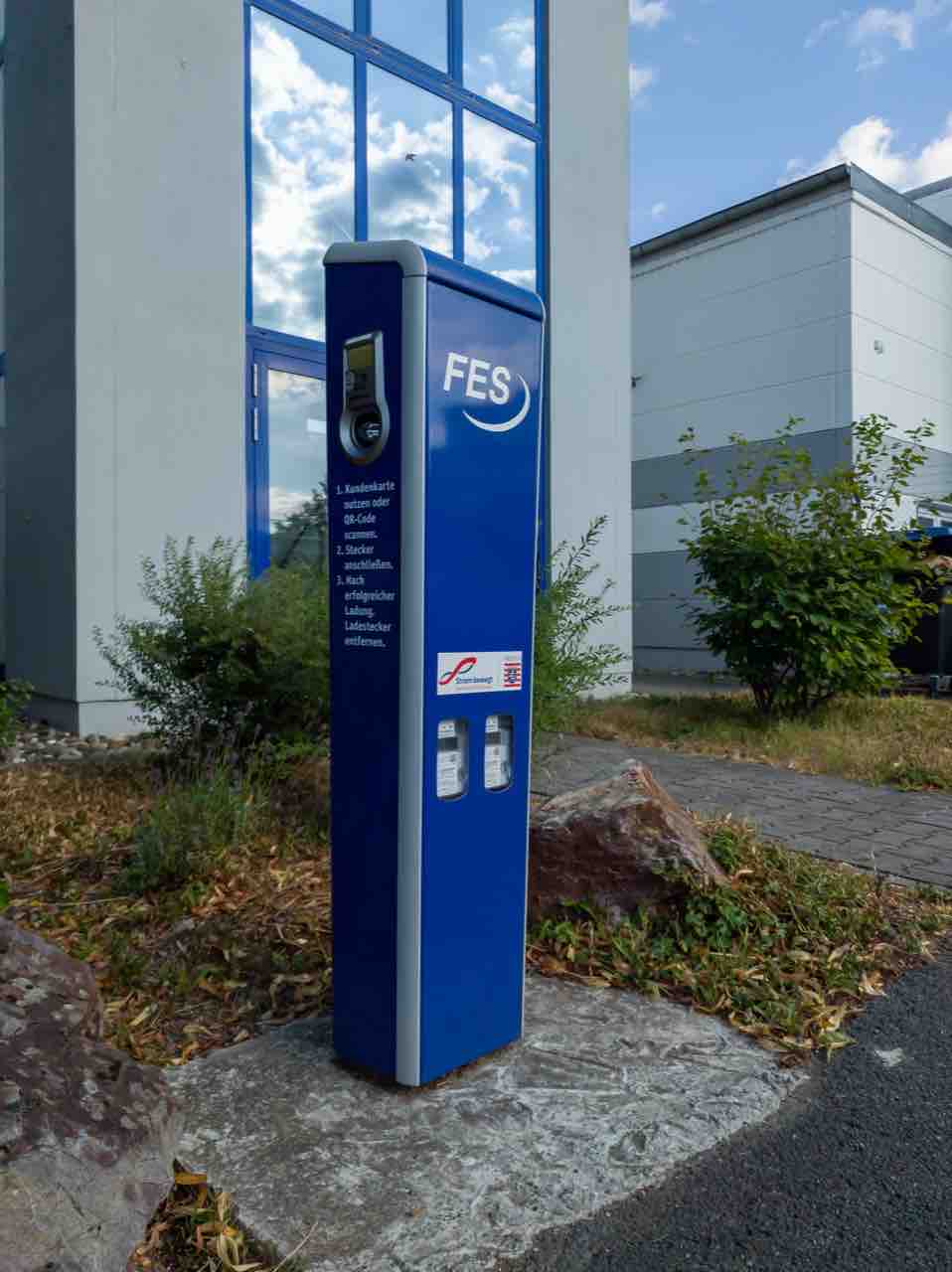
Start with the real numbers
Spain had about 58,075 publicly accessible charging points at the end of the third quarter of 2026, up 2.5% from the prior quarter, according to Anfac's Electromobility Barometer (published Oct 8, 2026). But the same report flags a warning: 17,965 points — 23.6% of everything installed — are not yet operational, held back by faults, poor condition or pending grid-connection permits. If every installed point worked, the network would be 76,040 strong.
Of the live network, only 6,651 points (11.4%) are high-power (≥150 kW); about 68% are 22 kW or less AC, where a full charge can take three hours or more. So the Spanish network is wide but still thin on speed — plan around that.
The REVE map changed the game in September 2026
Spain switched on REVE, a national real-time charging map built by Red Eléctrica and backed by the Ministry for the Ecological Transition (MITECO), on September 14, 2026. It tracks roughly 44,700 points live — location, whether a charger is working, and price. New road signs now point drivers to stations along national roads.
REVE is the practical answer to the government's own complaint that "finding a charger shouldn't depend on luck." Pair it with the operator apps (Iberdrola, Endesa On Your Way) before any trip, because the operator's own app still shows the most reliable live status and lets you book a slot.
Three tiers of coverage — plan the gaps
Spain's network is highly uneven. For route planning:
- Tier 1 (densest): Madrid, Barcelona, Valencia, the Mediterranean AP-7 and the AVE rail corridors — roughly 30–50 km between HPC sites.
- Tier 2 (good): Sevilla, Bilbao, Zaragoza, Málaga and the A-2/A-3/A-4 axes — about 60–90 km between fast chargers.
- Tier 3 (thin): rural Galicia, Extremadura, inner Castilla y León and Pyrenees backroads — up to 120–150 km between fast chargers.
Four regions — Catalonia, Madrid, Andalusia and the Valencian Community — hold close to 59% of all public charging (AEDIVE, July 1, 2026). Use ABRP and pre-load the Iberdrola and Tesla apps before leaving Tier 1.
Paying and what it costs
Since April 2024, EU AFIR rules require contactless card and mobile payments (Visa, Mastercard, Amex, Apple Pay, Google Pay) on every new charger above 50 kW — no app lock-in at the plug. For roaming across operators, a single RFID card (EnBW mobility+, Plugsurfing, Chargemap Pass, Octopus Electroverse) still helps visitors.
Public pricing runs roughly €0.20–0.30/kWh AC, €0.35–0.65/kWh DC, and €0.45–0.65/kWh HPC, with the cheapest ultra-fast often on the Repsol Waylet app. The main networks: Iberdrola (10,000+ points, widest urban AC), Endesa X Way (6,500+, strong on the A-7), Repsol Flexicharge (3,000+ at fuel stations), Tesla Supercharger (65+ CCS-open sites), Ionity (28+ up to 350 kW on key motorway stops), plus Wenea (~4,000), Powerdot (1,500+) and BP Pulse (500+).
The real fix: chargers in flats and workplaces
Public charging is a patch; the durable solution is charging where cars actually sit. The government's draft National Action Framework (Marco de Acción Nacional, MAN) — in public consultation through early October 2026 — would require non-residential car parks with more than 20 spaces to fit one charger per 40 spaces, and state-administration buildings to double that to one per 20. Towns above 50,000 inhabitants must set annual installation targets tied to their Low-Emission Zones. Spanish community-of-owners law already supports residents adding a charger to the building.
Workplace charging is growing too: Endesa alone has installed more than 20,000 private points for businesses and homes. If your employer or building can add a shared AC post, that one connection often beats hunting for a fast charger.
Checklist if you have no driveway
- Ask your community for a shared AC point — it is legally supported and usually cheapest.
- Get a home/community plan from Endesa Drive or Iberdrola rather than relying only on the street.
- Install REVE plus the Iberdrola and Tesla apps before any trip.
- Carry a roaming RFID card for networks your phone app does not cover.
- Charge at work whenever a workplace post is available.
- For Tier-3 trips, plan every leg with ABRP and never trust a single stop — 23.6% of installed chargers are still dead.
China Angle
China shows the opposite default. As of end-August 2026, China had 24.223 million charging "guns" in total — 19.063 million private versus 5.16 million public (National Energy Administration / China EV Charging Infrastructure Promotion Alliance, data released Sept 23, 2026). In other words, Chinese owners charge mostly at home; the apartment-without-a-plug problem that defines Spanish EV life is far smaller there because private, home-installed charging dominates.
On public scale the gap is stark: China's 5.16 million public guns dwarf Spain's ~58,000 public points — roughly 90 times larger. But the two countries share the same weakness: concentration. China's TOP 10 provinces hold 66.2% of public chargers (Guangdong alone ~867,000), mirroring Spain's four-region 59% skew toward wealthy coastal and urban areas. And density is not a cure-all — during China's 2026 National Day holiday, highway charging hit 6.711 million sessions and 163 GWh, with daily volume up 51.4% year on year, so even China's dense network queues at peaks. Both governments are now pushing power and distribution — Spain via AFIR/MAN mandates, China via NEA monitoring and a "build whatever it takes" rollout — rather than chasing raw connector counts.
Takeaway
Spain in 2026 is a "public-charging-first" EV market, and it works if you plan. Lean on REVE, keep a roaming card, and push your building and employer for a shared post — because the charger you use most will never be the one you hunt for on a Sunday trip.
Image credits
- EV charging station: Wikimedia Commons, CC license.
Sources
- Spain public charging points 58,075 (Q3 2026), 23.6% not operational, 6,651 HPC, regional concentration: Anfac Electromobility Barometer via Europa Press, Oct 8, 2026 — https://www.europapress.es/motor/sector-00644/noticia-red-publica-recarga-crece-25-tercer-trimestre-ralentiza-ritmo-respecto-2025-20261008120822.html
- Regional concentration 59% (AEDIVE, July 1, 2026, 56,933 active points): El País — https://motor.elpais.com/coches-electricos/espana-supera-los-56-000-cargadores-para-coches-electricos-pero-viajar-no-es-facil-6-de-cada-10-estan-en-cuatro-comunidades
- REVE real-time map launched Sept 14, 2026; MAN consultation; coverage tiers; AFIR 400/600 kW mandates: Híbridos y Eléctricos — https://www.hibridosyelectricos.com/coches/coche-electrico-sigue-teniendo-problema-en-espana-gobierno-quiere-atajarlo-encontrar-cargador-no-puede-depender-suerte_89315_102.html ; RUSSPAIN — https://russpain.com/news/spain-s-electric-car-charging-map-is-changing-how-drivers-plan-long-trips-96536
- Operator networks, pricing, connector/corridor detail: Travel Information Europe — https://travelinformation.eu/es/espana/puntos-de-carga-ev ; Endesa (network size, ultra-fast, tariffs) — https://www.endesa.com/content/endesa-com/en/press/press-room/news/energy-sector/four-out-of-ten-electric-vehicle-chargers-installed-were-high-power
- China charging: 24.223M total / 5.16M public / 19.063M private, end-Aug 2026 (NEA/EVCIPA, released Sept 23, 2026): National Energy Administration — https://www.nea.gov.cn/20260923/e63286a4c4174cf69bc13a772ae72d5f/c.html ; State Council (gov.cn) — https://big5.www.gov.cn/gate/big5/www.gov.cn/lianbo/202609/content_7081874.htm
- China TOP10 provinces 66.2% / National Day 2026 highway charging 6.711M sessions, 163 GWh, +51.4%: China EV Charging Infrastructure Promotion Alliance (EVCIPA) Aug 2026 run; China.com / China News (中华网), Oct 10, 2026 — https://news.china.com/socialgd/10000169/20261010/49787150_1.html
中文简报
2026年10月20日 · 用车技巧:西班牙无家充如何充电
西班牙多数 EV 车主住在公寓、没有私家车位,本文给出 2026 年实用方案。
要点:
- 截至 2026 年第三季度,西班牙公共充电点约 58,075 个(Anfac 10 月 8 日报告),但 23.6%(17,965 个)已安装却未运营(故障/等待并网);若全运营则为 76,040 个。高速桩(≥150kW)仅 6,651 个(11.4%),约 68% 为 ≤22kW 交流慢充。
- REVE 实时地图于 2026 年 9 月 14 日上线(Red Eléctrica 建设、生态转型部支持),覆盖约 44,700 个点,含位置/可用状态/价格;国道新增指示牌。
- 覆盖分三档:Tier1(马德里/巴塞罗那/瓦伦西亚/AP-7)HPC 间隔 30–50km;Tier2(塞维利亚/毕尔巴鄂等)60–90km;Tier3(农村加利西亚/埃斯特雷马杜拉等)可达 120–150km。四地区占公共充电约 59%。
- 支付:AFIR 规定 2024 年 4 月起 >50kW 新桩须支持contactless;漫游卡(EnBW/Plugsurfing 等)方便跨网。价格约 AC €0.20–0.30/kWh、DC €0.35–0.65、HPC €0.45–0.65。主要运营商:Iberdrola、Endesa X Way、Repsol、Tesla、Ionity 等。
- 根本解法在住宅/职场:MAN 草案拟要求 >20 车位非住宅停车场每 40 位 1 桩、政府楼宇每 20 位 1 桩;社区业主依法可加装。
中国视角:截至 2026 年 8 月底,中国充电基础设施(枪)总数 2422.3 万,其中公共 516.0 万、私人 1906.3 万(国家能源局/中国充电联盟,9 月 23 日发布)——中国以家充为主,公寓无桩问题远小于西班牙。公共规模中国约为西班牙的 90 倍,但同样集中:中国 TOP10 省份占公共桩 66.2%(广东约 86.7 万)。国庆 2026 高速充电 671.1 万次、163GWh、日均 +51.4%,密度也难消峰值排队。两国都在从"拼数量"转向强化功率与布局。
Back to all articles · View comments & share on the interactive page