No Home Charger in Germany? How Apartment Residents Charge an EV in 2026
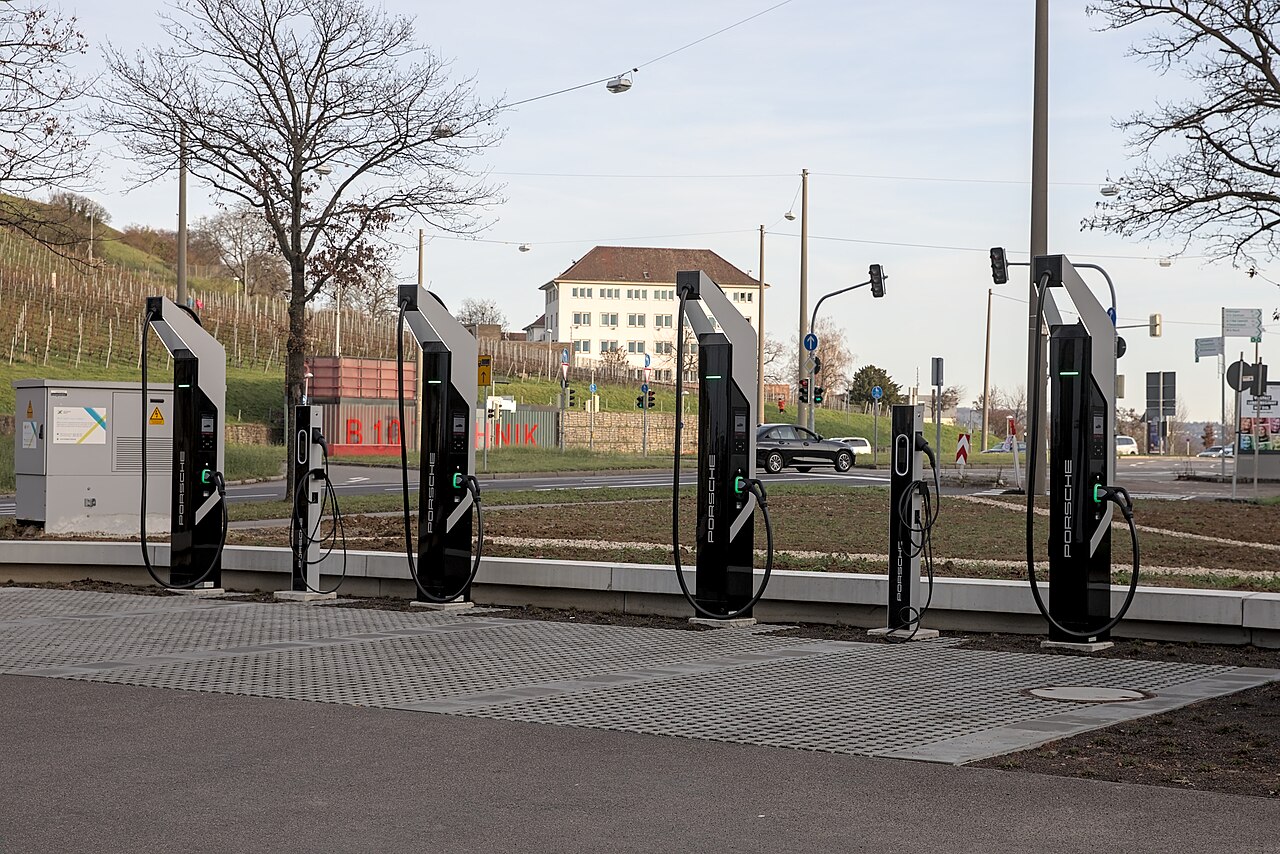
Around half of Germans live in apartments (Mehrfamilienhäuser), not single-family homes — which means no driveway and no private wallbox. If you are considering an EV but have no charger at home, the good news is that 2026 is the easiest year yet to make it work. Germany now runs one of the world's largest public charging networks, tenants gained a legal right to install chargers, and a new federal subsidy specifically targets apartment-building charging. Here is the practical playbook.
The network is bigger than you think
Germany's federal grid regulator (Bundesnetzagentur) counted 196,353 public charging points in operation as of 1 February 2026 — about 146,000 AC "normal" points and nearly 50,000 DC fast points — and independent trackers reported the network crossing the 200,000-point mark by April 2026. That is roughly a sevenfold increase since 2020. In most towns you are within a short walk or a shopping trip of a charger.
Practical takeaway: most city drivers cover 90% of trips with a public AC point a 5–10 minute walk away, plus charging while shopping or at work. You do not need a home wallbox to own an EV.
Know the cost gap — and close it
The biggest surprise for new EV drivers is the price gap between home and public electricity:
- Home charging averages about 37 ct/kWh on a standard German grid tariff (BDEW, 2026).
- Public DC/HPC ad-hoc rates typically run 69–99 ct/kWh — roughly 2–3× the home price.
To avoid paying top rate every time:
- Get a subscription tarif on the network you use most. Ionity Passport Power (≈€11.99/mo) and Aral pulse Extra (≈€2.99/mo) both bring per-kWh prices into the low-to-mid 40s, versus 70–99 ct ad-hoc.
- Since 1 July 2024, new public chargers must accept contactless card payment — so you are never stranded without an app, though you pay the highest ad-hoc rate that way.
- Keep one roaming app (EnBW mobility+, Allego, or ADAC e-Charge for members) as a fallback.
Avoid the Blockiergebühr
A Blockiergebühr is an idle penalty charged once charging is done but you stay plugged in. EnBW charges 10 ct/min after 4 hours (capped at €12); Tesla's Supercharger grace period is just 5 minutes. Set a "charge complete" alert and move the car promptly — it is the fastest way to annoy fellow drivers and rack up fees.
You have a right to charge at home (if your landlord agrees)
Under §554 BGB (since 2020), tenants in Germany have a legal right to request a charger installation. The landlord can set conditions (certified electrician, approved models) but cannot refuse without a valid reason. You generally pay for the electricity via a sub-meter, and you are expected to remove the unit when you move out — though many landlords accept it staying in place (get that in writing).
New 2026 federal money for apartment charging
On 25 March 2026, Transport Minister Patrick Schnieder announced a €500 million program to fund EV charging in multifamily buildings. Key points:
- Up to €1,500 per standard wallbox, up to €2,000 for bidirectional (vehicle-to-home) capable points.
- 22 kW power cap per point.
- Application window: 15 April – 10 November 2026 via the federal transport ministry portal.
- Eligible applicants: owners' associations, landlords, housing companies, and real-estate firms.
For shared building solutions, KfW 441 funding (up to 70% grant) can also apply, and employers may fund a charger for you tax-free up to €1,000/year. Ask your employer before assuming public charging is your only option.
A quick decision checklist
- Daily driving < 40 km and a charger within walking distance? → Public AC + a subscription is enough.
- Long commute, no charger at work? → Push for a building wallbox (§554 BGB + the 2026 subsidy); ask your employer about workplace charging.
- Frequent road trips? → Use HPC networks (Ionity, Aral pulse, Tesla) with a subscription; precondition the battery on the way.
China Angle
As a Chinese writer who also covers the domestic market, the contrast is striking. China solved apartment charging largely through top-down "充电桩进小区" (charging-pile-into-residential-communities) mandates and ubiquitous, cheap home/slow charging — public AC is often the backup, not the primary method, and residential communities routinely pre-wire parking spaces. Germany's model is more bottom-up: a legal tenant right (§554 BGB), a growing market of roaming apps, and now a targeted 2026 subsidy to retro-fit older apartment stock. Both routes converge on the same truth — EV adoption stalls on charging access, not on the cars themselves — and Germany's 200,000-point network plus the new multifamily subsidy finally closes the apartment-dweller gap that held adoption back for years.
Sources
Back to all articles · View comments & share on the interactive page