Why LFP Batteries Are the Right Call for Cambodia's Heat
Cambodia sits in the tropics, where ambient temperatures run 28–35°C for most of the year and parked cars bake in 50–60°C cabins. For an EV buyer here, the battery chemistry under the floor matters at least as much as the sticker price. The short version: lithium iron phosphate (LFP) is the safer, longer-lived and cheaper choice in this climate, and it is exactly what most Chinese-built EVs sold in Cambodia already use.
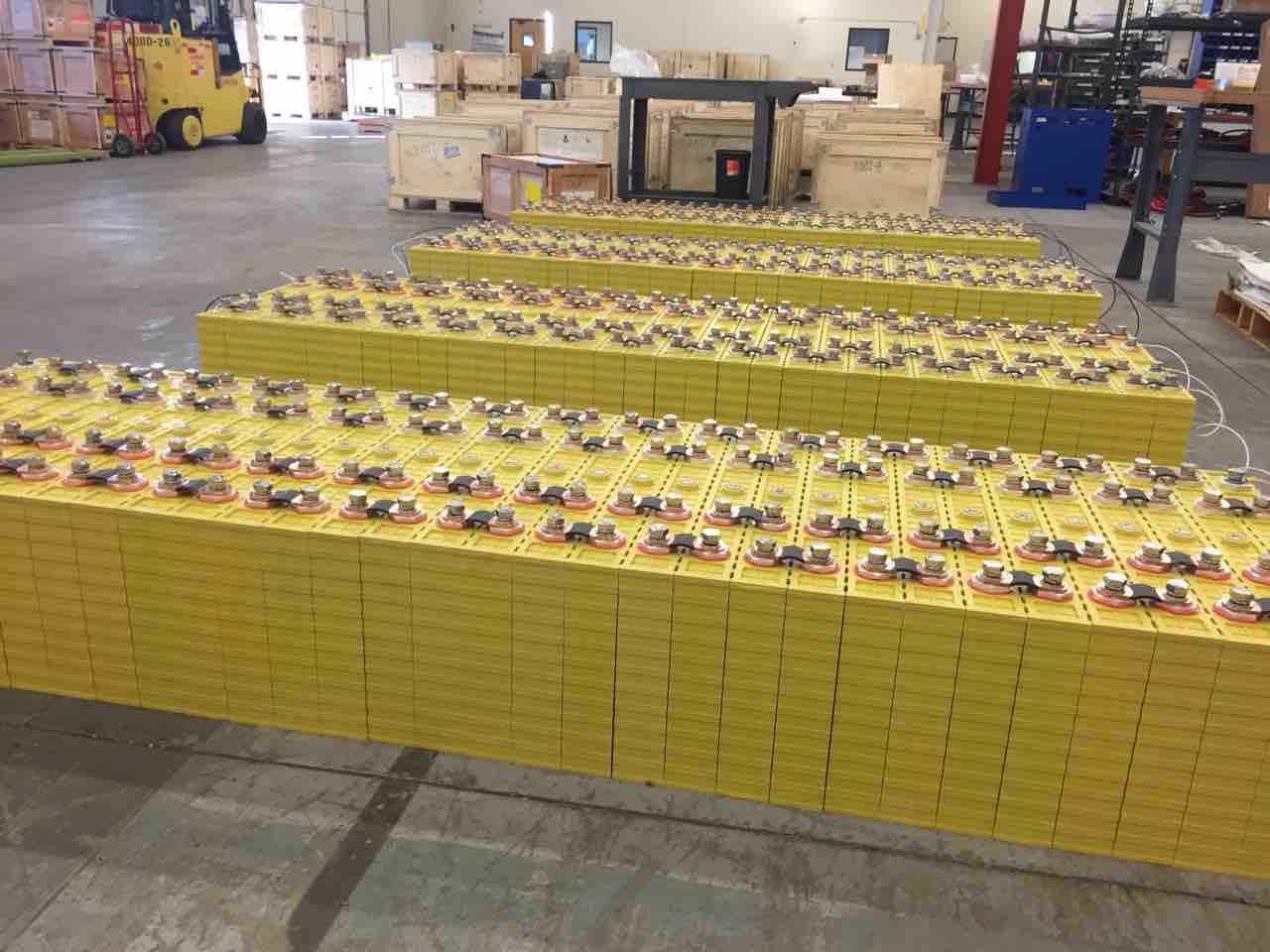
Why chemistry matters more in the tropics
All lithium-ion cells degrade faster in heat, but they do not degrade equally. LFP's olivine crystal structure is far more thermally stable than the layered structure of nickel-manganese-cobalt (NMC). In practical terms, that means an LFP pack resists overheating, needs less aggressive (energy-hungry) cooling, and simply wears out more slowly when it soaks in a hot parking lot day after day.
LFP's heat advantage, in numbers
The safety margin is the headline difference. Thermal runaway — the self-sustaining overheating that can lead to a battery fire — begins at roughly 270°C for LFP but only around 180–210°C for NMC. In a country where vehicles sit in direct tropical sun, that ~60–90°C cushion is a real safety feature, not a spec-sheet footnote.
Longevity is the second win. Multiple battery guides report that LFP degrades 40–50% slower than NMC in sustained heat, with cycle life to 80% state of health of roughly 3,000–4,000 cycles versus 1,000–2,000 for NMC. Real-world data backs it up: a BYD Atto 3 with an LFP pack retained about 92% capacity after 100,000 km over three years in Thailand (WinMinCar climate guide). For a Cambodian owner who keeps a car five to eight years, that gap translates directly into a pack that is still healthy when the warranty ends.
What it means for Cambodia buyers
Most affordable EVs imported into Cambodia — BYD Dolphin and Atto 3, MG4, Wuling models, and many e-two-wheelers — are built on LFP. That is good news on three fronts:
- Safety: a higher thermal-runaway threshold means lower fire risk in extreme heat and during DC fast charging, the hottest thing an EV battery ever does.
- Cost: LFP cells are roughly 20–30% cheaper than NMC, which is a big reason sub-$30,000 EVs are reachable in the Cambodian market.
- Warranty reality: Cambodian-market EVs typically carry an 8-year / 160,000 km battery warranty (matching regional norms). LFP's slower fade means more packs will still clear the ~70% state-of-health line at the end of that window.
The trade-off is energy density: LFP packs are heavier for the same range, so long-range premium models sometimes use NMC. For Cambodia's city-and-highway mix, LFP's strengths outweigh that downside.
The one LFP quirk to know
LFP has a flat discharge curve, which makes state-of-charge estimation harder for the battery management system. Many LFP EVs therefore recommend a weekly 100% charge so the BMS can recalibrate. The fix is trivial — just charge to full once a week — but ignoring it can make the displayed range drift. The other quirk is cold performance: LFP loses more range in low temperatures than NMC, which is irrelevant in Cambodia but worth knowing if you drive to upland provinces in cool season.
China Angle
China is the reason LFP is cheap and ubiquitous. As of the first seven months of 2026, LFP chemistry accounted for 81.7% of China's newly installed traction batteries (China Battery Industry Association, reported by 经济日报 in October 2026). CATL and BYD — the two largest LFP cell suppliers globally — drive that scale; BYD's Blade Battery (2020) turned cell-to-pack LFP into a mass-market standard. That domestic volume is what lets Chinese makers export low-cost LFP EVs to markets like Cambodia.
China is not without its own challenges, and they are worth noting for balance: a rapidly growing fleet is straining local grids in some provinces, and the power-battery recycling chain is already running into overcapacity ("hunger" for feedstock) even as retirements rise (经济日报, October 2026). Those are the same scaling pains any fast-electrifying market eventually faces.
Sources
- WinMinCar — LFP vs NMC Battery Chemistry Climate Guide: https://winmincar.com/ar/news/lfp-vs-nmc-battery-chemistry-climate-guide
- LithoTop — Hot Climate Battery Guide (LFP vs NMC thermal runaway ~270°C vs ~210°C): https://litopbatteries.com/hot-climate-battery-guide-lfp-or-nmc-for-desert-and-tropical-areas
- 经济日报 / 中国经营报 via 中国经济网 — 动力电池回收"吃不饱" (LFP 81.7% H1 2026, recycling overcapacity): https://auto.ce.cn/auto/gundong/202610/t20261012_3254919.shtml
- BSLBATT — What battery system suits high-temperature climates: https://www.bsl-battery.com/zh-TW/news/what-battery-system-is-suitable-for-high-temperature-climates/
中文简报
磷酸铁锂(LFP)电池更适合柬埔寨常年 28–35°C 的高温气候:热失控阈值约 270°C,远高于三元(NMC)的 180–210°C;持续高温下衰减比 NMC 慢 40–50%,循环寿命约 3000–4000 次至 80% 健康度(NMC 约 1000–2000 次);泰国 BYD Atto 3(LFP)10 万公里/3 年仍保持约 92% 容量。柬埔寨在售的 BYD、MG、五菱等平价 EV 多为 LFP,安全性与成本更优,保修普遍 8 年/16 万公里。小贴士:LFP 建议每周满充一次以便 BMS 校准。中国视角:2026 年前 7 个月中国 LFP 占新装车动力电池 81.7%(中国电池工业协会,经济日报 2026-10);宁德时代与比亚迪为全球最大 LFP 供应商;中国同样面临电网压力与回收产能过剩问题。
Back to all articles · View comments & share on the interactive page