Cambodia EV Charging in 2026: Sparse Public Network, Home-Charging Default, and Why LFP Batteries Fit the Heat
Cambodia's electric-vehicle story in 2026 is less about futuristic showrooms and more about a hard infrastructure scramble: a still-thin public charging network, a state utility racing to keep the grid ready, and a car parc that mostly recharges at home. This explainer maps who is actually building Cambodia's chargers, why most drivers still plug in privately, and why lithium iron phosphate (LFP) chemistry — not the headline-grabbing long-range NMC packs — is the engineering match for Cambodia's heat and rough roads.
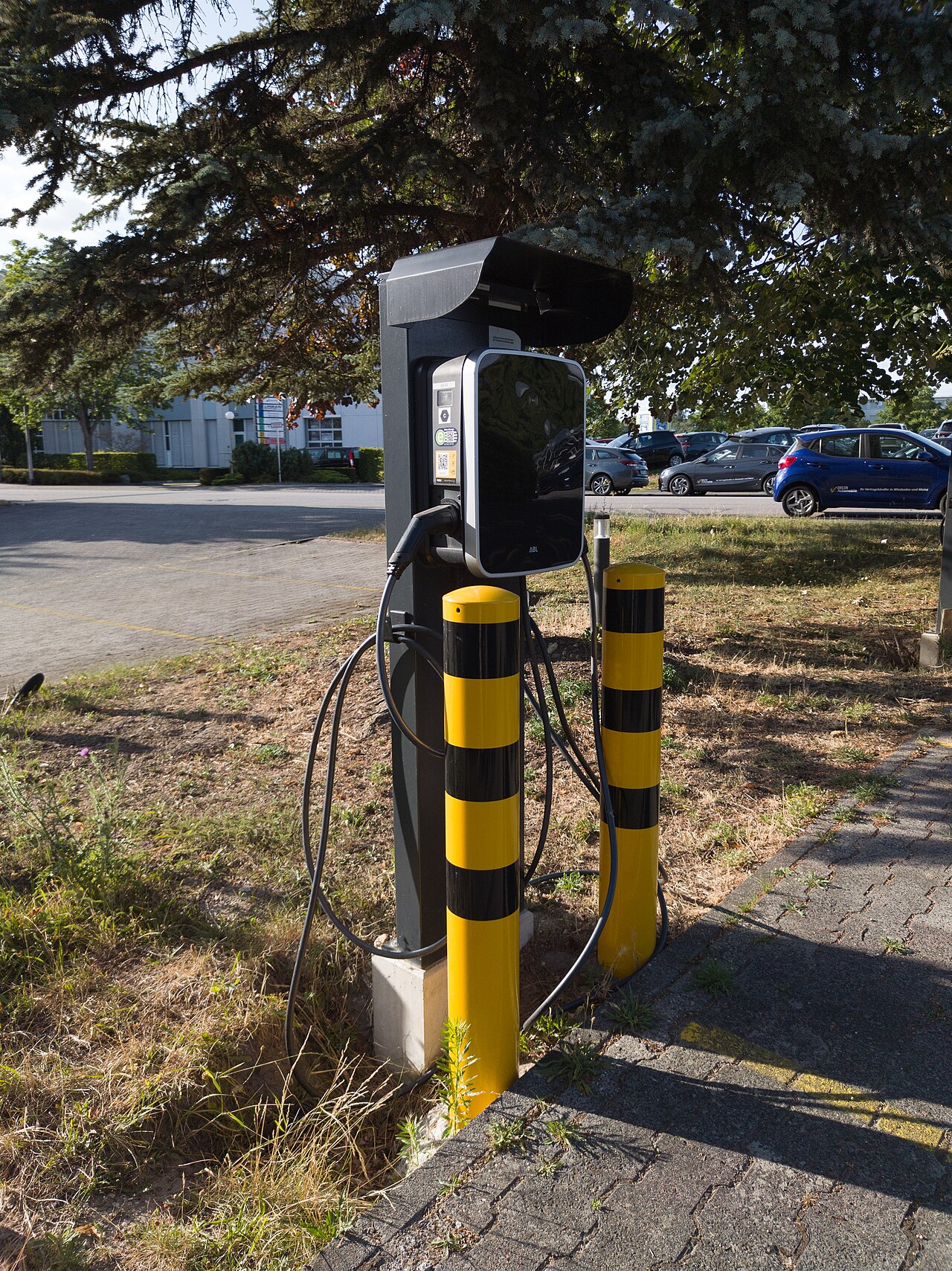
The network: small but growing fast
As of September 2026, Cambodia's public charging footprint is still modest. The Electricity Authority of Cambodia (EAC) reported more than 400 charging sites nationwide, with its national EV-charging app listing 460 machines as of September 15, 2026. For context, registered EVs had passed 22,793 units by August 2026 (16,926 cars, 4,974 motorcycles, 893 three-wheelers), per the Ministry of Public Works and Transport — so the fleet is growing faster than the plugs.
The state power utility Electricité du Cambodge (EDC) says it has supported the electricity supply infrastructure for more than 400 charging stations, and in May 2026 the government allocated an initial US$10 million for EDC to expand the public network, prioritising public areas and underserved provinces. EDC's remit is as much about the grid as the chargers: some sites draw factory-scale power, so transformers and feeder upgrades along national highways come first.
Who is building it
- EDC / government: the backbone. EDC integrates stations to the grid and targets 20–30 minute fast-charging on major corridors; the Ministry of Mines and Energy coordinates the national rollout.
- ZO Motors: the most visible private builder. It committed to 300 fast-charging stations — 30 in 2025, ~200 in 2026, 70 in 2027 — anchored by a flagship Phnom Penh site opened January 2026.
- Auto-brand chargers: BYD and other Chinese brands run chargers at malls (e.g. Aeon) and fuel-retail partnerships, largely on CCS2 and GB/T standards.
- Battery swap for two-wheelers: Singapore-based Oyika runs a swap network in Phnom Penh where a depleted pack is exchanged in under a minute — a pragmatic answer where public car-chargers are scarce.
- The EAC national app: launched to let drivers locate, start and pay across operator networks from one interface.
The home-charging default
Despite the build-out, the practical Cambodian EV is charged at home or at the workplace. Public chargers remain concentrated in Phnom Penh and a few provincial hubs; cross-province confidence is improving but early adopters still treat public DC fast-charging as a road-trip convenience rather than a daily habit. For the country's huge two-wheeler base, the dominant model is even simpler: a wall socket overnight, or a swapped battery — public chargers are not the binding constraint for e-bikes.
Why LFP suits Cambodia
Cambodia's operating environment — year-round 35–40 °C heat, monsoon flooding, and roads that punish suspension and batteries alike — favours LFP over higher-energy NMC/NCA chemistry:
- Thermal stability: LFP is inherently far less prone to thermal runaway. In a 40 °C Phnom Penh traffic jam, an LFP pack (such as BYD's Blade) dissipates heat passively and degrades slower than an NMC pack that must run active liquid cooling just to stay safe.
- Cycle life and toughness: LFP typically delivers 2,000–4,000+ cycles, shrugging off the deep daily discharges and vibration of potholed provincial routes better than denser chemistries.
- Chemistry already on the road: most EVs and e-bikes sold in Cambodia are Chinese brands, and LFP is now the Chinese-market default — so the cells best suited to the climate are also the ones most available locally.
China Angle
From where I sit in China, Cambodia's 400-odd charging locations look like a single mid-sized Chinese district. China crossed 3 million public chargers years ago and now runs a dense, app-unified ultra-fast network — you can fast-charge in almost any underground car park, highway service area, or county town, often at 250–480 kW. LFP is no niche here either: it is the mainstream chemistry powering everything from BYD's Blade to the bulk of China's electric two-wheelers, precisely because it is cheap, safe in heat, and long-lived.
What strikes me is not how far behind Cambodia is, but how rationally it is choosing its tech. Cambodia cannot copy China's blanket build-out overnight, so it leans on home charging + swappable LFP two-wheelers + a thin but strategically placed fast-charging spine. That is the right fit for a hot, grid-constrained, two-wheeler-first market — and the LFP chemistry Chinese makers have perfected is exactly what the climate demands.
Sources
- Kampuchea Thmey Daily — Cambodia's registered EVs surpass 22,000 as charging network tops 400 locations (Sep 17, 2026)
- Khmer Times — Cambodia to Expand EV Charging Stations Nationwide (ZO Motors, EDC, $10M)
- Vietnam+ / Vietnam News Agency — Cambodia moves to keep pace with growing EV market (EDC 400+ stations, $10M)
- Phnom Penh Post — Singapore company to expand battery-share idea to rural Cambodia (Oyika swap)
Image credits
Photo: "Electric vehicle charging station, Wiesbaden" by ABL, via Wikimedia Commons — https://commons.wikimedia.org/wiki/File:Electric_vehicle_charging_station,_Wiesbaden_(LRM_20250711_185218).jpg
Back to all articles · View comments & share on the interactive page