The Solid-State Battery's Impossible Triangle: Energy Density vs Charge Performance vs Cost
Solid-state batteries are the industry's promised "final answer" — higher energy density, non-flammable electrolyte, and the poster child for the next generation of EVs. The uncomfortable reality is that the technology is still at TRL 4 (laboratory validation), its fast-charging performance is currently worse than liquid-electrolyte cells, and its cost is 6–8x higher. This article breaks down why the first wave of solid-state batteries may end up in the wrong cars, and why the real race is not about chemistry breakthroughs but about making the chemistry cheap, reliable, and fast enough to matter.
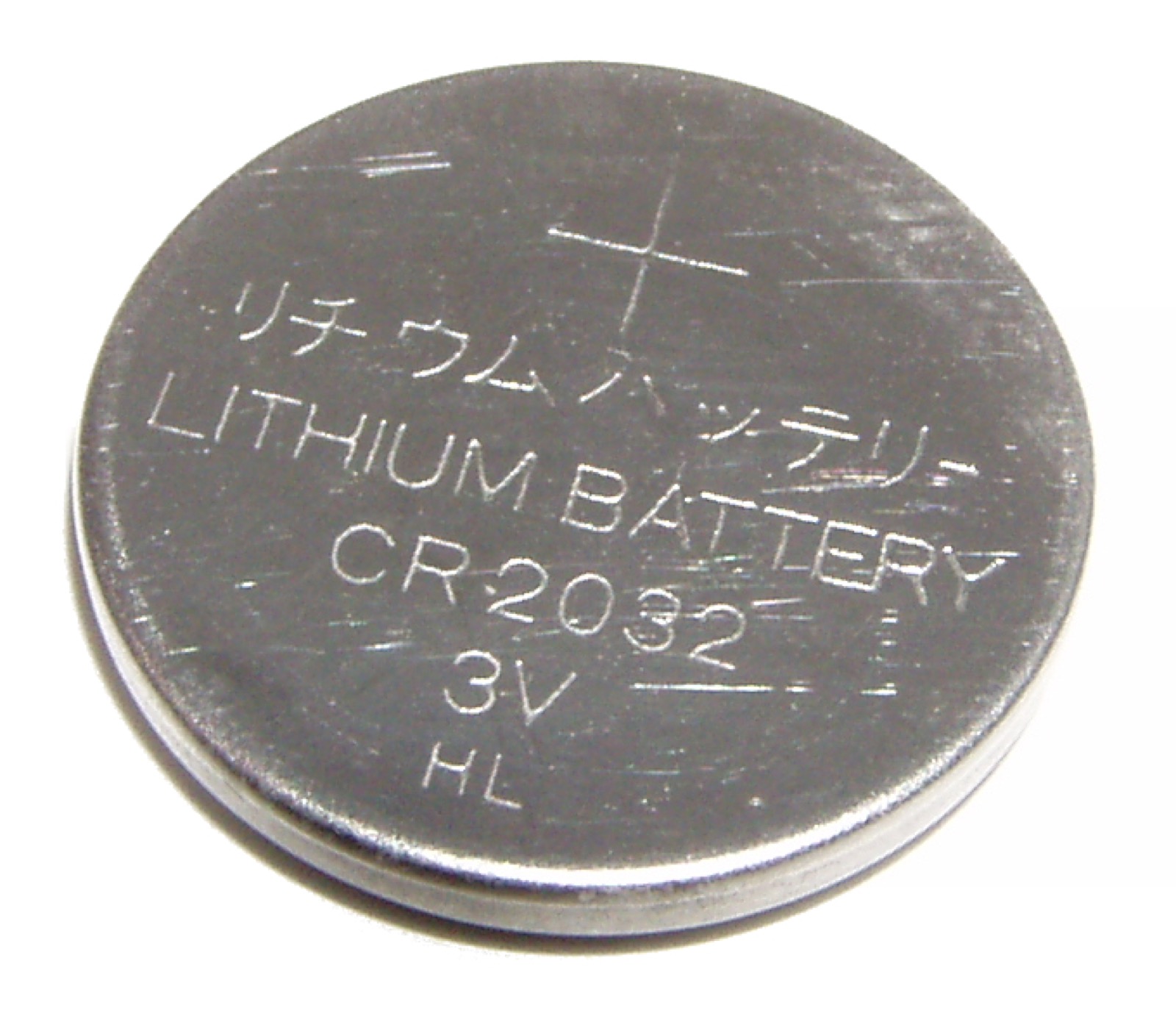 A lithium cell — the building block whose electrolyte (liquid vs. solid) defines the 'impossible triangle.' (Image: Wikimedia Commons, public domain)
The Glare and the Awkwardness
Solid-state batteries are widely regarded as the ultimate solution for next-generation battery technology. Their theoretical energy density far exceeds liquid lithium-ion cells, and safety improves dramatically because the solid electrolyte is non-flammable. But when a technology is burdened with great expectations, it also faces the harshest reality checks.
As of 2026, the technology readiness level (TRL) of all-solid-state batteries is still around 4 — laboratory-scale principle validation, not production engineering. Their greatest strength is energy density and safety; their most glaring weakness is charge/discharge performance, especially high-rate fast charging.
The academic research points to a fundamental cause: the solid–solid interface problem. In liquid cells, the electrolyte and electrodes are in intimate contact. In a solid-state cell, every charge/discharge cycle causes the solid electrolyte and solid electrode to expand and contract — and after repeated cycles, microscopic gaps appear, like cracks forming between two stones. Once those gaps form, lithium ions struggle to cross the interface. The interface impedance worsens polarization during fast charging, current concentrates unevenly, and reactions become non-uniform — severely limiting fast charge/discharge performance. As cycle count climbs, internal cracking in the electrodes compounds the problem.
This creates an awkward irony: the best use case for solid-state batteries — premium, long-range vehicles — is precisely the segment least tolerant of slower charging. A customer paying top dollar for a flagship EV expects faster charging, not slower.
The First Wave: Premium Cars Caught in an Identity Trap
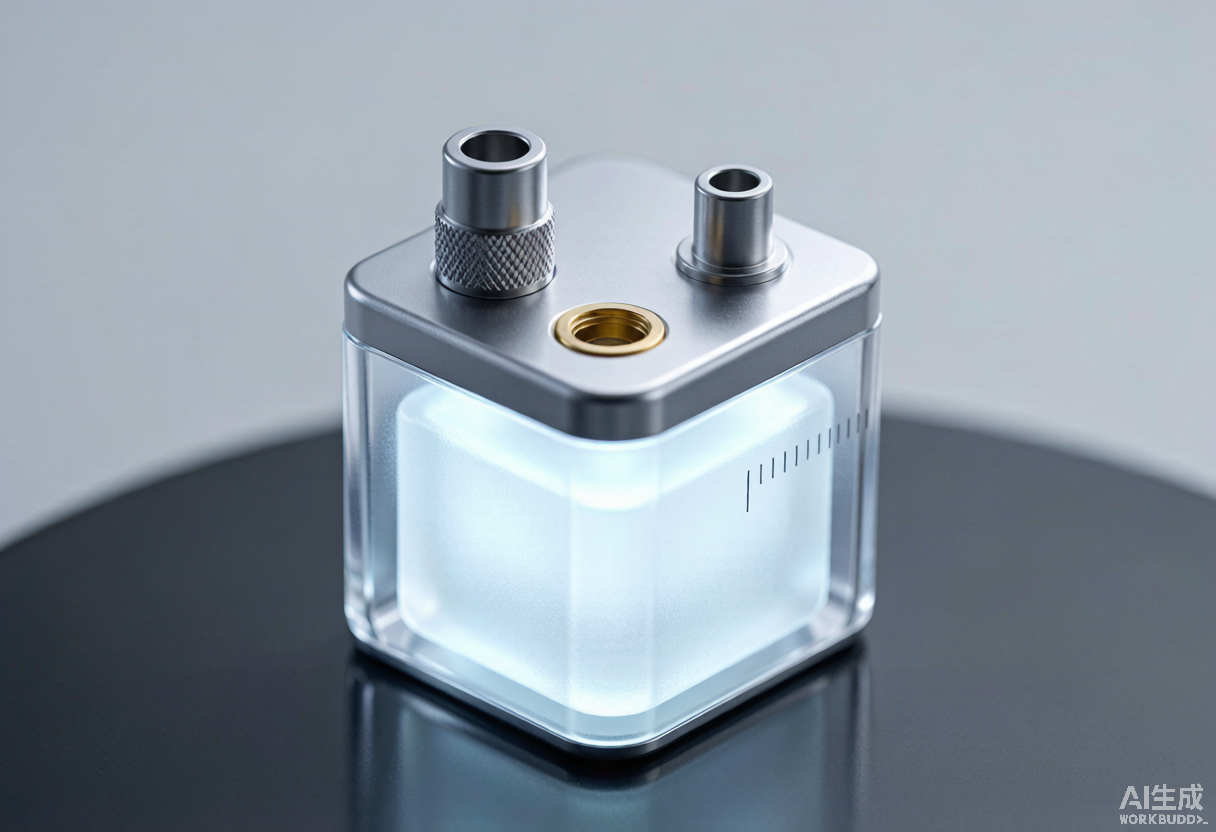 Solid-state battery concept illustration. (Image: EV & Auto Club)
Cost dictates that solid-state batteries must debut in premium vehicles. According to industry estimates (Huatai Securities), the comprehensive cost of all-solid-state cells is currently 6–8x that of conventional liquid cells. The core driver is the sulfide electrolyte: lithium sulfide (Li₂S) costs around RMB 2–3 million per tonne, while LiPF₆ — the key salt in liquid electrolytes — costs only about RMB 100,000 per tonne. That single material can represent 50–64% of an all-solid-state cell's total cost.
Even the most optimistic forecasts put all-solid-state cells at RMB 1.6–2.2 per Wh today (vs. RMB 0.39–0.5/Wh for LFP), with a path to roughly RMB 1/Wh only around 2028–2030, assuming lithium sulfide falls to ~RMB 500,000/tonne and the electrolyte to ~RMB 300,000/tonne. Production lines also cost 3–5x more per GWh than liquid lines, and yield rates on pilot lines hover below 70% — versus 95%+ for mature liquid cells. At those yields, every battery maker loses money on every cell.
This produces a closed-loop contradiction:
- Solid-state cells are expensive, so they must debut in premium vehicles (often six-figure price tags), where buyers' performance expectations are highest;
- But current solid-state charge rates are unimpressive, and real fast-charging power is limited. Existing 800V platforms are tuned for liquid or semi-solid cells; achieving 4C+ supercharging with all-solid cells still awaits material-science and interface-engineering breakthroughs;
- Premium buyers will not accept "pay more, charge slower."
The marketing claim of "500 km in five minutes" is far ahead of today's engineering reality. Chery has announced its Rhino S all-solid-state battery and 1.2 MW (1200 kW) Xunlong "second-fast-charge" technology — 8 minutes for ~500 km on paper — with pilot vehicle validation targeted for 2027. But industry insiders have been candid: whether an 800V platform can support the cell's fast-charging capability is an unproven question. Between lab data and mass production lie yield, process, and supply-chain hurdles.
The Cathode Dilemma: Ternary Lithium or LFP?
Another pivotal choice is the cathode chemistry, which directly affects safety, energy density, and cost.
If the industry stays on ternary lithium (NCM/NCA):
The solid electrolyte's non-flammability neatly solves ternary's historic safety problem, so early solid-state cells will very likely pair with high-nickel NCM cathodes to maximize the energy-density advantage. But two issues follow:
- Cost: nickel and cobalt are expensive, pushing an already-expensive solid-state cell higher;
- Supply chain: global nickel/cobalt resources are geographically concentrated; geopolitical and mineral-supply risks persist.
If the industry pivots toward LFP-family chemistries:
Longer term, lithium-rich manganese-based (LMR) cathodes are regarded as the ideal match for all-solid-state cells. LMR offers a theoretical specific capacity of up to ~320 mAh/g with a voltage window of 3.7–4.6 V — significantly higher than conventional NCM or LFP — while holding a cost advantage: raw-material costs roughly 15–20% lower than ternary, and watt-hour cost close to LFP. The significance of this route: precisely because the solid electrolyte permits a higher voltage window safely, the industry can abandon the ternary system entirely and move toward a low-cost, high-voltage, high-capacity direction.
The likely cathode evolution path:
- Short term (2027–2030): high-nickel NCM — quickly harvests the energy-density advantage with a relatively mature supply chain;
- Mid term (2030–2035): LMR / ultra-high-nickel — cost optimization, shedding nickel–cobalt dependence.
Chery's Rhino S already points this way: its announced all-solid-state module uses an in-situ polymerized electrolyte with a lithium-rich manganese-based cathode and claims up to 600 Wh/kg cell energy density.
Conclusion: Commercialization Is a Long-Distance Race
Commercializing solid-state batteries confronts three simultaneous challenges — cost, charge/discharge rate, and cathode chemistry — which form a "impossible triangle" that cannot be satisfied at once.
| Dimension | Status (2026) | Challenge |
|---|---|---|
| Cost | 6–8x liquid cells | Lithium sulfide (Li₂S) at RMB 2–3M/tonne dominates cell cost |
| Charge/discharge rate | Fast-charge power limited | Solid–solid interface impedance; performance degrades over cycles |
| Cathode chemistry | High-nickel NCM dominant | Cost pressure; nickel/cobalt supply-chain risk |
The leading players' mass-production timelines are strikingly consistent: CATL and BYD both anchor large-scale production around 2030, with 2026–2027 being only small-batch validation. Geely's chief strategy officer has said that from validation to scale production, three hurdles — yield, cost, and supply-chain maturity — remain, and that "3–4 years to mass production is a responsible estimate."
The real revolution in solid-state batteries is not about whether they "get into a car" in some particular year — it is about when they become "good and cheap." Until then, liquid lithium-ion cells — improved via CTP/CTC structural innovation and materials optimization — will keep dominating the market. Solid-state batteries' early applications may fit better in segments that are cost-insensitive and tolerant of slower charging, such as aviation (eVTOL), energy storage, and robotics — not premium family EVs.
Sources: Huatai Securities cost analysis of all-solid-state cells (sulfide route); Gotion High-Tech 2026 Global Technology Conference materials (electrolyte cost structure, lithium sulfide pricing); industry reporting on solid-state TRL and mass-production timelines (CATL/BYD anchoring around 2030); Chery Global Innovation Conference 2025 (Rhino S all-solid-state module, in-situ polymerized electrolyte, LMR cathode, 600 Wh/kg target, Xunlong 1.2 MW fast-charge); high-moisture-content engineering reports on solid–solid interface challenges. Cover image: lithium-ion coin cells in a laboratory test fixture — photo by Chingo K, Wikimedia Commons, CC BY 4.0 (representative of battery R&D, not a specific solid-state cell).
Back to all articles · View comments & share on the interactive page