Road-Tripping Japan by EV in 2026: Chargers, Apps, and the CHAdeMO Reality
Japan is one of the easiest places in the world to own an EV at home — and one of the trickier ones to drive across on public power. The network is dense but shaped by a decade of CHAdeMO history, expressway time limits, and a payment landscape that still rewards planning. Here is a practical 2026 playbook for a long Japan EV trip.
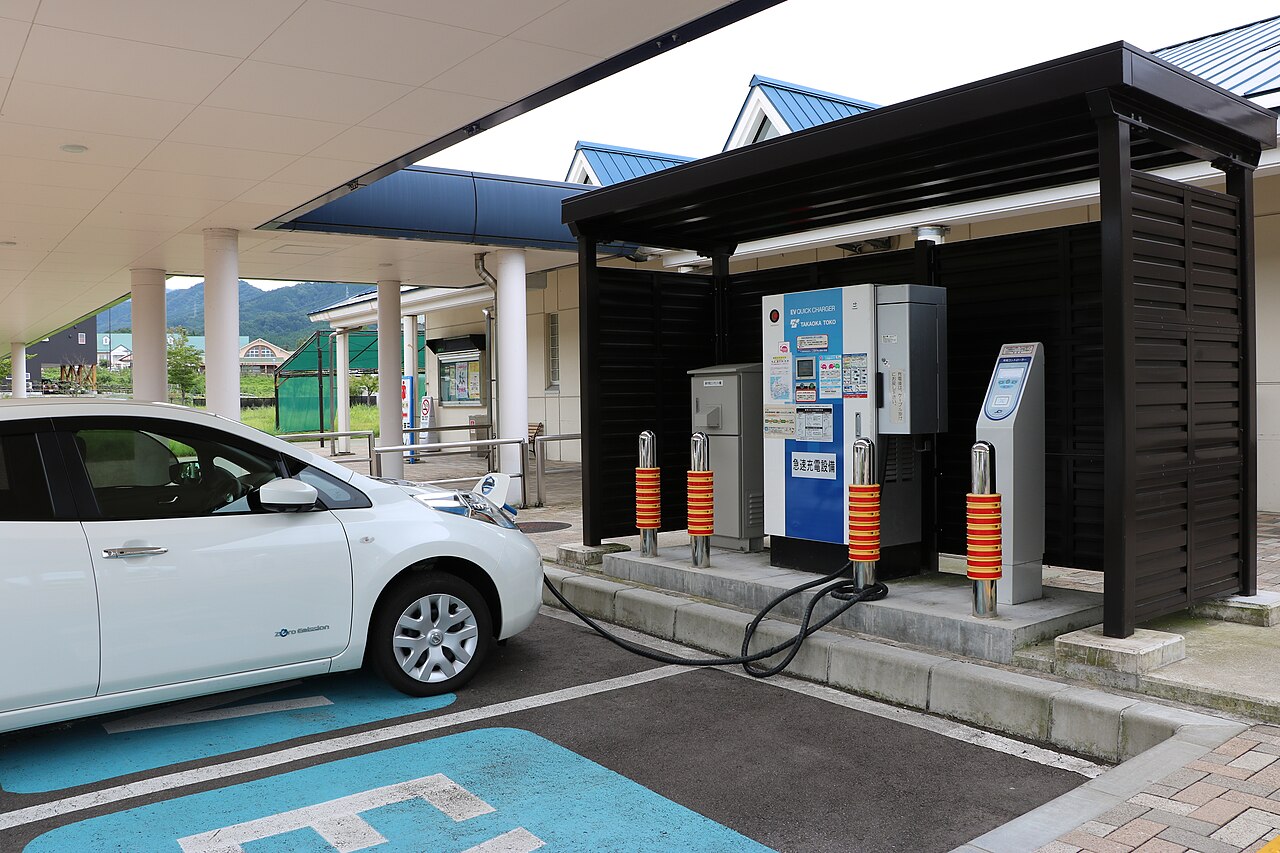
Know your plugs before you leave town
Japan's DC fast-charging is still dominated by CHAdeMO — the standard Nissan and TEPCO co-developed and deployed at thousands of sites before CCS gained traction. As of 2025–2026 Japan operates over 7,600 CHAdeMO-equipped DC fast chargers across networks like e-Mobility Power (eMP), NEXCO and retail operators. CCS2 is growing but remains a minority, and Tesla Superchargers exist yet are far less common than CHAdeMO. The practical consequence: a CCS-only car (many newer European and some Chinese imports) needs an adapter or careful route planning, while a CHAdeMO-native car (Leaf, Ariya, most Japanese EVs) plugs in almost anywhere. (Sources: autoedgeview Tesla-CHAdeMO guide; CHAdeMO Association; mmatsuura Japan charging overview, 2026.)
The 30-minute expressway rule
On most expressway service areas (SA) and parking areas (PA) run by NEXCO, a single DC charging session is capped at 30 minutes — enough for roughly an 80% top-up on legacy 50 kW units. Plan stops around that window: charge, then move the car off the charger so the next driver can plug in. Apps like "高速充電なび" show real-time NEXCO charger status; community maps (GoGoEV, EVSmart) cover the broader network. (Source: NEXCO Chubu SA/PA charging guide.)
Speed tiers: 50 kW is the baseline, 150 kW is the exception
Most Japanese CHAdeMO stalls deliver about 50 kW, with newer 90 kW and a few 150 kW ultra-fast sites (e.g., the Premium Charging Alliance) appearing in cities. A Tesla on a CHAdeMO adapter is capped near 50–60 kW regardless of the stall. Budget 100 km of range per hour on a 50 kW charger, and 200+ km/hr on 150–350 kW hardware your car can actually accept. Aim your stops for the 30–80% band to dodge the slow taper above 80%. (Sources: autoedgeview; destination.tokyo Tokyo charging guide, 2026.)
Payment: cards, apps, and idle fees
Japan's chargers mix RFID memberships, credit-card tap and app pay. The eMP network historically required a monthly-fee card, but app-based, no-subscription options from ENEOS, EneChange and Plago have expanded, and eMP now offers a QR/credit flow too. Register and verify at least one payment method before you leave the metro area, and watch for idle fees if you stay plugged in after charging completes. (Sources: mmatsuura; destination.tokyo.)
Winter and the long north
Cold hits Japanese EVs hard, just as elsewhere: a Hokkaido trip in deep winter can cut real range by 30–40%. Precondition the battery while still plugged in, keep a 20–30% energy buffer on top of your plan, and pin DC chargers every 100–200 km in colder regions. (Source: destination.tokyo winter planning notes, 2026.)
PHEV and EREV: the bridge for thin corridors
Where the DC network thins — rural Tohoku, parts of Shikoku and Kyushu, remote Hokkaido — a plug-in hybrid or range-extender lets you fall back on gasoline for the gap between chargers. It is the pragmatic bridge until ultra-fast coverage reaches every corner. (Region: applies across Japan, especially outside the Tokyo–Osaka–Nagoya corridor.)
China Angle
China's highway charging density puts Japan's network in perspective. By the end of August 2026, China had 5.16 million public charging points (24.22 million total including private, per the China Electric Vehicle Charging Infrastructure Promotion Alliance) — a far larger and faster-built public network than Japan's. China also runs the world's largest battery-swap (换电) footprint, led by NIO, which can turn a road-trip energy stop into a sub-three-minute pack exchange rather than a charge. For the traveler, the contrast is stark: a Chinese highway corridor is rarely range-anxious, while Japan's strength is reliability and ubiquity of slower CHAdeMO rather than raw speed or count.
Sources
- CHAdeMO dominance / 7,600+ DC chargers: autoedgeview Tesla-CHAdeMO adapter guide (2025–2026); CHAdeMO Association
- NEXCO 30-minute limit & "高速充電なび": NEXCO Chubu SA/PA charging guide
- Payment, tiers, winter, 30–80% planning: mmatsuura "Charging PHEVs/EVs in Japan" (Jan 2026); destination.tokyo "Charging Ahead" road-trip guide (2026)
- China public chargers (5.16M public / 24.223M total, end-Aug 2026): China Electric Vehicle Charging Infrastructure Promotion Alliance (EVCIPA); National Energy Administration
- China battery-swap scale (NIO-led): NIO official disclosures
中文简报
2026年日本跨城EV自驾要点:直流快充仍以CHAdeMO为主(2025–2026年全国超7600个CHAdeMO直流桩,eMP、NEXCO等运营),CCS2较少、特斯拉超充不及CHAdeMO普遍;NEXCO高速SA/PA单次充电限30分钟(约充至80%);多数桩50kW,少数90–150kW;支付以eMP会员卡、ENEOS/Plago等App免月费为主,注意占桩闲置费;冬季北海道续航或降30–40%,建议30–80%区间补能、每100–200km布点。PHEV/EREV可作为偏远路段兜底。中国视角:截至2026年8月中国公共充电桩516万个(含私人总量2422.3万个),换电网络(蔚来领先)规模全球最大。
Zurück zu allen Artikeln · Kommentare auf der interaktiven Seite