Chinese EVs in Japan 2026: Worth Buying?
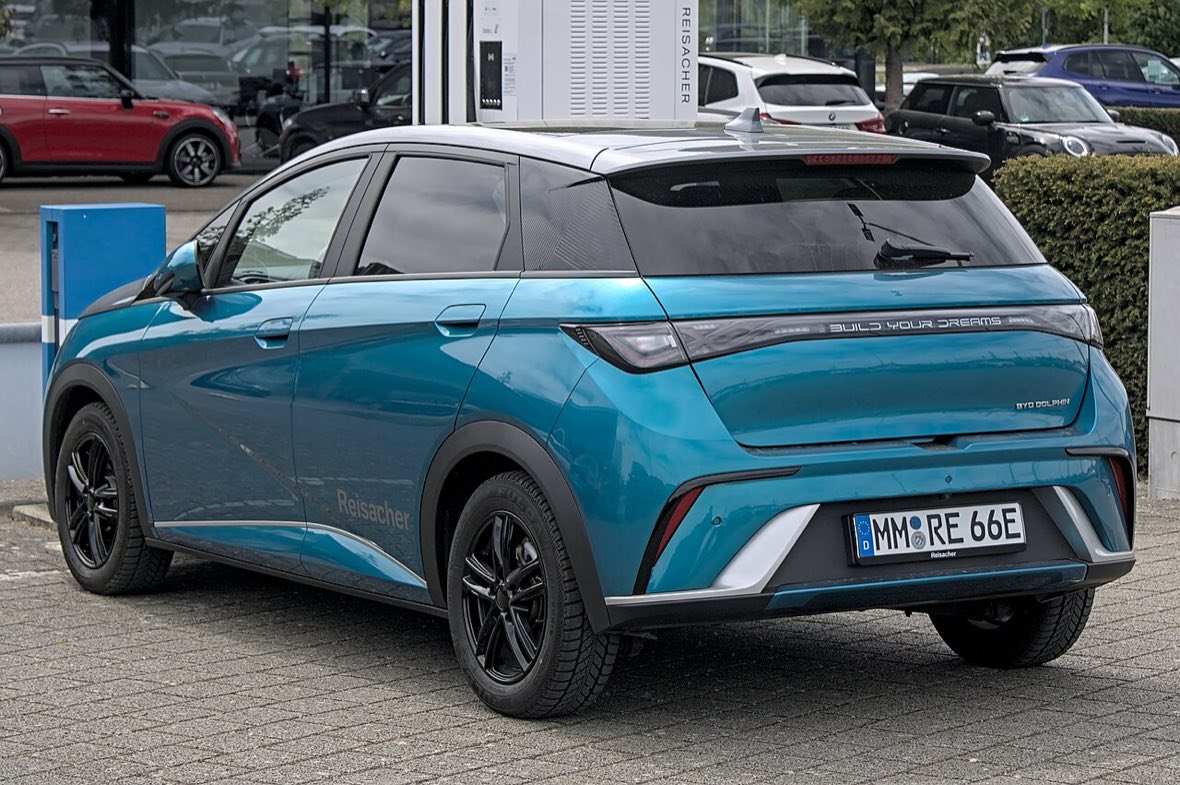
A growing number of Chinese-brand EVs are now on sale in Japan — led by BYD, with GAC Aion arriving in 2026 and Chery planned for 2027. The short answer: a Chinese EV is worth a serious look if you want strong value and tech in a mid-priced package, and you can charge at home or near work. It is a weaker choice if you rely on street parking with no charger, worry about resale, or expect Toyota-level service density. Below is a practical buyer's guide based on current Japanese prices, subsidies and charging reality.
The lineup you can actually buy today
BYD is the only Chinese brand with a full Japan showroom network. Its official Japan lineup (manufacturer suggested retail price, including consumption tax) looks like this:
| Model | Type | From (incl. tax) | WLTC range | Notes |
|---|---|---|---|---|
| BYD Racco | Kei EV | ¥2,145,000 | 210–320 km | Japan-only kei car, launched Jul 2026, powered sliding doors |
| BYD Dolphin | Compact EV | ¥2,992,000 | ~320–380 km | Smallest hatchback; fits most parking |
| BYD ATTO 3 | Compact SUV | ¥4,180,000 | ~470 km | The new ATTO 3 EX (from Sep 2026) reaches 620 km WLTC at ¥4,378,000 |
| BYD Seal | Sedan | ¥4,950,000 | ~460–512 km | RWD/AWD performance sedan |
| BYD Sealion 7 | SUV | ¥4,950,000 | ~430–470 km | Larger family SUV |
| BYD Sealion 6 | "Super hybrid" | ¥3,982,000 | PHEV, not pure BEV | For drivers not ready to go fully electric |
On the way: GAC Aion is entering Japan in summer 2026 through local agent M Mobility Japan, targeting fleet and corporate buyers first with the Aion UT (around ¥3.30M) and Aion V (around ¥5.00M). Chery plans a 2027 entry via a joint venture with autoparts retailer AUTOBACS. Both are early-stage, so today "Chinese EV in Japan" effectively means BYD.
If you want long electric range without charging stops, see our explainer on range-extender (REEV) cars and whether they make sense in Japan.
What it really costs — and the subsidy gap
Japan raised its national CEV subsidy cap to ¥1.3 million for eligible EVs registered from 1 January 2026 (METI, announced 19 December 2025). Kei EVs cap at ¥580,000. But the 2026 rules add scoring for domestic battery content and secure rare-earth sourcing — which Chinese-battery models largely miss.
The practical result: a Chinese-brand EV in Japan typically qualifies for only about ¥150,000–¥350,000, while a domestically-built Japanese rival can reach the full ¥1.3M. One widely reported example (Nikkei, 28 March 2026) had the BYD Seal's national grant cut from ¥450,000 to ¥150,000; BYD's kei car Racco is itself listed for the ¥150,000 national amount.
That narrows the headline price gap more than the sticker suggests:
| Vehicle | List (incl. tax) | Likely national CEV | Rough effective price |
|---|---|---|---|
| BYD Dolphin | ¥2,992,000 | ~¥150k–¥350k | ~¥2.6M–¥2.8M |
| BYD ATTO 3 | ¥4,180,000 | ~¥150k–¥350k | ~¥3.8M–¥4.0M |
| Nissan Sakura (kei, Japanese) | ~¥2,300,000 | up to ¥580k (kei cap) | ~¥1.7M |
| Toyota bZ4X-class (Japanese) | ~¥5.4M | up to ¥1.3M | ~¥4.1M |
So a BYD is not "cheap" — it is competitive on features at a mid price, but gets far less government support than a local rival. Local (prefecture/city) top-ups vary widely and are applied on top of the national grant.
Charging: what to check before you sign
Connector: BYD's Japan models are built for CHAdeMO, Japan's long-standing DC fast-charge standard (per BYD Auto Japan's official charging page). GAC Aion's first Japan models are also specified for CHAdeMO. That is actually convenient in Japan, where CHAdeMO still makes up a large share of the installed base, even as new chargers add CCS2. Just confirm the connector matches the chargers you plan to use.
Home charging: Most urban apartments have no dedicated parking, so home charging is rare. A single-family home can add a 200V outlet for roughly ¥200,000; kei EVs can trickle-charge on a standard 100V plug but it takes about 8 hours. If you cannot charge at home or at work, public charging becomes your daily life — and Japan's public network is a mix of slow and fast, with fast DC units a minority of total points. The 2025 Charging Infrastructure Act targets 150,000 fast chargers by 2030, but build-out is gradual.
Want to understand fast-charging speed limits? Our piece on 800V architecture and why some EVs charge much faster explains the hardware behind the numbers.
Common misconceptions
- "Chinese EV = budget car." BYD's Japan prices start at ¥2.15M (kei) and run to ¥4.95M+ for the Seal and Sealion 7. These are mid-market, not discount, prices. Japanese reviewers describe BYD's value as "highest cost-performance," not "cheapest."
- "It gets a huge government subsidy." Under 2026 rules a Chinese-brand EV gets a fraction of the ¥1.3M cap — often ¥150k–¥350k.
- "I can charge anywhere." Charging depends on connector match (CHAdeMO here), home/parking access, and the still-patchy fast-charge network.
- "Resale will hold like a Toyota." Chinese brands have only been in Japan since 2023, with a small installed base — resale curves are unproven.
- "Service is everywhere." BYD had nearly 70 showrooms at end-2025 and targets 100; that is growing fast but nowhere near Toyota's thousands of touchpoints.
Who should — and shouldn't — buy one
Good fit: an urban or suburban household with a garage or workplace charger; a second-car buyer who values tech and quiet driving; a kei buyer who wants the Racco's sliding doors and 320 km range; someone who keeps cars 5–8 years and cares more about purchase value than resale.
Poor fit: a driver with only street parking and no charger; anyone who does frequent long highway trips through rural areas with thin fast-charging coverage; a buyer who will trade in within 2–3 years and depends on strong resale; someone who wants a service network on every corner.
BYD's batteries are LFP "Blade" cells — see our LFP vs NMC comparison for what that means for safety, range and longevity.
FAQ
Will a Chinese EV qualify for Japan's EV subsidy? Yes, but at a much lower rate than a domestic EV — typically ¥150k–¥350k versus up to ¥1.3M. Check the exact model on the Next-Generation Vehicle Promotion Center's list, and add any prefecture/city top-up.
Can I charge it at normal Japanese chargers? BYD Japan models use CHAdeMO for DC fast charging and standard AC for home. CHAdeMO is widely available in Japan, so public charging is feasible; just verify the connector at your usual spots.
How is the resale value? Unknown with confidence. The brands are new to Japan (BYD since 2023) with a small base, so used prices have little history. Expect more uncertainty than a Toyota or Nissan.
Is the service network good enough? BYD is expanding fast (nearly 70 showrooms end-2025, 100 targeted) but remains far smaller than legacy Japanese brands. If you live far from a BYD point, weigh that before buying.
Which Chinese EV fits a Japanese household best? For city/tight-parking life, the kei-sized Racco (fits kei spaces, 320 km) is the most Japan-appropriate. For a mainstream family EV, the Dolphin offers the lowest entry price with usable range.
China Angle
China's supply chain is the reason Chinese EVs can price aggressively abroad. In the first nine months of 2026, global EV battery usage reached about 994.5 GWh (up 19.7% year-on-year), and seven Chinese battery makers — led by CATL (39.1%) and BYD (15.2%) — held 73.0% of the market (SNE Research, data through September 2026). LFP chemistries, which BYD builds into its Blade batteries, expanded from 52.5% to 57.7% of global battery usage over the year, driven by cost competitiveness.
That scale translates into lower cell costs and vertically-integrated vehicles, which is why a BYD can pack long range and rich equipment at a mid price in Japan. But the picture is not one-sided: China began imposing a 2% consumption tax on domestically-used lithium-ion batteries in September 2026 and plans to remove VAT export rebates on battery exports from January 2027 (SNE Research / BusinessKorea) — cost pressures that may eventually reach export pricing. China also faces its own EV challenges: intense domestic price competition, regional charging imbalance, and grid strain in peak seasons. For a Japan buyer, the takeaway is practical: Chinese brands currently offer strong hardware-per-yen, but the subsidy gap and young resale history are the trade-offs to weigh.
中文简报
中国品牌的电动车(以比亚迪为主)正进入日本市场。比亚迪日本在售车型包括海獭 Racco(轻自动车,约215万日元起)、海豚(约299万起)、ATTO 3(约418万起,新款EX达620km WLTC)、海豹与海狮7(均约495万起)。广汽埃安计划2026年夏、奇瑞计划2027年进入日本。
价格上,中国品牌并非"廉价车",而是中型价位、配置丰富。关键短板是日本2026年CEV补贴新规偏向"国产电池+稀土来源",中国品牌车型通常仅获约15–35万日元补贴,而日本国产车最高可享130万日元,补贴差距显著削弱了价格优势。
充电方面,比亚迪日本车型支持日本直流快充标准 CHAdeMO,与日本现有充电桩兼容;但城市公寓无自有车位者家用充电困难,公共快充网络仍待完善。
供应链角度:2026年前三季度全球车载电池用量约994.5GWh,七家中国厂商(宁德时代39.1%、比亚迪15.2%)合计占73.0%(SNE Research,截至2026年9月);LFP 电池占比升至57.7%。这支撑了中国品牌的硬件性价比,但中国自身也面临价格战、区域充电不均与电网压力,且2026年9月起对动力电池征2%消费税、2027年起取消电池出口退税,长期或影响出口定价。
Sources
- BYD Auto Japan — official lineup and prices: https://www.byd.com/jp/lineup/
- BYD Auto Japan — charging technology (CHAdeMO support): https://www.byd.com/jp/byd-brand/charging-technology
- BYD Racco launch and specs / orders (1,832 by 27 Sep 2026): BYD Auto Japan; 网通社 / Auto.ifeng, https://auto.ifeng.com/c/8wtiQMvBGkE
- BYD ATTO 3 EX Japan launch (29 Sep 2026, ¥4,378,000, 620 km WLTC): BYD Auto Japan via EVGulf, https://www.evgulf.com/en/news/byd-atto-3-ex-japan-launch-2026
- Japan CEV subsidy cap raised to ¥1.3M (METI, 19 Dec 2025): https://www.meti.go.jp/english/speeches/press_conferences/2025/1219001.html
- 2026 CEV rules reward domestic battery / rare-earth sourcing; BYD Seal grant cut to ¥150k (Nikkei, 28 Mar 2026, via Taiwan Trade Office): https://www.trade.gov.tw/Pages/Detail.aspx?nodeid=45&pid=813316
- National CEV subsidy structure and 2026 deadlines: https://www.min-taxes.com/en/column/ev-hojokin-todofuken
- Japan imported BEV sales H1 2026 ~19,900 (+40%); BYD Japan +40% YoY; Feb 2026 BYD 466 units (JAIA): PCauto / 新浪财经 / 每经网
- GAC Aion Japan entry (summer 2026, Aion UT ¥3.30M / Aion V ¥5.00M, CHAdeMO, B2B): Nikkei via 凤凰网 / 创业邦, https://tech.ifeng.com/c/8p1mR91uFU4
- Chery Japan 2027 plan via AUTOBACS JV: 每经网 / 新浪财经
- China battery market share H1 / 9M 2026 (73.0% Chinese, SNE Research): https://www.sneresearch.com/en/insight/release_view/744/page/0?s_cat=%7C&s_keyword= ; BusinessKorea, https://www.businesskorea.co.kr/news/articleView.html?idxno=280201
- Japan home charging ~¥200,000 / 200V; kei 100V ~8h; 2025 Charging Infrastructure Act 150,000 fast chargers by 2030: Electric-vehicle-adoption-in-Japan analysis (Toxigon)
Back to all articles · View comments & share on the interactive page