Buying a Used EV in South Korea in 2026: Battery Health, Warranty Transfer, and the Chinese-Brand Question
A used electric car in Korea can look like a bargain — but the battery, the warranty and the repair bill decide whether it actually is one. With Chinese brands like BYD now inside the Korean Top 10 and depreciation steep in the first year, used-EV shoppers need a different checklist than they would for a petrol car.
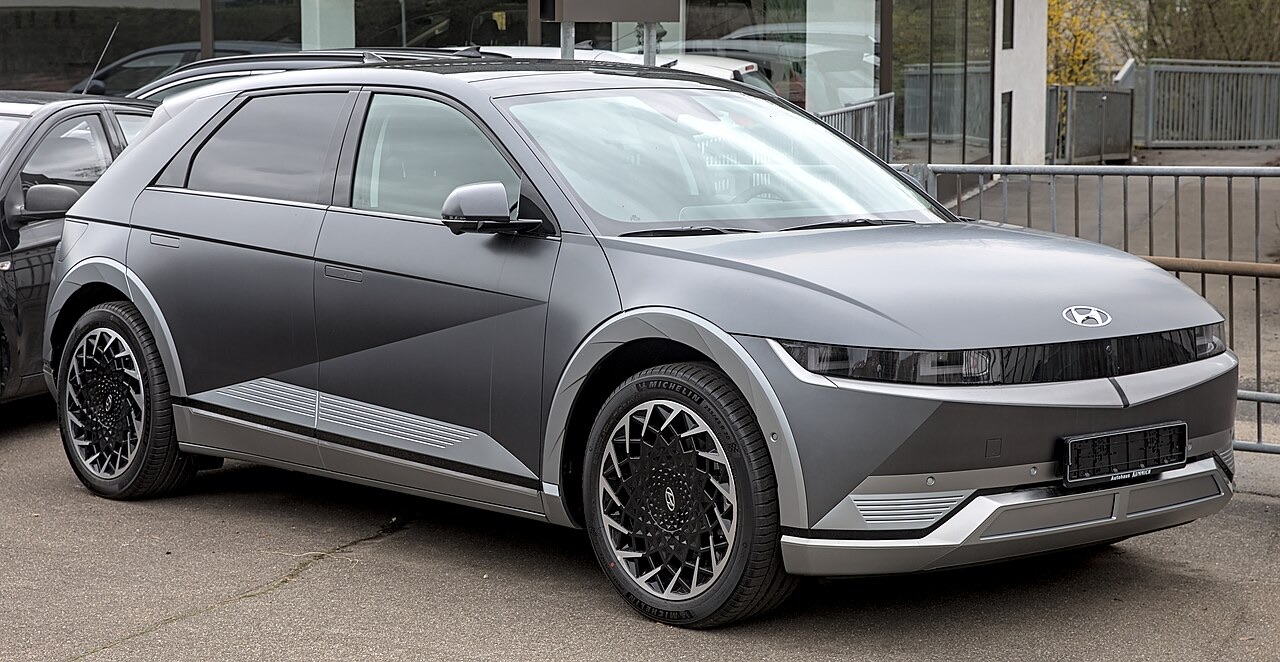
The market is mature, but battery data is thin
South Korea's used-car market is highly organized — the formal dealer segment accounts for roughly 90% of transactions, and Encar is the dominant online marketplace. Dealer-sold cars must pass a mandatory pre-sale inspection, so most listings carry a detailed record of mileage, body condition and insurance history. That is a good starting point, but it still says little about the one component that defines an EV's value: the battery.
Chinese brands are now part of this picture. BYD entered Korea's monthly Top 10 in early 2026 and Tesla's share has surged, so a used-EV buyer increasingly faces the question of how a younger, less-proven brand will hold value and serviceability a few years out.
SoH is the number that moves price — and it is easy to misread
A report published on October 15, 2026 by ChosunBiz tells the story cleanly: two used EVs with the same model year, similar mileage and an identical 92% state of health (SoH) can be valued 2.5 times apart — one at ₩7.8 million, the other at ₩19.5 million — purely because of how the batteries were used (repeated fast charging, sustained high temperatures). Today's market prices mainly on year, mileage and current SoH, and does not yet reward usage history.
Startups such as Quantum Hi-Tech are trying to fix this with AI models built from real operating data (it claims a 3–5% SOH prediction error and up to 4 GB of per-vehicle data a year). The practical takeaway for buyers: a dashboard percentage is not enough. Get an independent diagnostic report that shows cell-group deviation, fault codes and degradation rate — not just the average pack figure.
Warranty and repair cost matter more than on a petrol car
Korea's automakers typically back the high-voltage battery for 8 years or 160,000 km; Lexus Korea goes further with a 10-year / 200,000 km BEV battery warranty. The critical question is transferability — many warranties are written for the first owner, so a used buyer can lose the core protection. Confirm in writing whether the battery and high-voltage warranty follow the car.
Repair cost is the other hidden variable. Data obtained by a lawmaker and reported in 2026 shows the average insurance-covered repair on a Tesla in Korea reached ₩3.01 million through August, about twice the ₩1.51 million for a Hyundai EV and ₩1.44 million for a Kia EV, with 16.1% of Tesla repairs costing at least ₩5 million. For a used premium EV, that difference flows straight into ownership cost.
Depreciation: Korean EVs lose about a third in year one
A 2026 iSeeCars study puts first-year depreciation at 33.3% for the Kia EV6 and 32.9% for the Hyundai Ioniq 5, while five-year losses run to 59.2% for the Kia Niro EV, 58.0% for the Hyundai Kona Electric and 63.1% for the Nissan Leaf. In plain terms: the first owner takes the steepest hit, so a lightly used example is often the smarter buy — provided the battery checks out.
Practical checklist before you buy
- Get a dated battery-health certificate from the manufacturer, an inspection center or a specialist — it should list SoH, fault codes and cell-group deviation, not just a percentage.
- Drive it from a known charge level on a varied route and watch SoH stability, power delivery and regen.
- Test both AC and DC charging; interrupted sessions or error messages deserve investigation.
- Inspect the underbody for impacts, corrosion or a battery housing that has struck the ground.
- Verify warranty transferability and any remaining coverage in writing.
- Read the Encar "무사고" (no-accident) label carefully — in Korea a car is only an "accident car" if its structural frame was repaired; replaced bolt-on panels do not count, so check the body diagram, not just the badge.
China Angle
China's used-new-energy-vehicle (NEV) market went through the same chaos Korea is still navigating, then built infrastructure to fix it. As recently as 2025, Chinese used EVs suffered from inconsistent battery-health testing (one lab would read 89% SoH, another 72% for the same pack) and warranties that died with the first owner. Two standards changed that: in 2025 the China Auction Association published the Electric Vehicle Auction Inspection and Evaluation Specification — the country's first inspection spec for pure-EV and plug-in hybrids — and in May 2026 a national standard, the Evaluation Specification for Health and Safety Status of Traction Batteries in Battery Electric Vehicles, took effect, giving battery residual value a unified metric (sources: Toutiao industry roundup, Oct 2026).
Circulation also opened up: from June 2026 China rolled out "one-ID" used-passenger-car transfer nationwide, cutting cross-province deals to "at most one trip," after the cross-provincial transfer rate already reached 31.1% in 2025. On warranties, SAIC MG and GAC Aion's Hyper brand began offering transferable lifetime three-electric (battery, motor, electronics) warranties, while NIO, Zeekr and BYD launched official certified-used programs that underwrite their own models' resale.
The depreciation picture split sharply. Tiantian Paimai data showed NEVs' one-year average retention at 57.4% in 2025, but by 2026 the top high-end BEVs sat in a 76–82% one-year band; Tesla's three-year retention of 61.2% leads pure EVs. The flip side is real risk: the same analysis notes that cars from about two dozen bankrupt Chinese EV makers collapse in value, because no official used-car system or service network backs them. That brand-survival lesson is directly relevant to Korean buyers eyeing newer Chinese entrants — a low price on an unproven marque can become an unsupported asset.
Image credits
- Hyundai Ioniq 5: photo via Wikimedia Commons (File:Hyundai Ioniq 5 1X7A7085.jpg), CC license. Illustrative of Korea's used-EV market.
Sources
- ChosunBiz (The Chosun Ilbo) — Quantum Hi-Tech battery-diagnostics, Oct 15, 2026: https://www.chosun.com/english/industry-en/2026/10/15/OVELBS76IFEHVJJ4ZJHB7KXTYA
- Pulse by Maeil Business News Korea — Tesla vs Hyundai/Kia EV repair costs, 2026 YTD: https://pulse.mk.co.kr/news/english/12176531
- Morning Overview — iSeeCars 2026 depreciation study (EV6, Ioniq 5, Niro EV, Kona EV, Leaf): https://morningoverview.com/12-evs-that-drain-your-money-fastest-with-one-audi-losing-72-3-in-five-years
- Latest EV News — used-EV battery-health checklist: https://www.latestevnews.com/articles/buying-a-used-ev-how-to-check-battery-health
- VinLID — how to buy on Encar, inspection record, 무사고 trap: https://vinlid.com/blog/how-to-buy-a-car-on-encar
- Toutiao — China used-NEV standards, warranty transfer, depreciation (2025–2026): https://www.toutiao.com/article/7694644982887531043
- Sina — China NEV retention rates 2026, Tesla 61.2% 3-yr: https://k.sina.com.cn/article_7879923143_1d5ae15c706801lqd0.html
中文简报
2026年在韩国买二手电动车,真正决定值不值的是电池、质保和维修成本。韩国二手车市场约九成为正规经销商渠道,Encar是最大平台,经销商售车前须过强制检测,但检测对电池这一核心部件着墨有限;比亚迪已进入韩国月度前十,中国品牌入局让"新品牌几年后保值与服务"成为二手买家的新问题。朝日(ChosunBiz)10月15日报道:同年款、相近里程、同为92%健康度(SoH)的两台二手EV,因使用史(频繁快充、长期高温)不同,电池估值相差2.5倍(780万 vs 1950万韩元),说明仅看仪表百分比不够,应索要含电芯偏差与故障码的第三方检测报告。质保方面,韩国车企普遍对高压电池提供8年/16万公里质保, Lexus韩国为10年/20万公里,关键是"是否随车转移"。维修成本上,2026年韩国特斯拉单车平均理赔约301万韩元,约为现代(151万)/起亚(144万)EV的两倍。保值率:iSeeCars 2026研究显示起亚EV6、现代Ioniq 5首年折旧约33%,五年期Kona Electric约58%、Leaf约63%。中国视角:中国二手NEV市场2025年由中拍协发布首部纯电/插混检测规范,2026年5月国标《纯电动汽车动力蓄电池健康与安全状态评估规范》实施,统一了电池残值计量;2026年6月全国推行"一证通办"二手车过户;上汽MG、昊铂埃安推出可转移的三电终身质保,蔚来/极氪/比亚迪布局官方认证二手车。保值率分化明显:2025年新能源一年平均保值率57.4%,2026年头部高端纯电一年达76%–82%;但约20余家破产中国车企的车大幅缩水——这一"品牌存续风险"对韩国买家选购新入局中国品牌同样适用。
Back to all articles · View comments & share on the interactive page