Indonesia's EV Battery Technology: Nickel Riches, LFP Reality, and the China Connection
Indonesia sits on the world's largest nickel reserves, and since 2020 it has refused to ship that nickel raw. The result is a fast-growing domestic battery industry — from HPAL nickel plants in Sulawesi and Halmahera to the first cell factories in Karawang. But here is the twist: the chemistry winning Indonesia's own showrooms is increasingly LFP, which uses no nickel at all. This explainer walks through the supply chain, the LFP-versus-NMC trade-off in a tropical climate, and what the warranty fine print really covers.
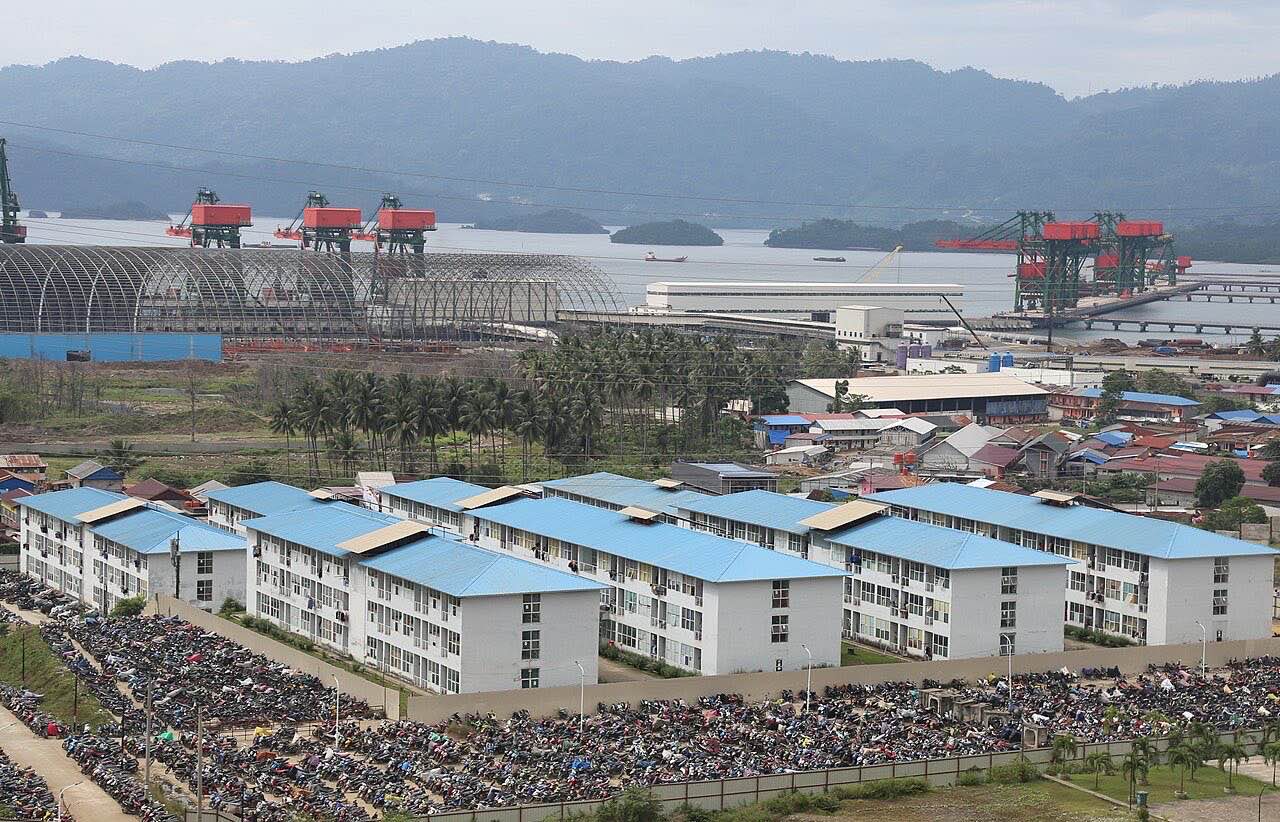
Image: Morowali Industrial Park (IMIP), Central Sulawesi — Ministry of Public Works of Indonesia (Kementerian PUPR), public domain, via Wikimedia Commons.
A Nickel Superpower, by the Numbers
According to USGS data (as of 2025), Indonesia holds roughly 62 million tonnes of nickel reserves — about 44.5% of the global total — and mined around 2.6 million tonnes in 2025, roughly two-thirds of world output. No other country comes close; the Philippines, the second-largest producer, supplied under 7%.
The pivotal policy was the January 2020 raw ore export ban. Overnight, the ore that Chinese and Japanese smelters used to import had to be processed on Indonesian soil — a strategy Jakarta calls "downstreaming" (hilirisasi). Within five years, Indonesia went from exporting dirt to exporting nickel matte, mixed hydroxide precipitate (MHP) and battery-grade nickel sulfate, with Chinese, Korean and Japanese capital building the plants. Indonesian officials estimate processed-nickel exports reached about US$9.7 billion in 2025.
From Ore to Cell: The HPAL Route
Most of Indonesia's battery-relevant nickel is low-grade laterite ore that traditional smelters can't economically process. The key technology is HPAL — high-pressure acid leaching — which digests limonite ore in sulfuric acid inside giant autoclaves at high temperature and pressure, producing MHP that is then refined into nickel sulfate for NMC cathodes.
HPAL plants in Indonesia scaled at record speed and now sit at the low end of the global nickel cost curve (one 2025 academic estimate put average MHP cash costs near US$9,800 per tonne). Chinese companies — Tsingshan, Huayou Cobalt, GEM, Lygend — built or operate most of them, in hubs like the Morowali Industrial Park (IMIP) in Central Sulawesi and the Weda Bay area of North Maluku. The caveats are real: HPAL generates significant tailings, many parks still run on coal-heavy power, and producing 1 kg of nickel in Indonesia generates an estimated 20–25 kg of CO2-equivalent (Arthur D. Little estimate). Greening this chain is now the industry's biggest credibility test.
Who Actually Builds the Cells in Indonesia
- HLI Green Power (Karawang, West Java) — a US$1.1 billion joint venture between Hyundai Motor Group and LG Energy Solution, Southeast Asia's first operating EV battery cell plant. Capacity is about 10 GWh of NCM cells, feeding Hyundai's nearby car plant (Ioniq 5 and siblings) since 2024.
- CATL-led "Dragon" project (Karawang + East Halmahera) — a roughly US$6 billion consortium between CATL's subsidiary CBL (with Brunp and Lygend), state-owned Indonesia Battery Corporation (IBC) and miner ANTAM. Groundbreaking for the Karawang cell plant happened in June 2025: an initial 6.9 GWh phase scaling toward 15 GWh — enough for roughly 250,000–300,000 EVs a year — with upstream nickel mining, RKEF and HPAL processing in North Maluku.
- Huayou's "Titan" project — after LG Energy Solution withdrew from the original multi-billion-dollar integrated supply-chain project in April 2025, Chinese processor Huayou Cobalt stepped in as lead partner.
- Chinese LFP makers arriving — Gotion High-Tech (Wuling's battery partner) and REPT Battero are building or planning LFP capacity in Indonesia, largely for the mass market and energy-storage systems.
Note the split: the plant already running makes nickel-based NCM cells, while the newest Chinese investment waves target LFP — for cheap cars, two-wheelers and grid storage.
Why LFP Wins in Indonesia's Heat
Lithium iron phosphate (LFP) and nickel-manganese-cobalt (NMC) are different tools:
| Property | LFP | NMC |
|---|---|---|
| Thermal runaway onset | Above ~270 °C | Roughly 180–210 °C |
| Cycle life to 80% | ~3,000+ cycles | ~1,000–2,000 cycles |
| Heat degradation | Slower | Faster |
| Energy density | Lower (heavier pack for same range) | Higher |
| Cold-weather performance | Weaker | Better |
| Cost | ~20–30% cheaper | Pricier, exposed to nickel/cobalt prices |
In a country where ambient temperatures sit around 28–35 °C year-round and cars park under a brutal sun, that first row matters most. High temperatures accelerate every degradation mechanism in a lithium-ion cell, but LFP's olivine crystal structure is far more thermally stable than NMC's layered structure — it simply degrades slower in sustained heat and needs less aggressive (energy-hungry) cooling. It is also intrinsically harder to set on fire, a genuine safety margin when a vehicle pack soaks in a 60 °C outdoor parking lot.
LFP has two tropical quirks worth knowing. First, its flat discharge voltage curve makes state-of-charge estimation harder, so some LFP cars recommend a weekly 100% charge so the battery management system can recalibrate. Second, LFP tolerates sitting at high state of charge far better than NMC — convenient in a market where owners habitually charge overnight to full.
NMC still earns its place in long-range, premium models (like Hyundai's Ioniq 5), where energy density and highway range matter more than cost. But for Indonesia's price-sensitive mass market — Wuling Air EV, BYD Dolphin/Atto 3, and most e-two-wheelers — LFP is the default.
Humidity, Heat Soak and Warranty Reality
Indonesian-market EVs typically carry an 8-year / 160,000 km battery warranty — Hyundai Indonesia officially lists exactly that for its high-voltage batteries, and BYD's local lineup matches it. The warranty generally promises the pack retains at least ~70% state of health within that window; degradation beyond that is repaired or replaced free. Out-of-warranty pack replacement remains expensive — estimates run from Rp100–200 million as of 2026 — though prices keep falling as cells get cheaper.
Humidity is handled mostly by engineering rather than chemistry: packs are sealed to IP67/IP68 standards, and the BMS watches cell temperatures during DC fast charging, the hottest thing an EV battery ever does. Practical heat tips for Indonesian owners: prefer shaded or covered parking, favor overnight AC charging over daily fast charging, and keep the car plugged in during long airport trips if the manual allows it.
China Angle
作为一个中国作者,看印尼的电池故事颇有些"似曾相识"。中国从2000年代起押注磷酸铁锂路线——比亚迪2002年选定LFP,2020年推出刀片电池(Blade Battery),把电芯做成又长又薄的"刀片"直接集成进包体;到2025年,LFP已占中国新能源汽车装车量的八成左右,比亚迪与宁德时代两家合计占据全球动力电池市场约一半份额。有意思的是,印尼手里握着全球最大的镍储量,中国本土镍储量只有约3%,但真正把红土镍矿变成电池级硫酸镍的HPAL技术、资本和运营方,大多来自中国——青山、华友、格林美、力勤这些名字遍布苏拉威西和北马鲁古。换句话说:印尼提供资源和中国提供加工与化学体系,是一种深度的互补绑定。对印尼消费者的启示也很直白——今天在雅加达展台上性价比最高的LFP电动车,背后正是这套"印尼镍 + 中国LFP"的组合拳;而印尼想真正掌握从矿石到电芯的全链条,最现实的路径恰恰是与中国厂商合资建厂,CATL在卡拉旺的15 GWh项目就是最新样本。
Sources
- Tempo English (citing USGS 2026 data): Indonesia holds ~44.5% of global nickel reserves and ~67% of 2025 production — https://en.tempo.co/amp/2102600/indonesia-launches-nickel-corridor-deal-with-philippines
- Arthur D. Little, "Unleashing Indonesia's electric mobility potential" (LFP vs NMC in hot climates, nickel CO2 intensity) — https://www.adlittle.com/en/insights/report/unleashing-indonesias-electric-mobility-potential
- Aluna.id, "Indonesia's EV Ecosystem: Mapping the Integrated Value Chain" (HLI Green Power, CATL/IBC Dragon project, Huayou Titan) — https://aluna.id/indonesias-ev-ecosystem-mapping-the-integrated-value-chain/
- Hyundai Indonesia official warranty page (8-year/160,000 km high-voltage battery coverage) — https://www.hyundai.com/id/en/myhyundaicare/kepemilikan/garansi
中文简报
印尼坐拥全球约44.5%的镍储量(约6200万吨)和三分之二产量,但本土热销电动车的电池主力却是几乎不用镍的磷酸铁锂(LFP)——因为它更耐高温、循环寿命更长、更便宜,也更适配热带气候。文章详解了从HPAL镍冶炼到卡拉旺电芯工厂(现代-LG 10GWh、CATL-IBC 15GWh)的产业链,以及8年/16万公里电池质保的实情;中国角度:比亚迪刀片电池与LFP路线(中国装车占比约八成)+ 中国企业主导印尼镍加工,"印尼镍+中国LFP"已成组合拳。
Back to all articles · View comments & share on the interactive page