Extended-Range EVs (EREV): How They Work and Why They Suit Spain and Latin America
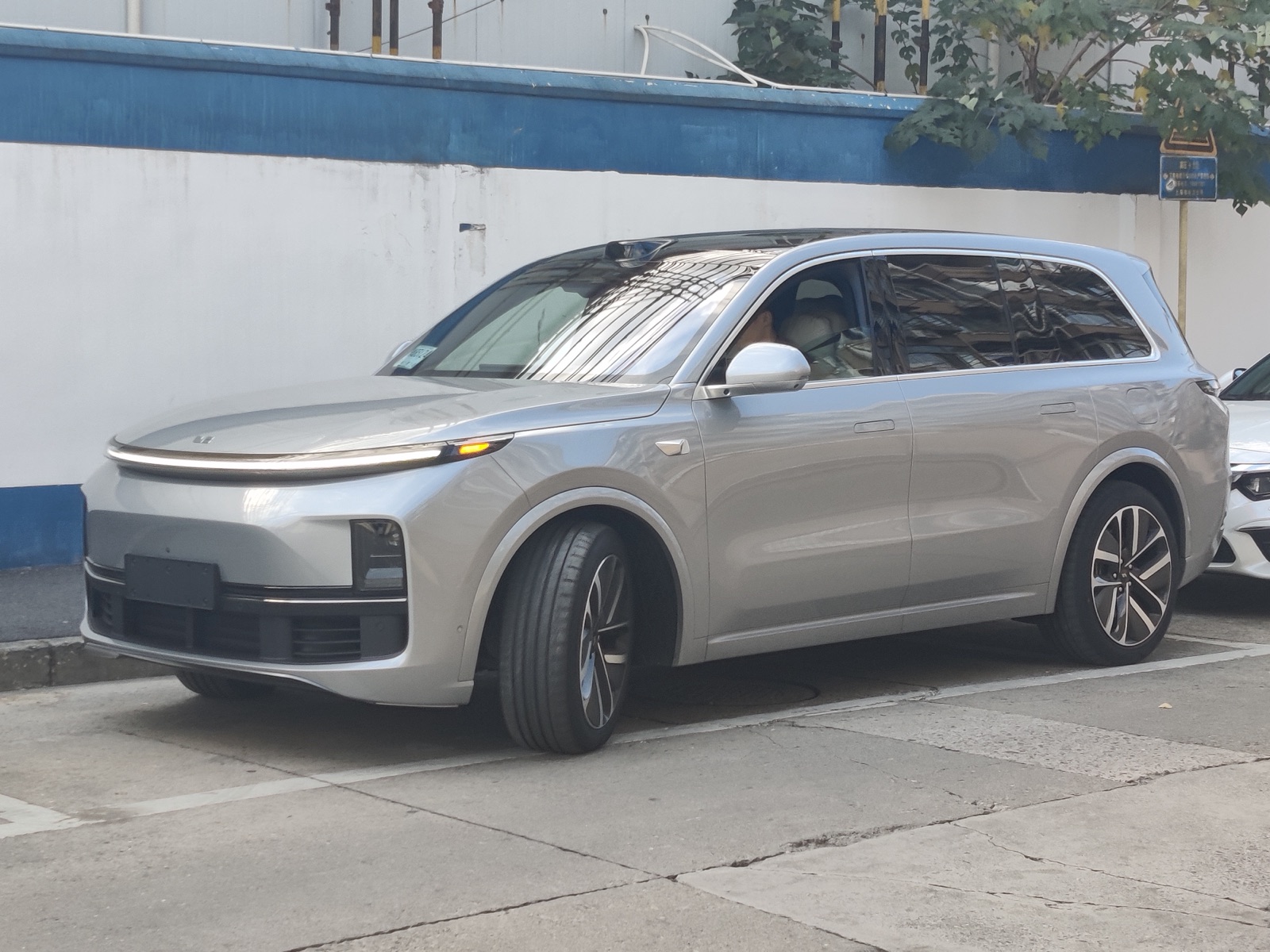
Extended-range electric vehicles (EREVs) are back in the spotlight. China's brands — Li Auto, Leapmotor, Arcfox, GAC Aion and others — have turned the layout into a mainstream choice, and this week alone Arcfox's αT7 and GAC Aion's 2027 i60 arrived as EREV options. But the case for an EV that still carries a petrol generator is strongest somewhere else: markets where public chargers are thin on the ground. For Spanish drivers crossing Extremadura and for owners in Mexico or Colombia, an EREV can be the difference between "electric, mostly" and "electric, never." Here is how the architecture actually works, and why it fits the Spanish-speaking world.
What an EREV is — an EV with a generator on board
An EREV (also badged REEV or REV) is a plug-in vehicle whose wheels are always turned by an electric motor. It carries a battery you charge from the wall, plus a small internal-combustion engine that acts only as a generator. The engine never drives the wheels mechanically — there is no clutch, no direct mechanical link. That single rule is what separates an EREV from a plug-in hybrid (PHEV), where the engine can clutch in and propel the car directly at speed (Sources: Driven Car Guide; CarAdvise; Engineer Fix).
In practice the car runs "charge-depleting" on battery alone for typical daily distances — usually 150–350 km of electric-only range from a 10–45 kWh pack — then switches to "charge-sustaining" mode. The generator starts, runs at its most efficient speed, and feeds the motor (and gently tops up the battery) as needed. Total range routinely exceeds 1,000 km, because once the battery is low you simply refuel at any petrol station (Source: Fresh Motors).
Why carmakers like the format
The generator solves range anxiety cheaply. Because the engine covers the rare long trip, the battery can be smaller and cheaper than a long-range BEV's, yet the driver keeps EV refinement — one-pedal driving, silence, instant torque — at all times (Source: Fresh Motors). For buyers who cannot rely on fast chargers everywhere, that combination is persuasive. It is also simpler in feel than a PHEV: no gear-hunting, no sudden engine engagement, just a constant electric character even when the generator is running (Source: Driven Car Guide).
The trade-offs are real. When the generator runs, the car emits CO2 and still burns fuel — and generating electricity through an ICE is less efficient than a dedicated hybrid on sustained high-speed cruising. EREVs also carry two complete powertrains, pushing purchase price toward BEV territory without matching a BEV's electric range (Sources: CarAdvise; Engineer Fix).
The Spanish-speaking reality: chargers are the constraint
This is where the EREV argument gets concrete for Spain and Latin America.
Spain — dense coasts, thin interior. Spain had roughly 55,000–80,000 public charging points by mid-2026, but the network is heavily skewed toward Madrid, Barcelona and the Mediterranean AP-7 corridor. Industry data cited by AEDIVE put more than 16,000 installed points still non-operational at the end of 2025, and charging guides flag "Tier 3" gaps across Extremadura, inland Castilla-La Mancha and rural Galicia where fast chargers can be 120–150 km apart. Spain's Plan MOVES III targets 250,000 public points by 2028 and a €100 million corridor programme is adding 337 rapid chargers to "shadow stretches" — but until that lands, a small-battery EV on a cross-country trip needs careful planning (Sources: TravelInformation.eu; Euro Weekly News; EVStrada).
Latin America — a structural charging deficit. The OLADE Electric Mobility Monitor (data through Q1 2026) shows how uneven the region is: Chile leads with 8.04 public chargers per 100 electrified vehicles (2,159 points, 26,863 light EVs), but Mexico sits at just 1.43 and Colombia at 1.06 per 100, with Uruguay below 1. The region's electrified light-vehicle fleet reached 837,014 units in Q1 2026 and is on track to pass one million by year-end — yet analysts estimate 400,000–800,000 charging points would be needed by 2030 to meet demand. Brazil is the volume leader (505,806 electrified vehicles, ~52.7% of them PHEVs, and 25,429 public points by May 2026), but most of the region operates from a very low base. A much-hyped ZapCharge plan for 10,000 near-term units and 300,000 by 2030 remains unverified (Sources: OLADE via Latam Mobility; LEMOB News; Lemob-news.com).
In both markets, the sales mix already reflects the gap: where chargers are scarce, buyers default to hybrids and plug-in hybrids rather than betting on the charging network. An EREV sits neatly in that gap — it delivers daily electric commuting where home or workplace charging exists, and removes the "what if the next charger is broken or 140 km away" fear on the long trips that define Spain's interior and Latin America's highways.
What to check before buying an EREV
- Electric-only range: the bigger it is, the less the engine ever runs. Today's Chinese EREVs advertise 200–350 km of EV range.
- Generator efficiency: a well-tuned unit sips fuel; a poor one drinks it once the battery is empty.
- DC fast charging: a good EREV still supports rapid charging, so you are not forced into petrol on a road trip.
- Total-range claims: most are CLTC (China) or optimistic cycles — realistic figures run lower, especially at motorway speed or in heat (Source: Fresh Motors).
China Angle — a first-person note
As a writer based in China, I watch EREVs from the market that invented their modern form. Li Auto turned the series-hybrid range extender into a best-seller here precisely because, five years ago, China's public charging network outside big cities was exactly the "shadow stretch" problem Spain's interior faces today. EREVs let families go electric for the school run and petrol for the 1,000 km holiday drive without anxiety — and the format stayed popular even as chargers multiplied, because it suits cold northern provinces and long-distance culture.
That is the same logic now reaching Spanish-speaking markets. Just this week, China's Arcfox αT7 (Huawei-assisted, offered as EREV and BEV) and GAC Aion's 2027 i60 (EREV + BEV) launched — proof the format is still expanding at the source. For Spain and Latin America, where charging density is a fraction of China's today, the EREV is less a "transitional compromise" and more a practical on-ramp to electric driving that does not depend on the grid catching up first. One regulatory echo: Chile's Decree 114/2025 now mandates green license plates for BEVs and PHEVs — the same kind of policy signal China used early on to seed its NEV market.
Image: Li Auto L9, a series-hybrid extended-range EV, self-hosted at evandauto.com/img/. Other sections use the EV & Auto Club brand placeholder.
Sources:
- EREV mechanics: Driven Car Guide · CarAdvise · Engineer Fix · Fresh Motors
- Spain charging: TravelInformation.eu · Euro Weekly News · EVStrada
- Latin America charging: OLADE Monitor via Latam Mobility · LEMOB News
- China context (this week's EREV launches): QQ News · Sina Auto – Arcfox αT7
Tags: technology,EREV,range-extender
Back to all articles · View comments & share on the interactive page