Why German EV Drivers Carry a Wallet Full of Charging Cards: Roaming, Tiers, and the Real Price of a Fast Charge in 2026
Applies to: anyone charging an EV in Germany (or planning a road trip through DACH). The roaming and tiered-pricing model explained here is very different from the single-network model most drivers in North America or Asia are used to.
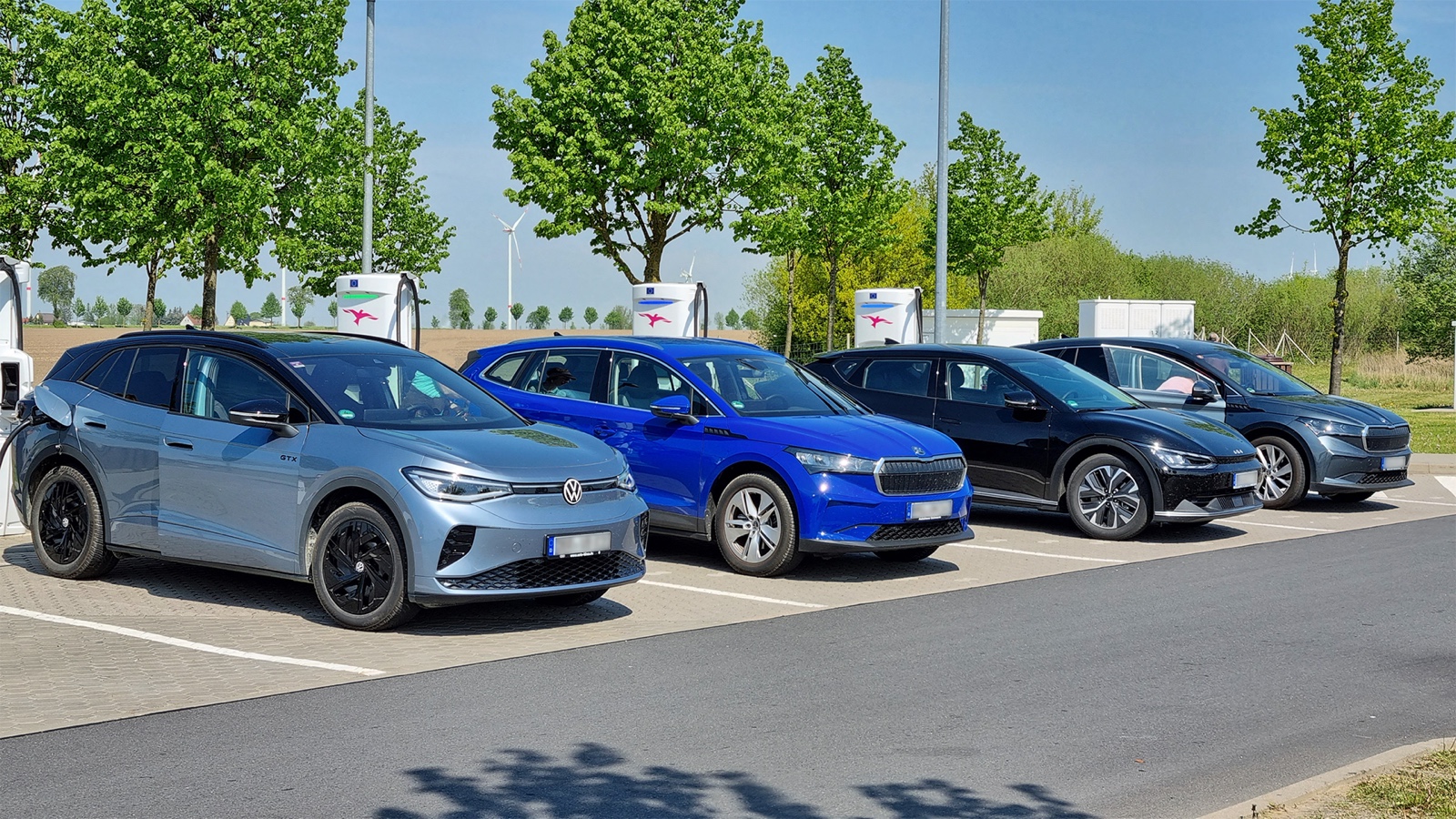 An Ionity ultra-fast charging station on the German A7 motorway. Public charging in Germany is a patchwork of operators, and no single card covers all of them. Photo: Michael32710, CC BY-SA 4.0, via Wikimedia Commons.
Walk into a German EV owner's glovebox and you will probably find three or four RFID charging cards. Open their phone and you will find twice as many charging apps. If you are new to German EVs, the first question after "how much range do I actually get in winter?" is usually: which charging card should I carry?
The honest 2026 answer is: it depends on how and where you drive — and the days of "one simple price everywhere" are over.
Why Germans need more than one card at all
The key concept is roaming. No charging operator builds a network that covers every supermarket, motorway service area and city car park in the country. Instead, operators plug into roaming networks (the largest is Hubject Intercharge) so that one card or app from one provider can start a charge at a station owned by another.
That sounds like the telecom roaming you know from travelling — but there is a catch: the price you see is often the roaming provider's re-priced tariff for that station, not the station operator's own price. The same physical charger can cost a different amount depending on which card you tap. In 2026, checking the in-app price before you plug in is not optional anymore — it is how you save money.
The 2026 landscape: flat pricing is gone
For years, the marketing pitch was "one flat price at every station." That promise has quietly unwound. Here is what the major options actually look like (prices as of mid-2026):
- EnBW mobility+ — the heavyweight. Germany's largest fast-charging network (8,000+ own HPC points) plus a large European roaming footprint. Three tariffs: S (free, €0.56/kWh), M (€5.99/month, €0.46/kWh), L (€11.99/month, €0.39/kWh). AC and DC cost the same inside each tier — no fast-charge surcharge. Roaming prices are capped at €0.89/kWh.
- EWE Go — the simplicity option. No monthly fee, one-time €9.65 connection fee, flat €0.39/kWh AC / €0.49/kWh DC at its own stations. Strongest coverage in northern Germany (Lower Saxony, Bremen, Brandenburg).
- Maingau Autostrom — no monthly fee, no contract, quick registration. AC is one flat rate, but since 2025 DC is split into tiers by operator, so you have to check the app to see which tier a given fast charger falls into.
- ADAC e-Charge — one of the broadest roaming networks in Germany (you do not need to be an ADAC member to buy the card, though membership gives better perks). Not usually the cheapest per kWh, but the best backup card when your main provider has no station nearby.
- Ionity — the pure highway HPC network. Ad-hoc without any account: ~€0.72/kWh. With the Passport subscription (€5.99–€11.99/month) rates drop to €0.39–0.49/kWh. Manufacturer partnerships often get even better pricing.
The price trap: the same charger, from €0.39 to nearly €1.00
The single biggest variable in what public charging costs is not the car or the battery — it is how you pay.
ADAC's 2026 tariff comparison found that charging without any contract can cost up to 62% more than the same network's app tariff. On German motorways, ad-hoc DC prices have been seen jumping from around €0.52 to €0.84/kWh depending on operator and location. The ADAC-reported ceiling for pure ad-hoc DC charging without any contract is up to 99 cents/kWh — more than 2.5× the ~€0.37/kWh average German household electricity price.
So the exact same energy can cost you 39 cents or nearly a euro, depending only on which card, app or tariff you used. Since 1 July 2024, all newly built public chargers in Germany must accept contactless bank cards — which is great as a fallback, but contactless ad-hoc is usually the most expensive way to charge.
A quick way to think about it
If you charge less than ~150 kWh/month at public stations, pay-as-you-go with no monthly fee (EWE Go, Maingau) is hard to beat. If you are a high-mileage driver who lives on motorway DC, the monthly fee on EnBW Tariff L or Ionity Passport can pay for itself after a handful of sessions.
Example math (mid-2026 prices): charging 100 kWh/month on AC costs €39 with EWE Go, but €50.99 with EnBW Tariff L (€39 + €11.99 fee) — the free/cheap card wins. At 300 kWh/month, mostly DC: EWE Go costs €147 (300 × €0.49), while EnBW Tariff L costs €117 + €11.99 = €128.99 — the flat €0.39 rate saves money because it does not split AC/DC.
Two more things German EV owners learn the hard way:
- Blocking fees (Blockiergebühr): stay plugged in after your car is full and some networks charge €0.10/minute after ~4 hours, capped around €12 per session. Move the car when the app says it is done.
- The physical card is a fallback, not a fashion statement: apps fail when reception is bad (yes, even at motorway chargers). A €5–10 RFID card that works offline is worth having.
Why this matters beyond Germany
Germany's charging market is the most fragmented in Europe — and a preview of what happens when charging stops being a "one network, one app" world. For drivers in North America (where a single NACS ecosystem dominates) or in markets that are just building out public networks, the German lesson is simple: coverage, price transparency and a payment fallback matter more than any single headline rate.
A Note from China
From where I write this — in China — the German habit of carrying a wallet of RFID cards feels almost foreign. Here, public charging is overwhelmingly app-and-QR based and already unified: you scan a code with WeChat, Alipay, or a map app like Amap (Gaode), and one of the big operator apps (TELD / 特来电, Star Charge / 星星充电, or your carmaker's own app for NIO / BYD / Zeekr) handles payment across most of the country. There is essentially no "roaming price arbitrage," because the leading operators already span the national network, and contactless card payment at chargers is the exception rather than the rule.
The flip side of Germany's problem is ours, just inverted: instead of too many cards, Chinese drivers mostly worry about which app covers a given remote station. But the per-kWh gap between apps is small — DC fast charging typically runs about ¥0.8–1.5/kWh including the service fee, with steep off-peak (night-time) discounts in many provinces — so the "check the price before you plug in" discipline still applies, just through a different interface. The German lesson about transparency travels well; the implementation does not need to.
Sources: ADAC tariff comparison 2026 (ad-hoc up to 62% premium, 99 ct/kWh ceiling); EnBW mobility+ tariff announcement (Dec 2025, S/M/L tiers); EWE Go official tariff page 2026; Ionity Passport pricing 2026; carify.com / navit.com / easycharging.app / gadgetceo.com 2026 German charging-card comparisons; German BMDV contactless-payment regulation (since 1 July 2024, all new public chargers accept debit/credit cards).
Back to all articles · View comments & share on the interactive page