Zhuoyu's Evolution: The Autonomous Driving Company Born from DJI's Drone Vision
In 2016, deep inside DJI, a pre-research project numbered BR1609 began. It was, in effect, the ninth research project DJI started that year. Almost nobody at the time would have guessed it would become one of China's most distinctive autonomous driving companies — one whose most famous decision was to delete its own code base. That company, known internationally as ZYT (Chinese: 卓驭科技; formerly DJI Automotive), is the subject of this story.
 ZYT (formerly DJI Automotive) and its Chengxing platform journey. (Image: EV & Auto Club)
1. Cross-Breeding the Drone Gene: A Front-Mounted Stereo Vision Origin
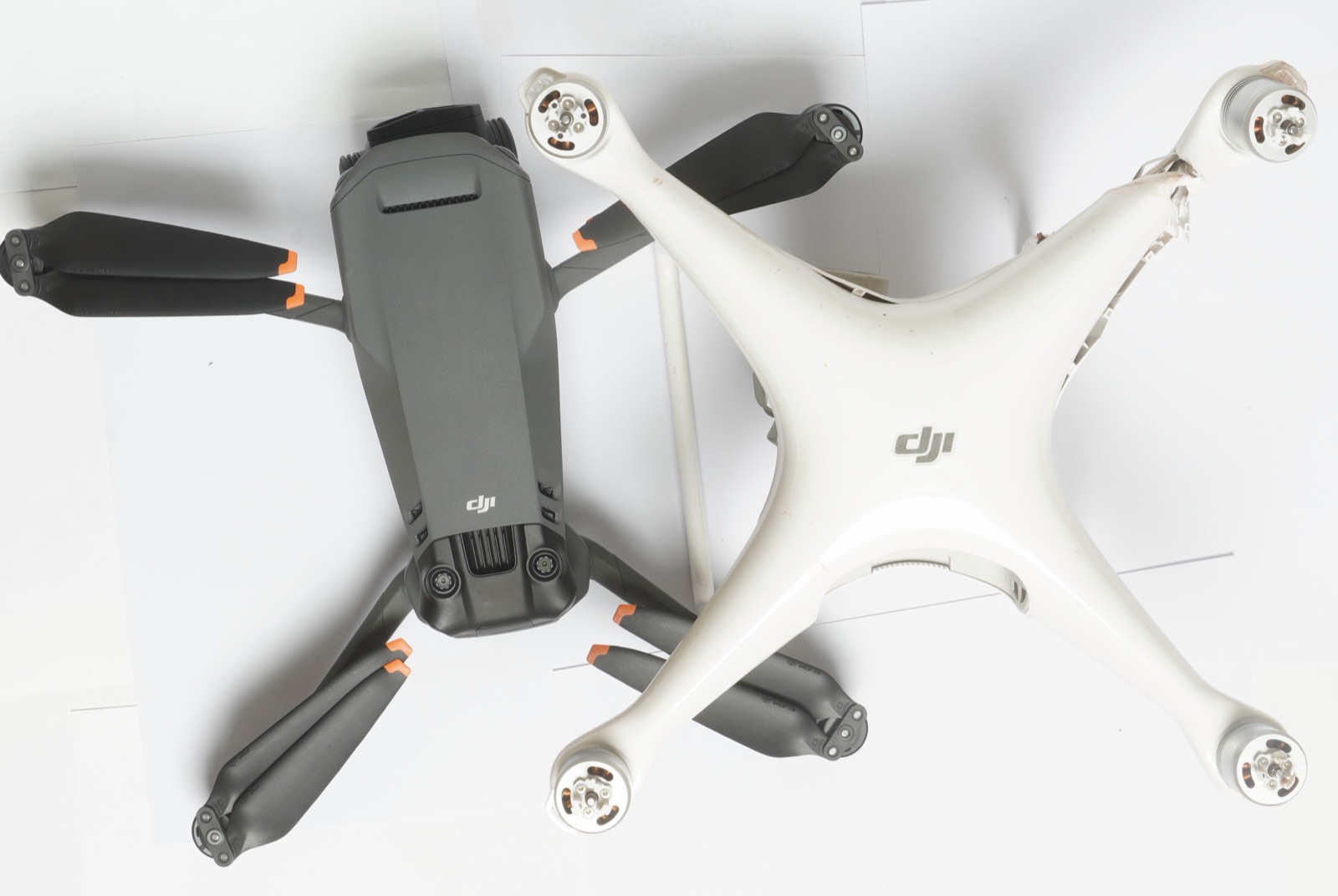
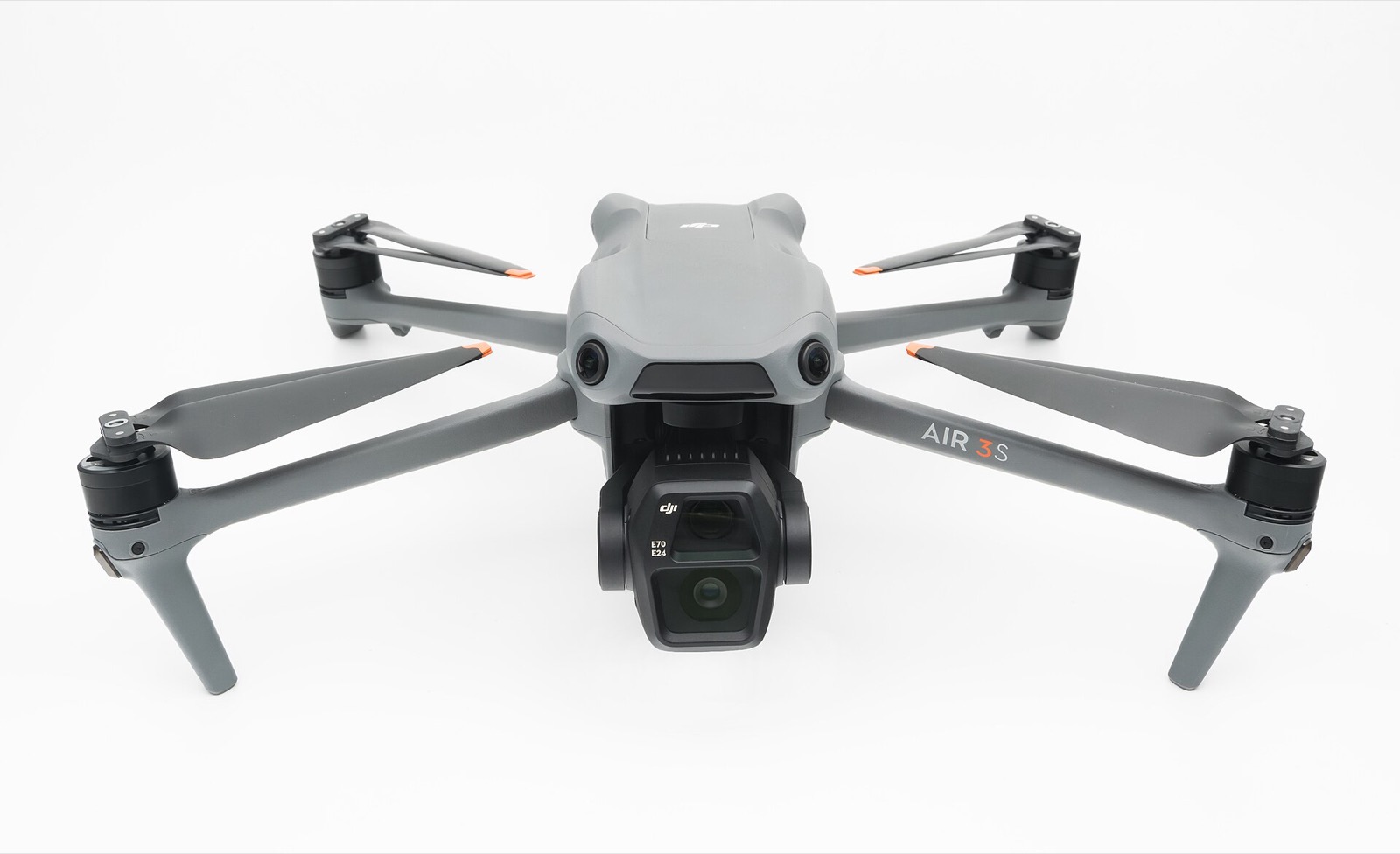 A DJI drone — the stereo-vision and robotics DNA that ZYT inherited. (Image: Wikimedia Commons, CC BY-SA 4.0, Jacek Halicki)
In 2016, DJI's Phantom 4 had just secured the consumer drone market with industry-leading machine vision, and the "Mavic" (御) series was redefining what a portable drone could be. Shen Shaojie (沈劭劼) — then an assistant professor at HKUST and a DJI engineer working on drone localization and planning — led the team that first put stereo cameras on drones. His team ported their HKUST research, a visual-inertial navigation system built on the VINS framework, from the lab into production drones.
The team noticed something important: the machine vision used for drones and the environmental perception required for driving shared the same underlying logic. DJI's accumulated capabilities in vision algorithms, sensor fusion, and inertial navigation could be carried over to vehicles. In 2017, the small team completed its first road tests in a closed proving ground in Shenzhen, using a perception system adapted from drone technology. In 2018, the project received one of Shenzhen's first autonomous driving test permits and moved to open-road validation.
From that moment, a technical identity was set that would run through the company's entire history: vision-first, built specifically around a front-mounted inertial stereo-vision system — a direct descendant of the drone-era VINS work.
2. The Chengxing Platform: City Pilot Assist on Low-Cost Hardware
In 2021, DJI's Automotive division was formally established and made its first public appearance at the Shanghai Auto Show. Zhuoyu's technical route diverged sharply from the industry mainstream:
- No compute stacking: The industry assumed city-level navigation needed 256+ TOPS of compute. Zhuoyu set out to deliver the same capability on a 32 TOPS platform or less.
- No expensive sensors: A 7-camera vision configuration (a pair of front inertial stereo cameras, one rear monocular, four surround fisheye cameras) — no high-definition maps, no lidar dependency.
- "Smart driving equality" as the target: bring advanced driving assistance to A0-class EVs costing under RMB 100,000.
In 2022, the Baojun KiWi EV, powered by a Zhuoyu solution, went into volume production and became known as the "100,000-yuan smart driving experiment." The architecture — minimal sensor configuration plus extreme algorithm optimization — was named the "Chengxing Platform" (成行平台). Its self-developed inertial stereo vision system recovers 3D information from disparity, robustly detects unseen edge-case objects, and raises obstacle perception accuracy to the 0.05–0.1 meter range. The industry took notice: city-level pilot assist on that cost budget was unheard of.
3. The Rule-Based Era: An Engineering Paradox That Got Harder, Not Easier
As a traditional robotics school, Zhuoyu's team long believed in rule-driven approaches, with the implicit assumption that "I built the model of the physical world." In city pilot development, engineers enumerated traffic scenarios and wrote thousands of rules to handle traffic lights, unprotected turns, pedestrians, and e-bikes.
Reality delivered a brutal counterpunch. China's urban traffic complexity vastly exceeds what any rule library can cover — wrong-way e-bikes, mid-block pedestrians, intersection "zipper" standoffs. Every un-enumerated long-tail scenario required new rules, and every new rule surfaced more new problems. The team described the situation as an engineering paradox: "solve one problem and ten new ones appear." Rule code grew, and the system got clumsier. By 2024, when the industry pivoted wholesale to end-to-end, Zhuoyu was squeezed from three sides: an immature model, client delivery pressure, and volatile backend output.
4. Going All In: Deleting the Code Base and Betting Everything on End-to-End
2024 became the turning point.
After nearly a year of end-to-end pre-research, the team made a decision that is rare in the industry — a "cutting off one's arm" moment. On October 14, 2024, they deleted the entire legacy code base and declared: "From now on there is only end-to-end, no rules."
The decision wiped out eight years of accumulated rule-based engineering. At the time, Zhuoyu had only recently spun off from DJI. Its first funding round had closed at RMB 1.5 billion — but only one third had actually landed. Thousands of employees, and the company's cash could sustain it for just a few months. CEO Shen Shaojie described the moment of separation from DJI using a favorite metaphor from The Three-Body Problem: humanity becomes space humanity — there is no home to return to, the enemy is too strong, and of five surviving ships, resources are only enough for two. "You have to sacrifice three."
The pivot was not a gamble on instinct. Inspired by what he called Tesla's "cleverness over brute force" (the FSD approach of modular, explainable components rather than one giant black box), Zhuoyu chose a differentiated explainable end-to-end route:
- Decompose the VLA (Vision-Language-Action) model into explainable, role-divided modules — perception fusion, scene understanding, and decision planning — keeping the data-driven advantage of end-to-end while solving two of the industry's hardest problems: causal reasoning and low-frequency data generation. Every module's output is traceable and interpretable; when something fails, the team can pinpoint which module failed.
- For low-frequency data (rainstorms, blizzards, construction zones), a simulation library covering 200+ long-tail scenarios was built to supplement real-world data.
The release cadence after the pivot was fast. In November 2024, the FAW Hongqi Tiangong 08 became the first production vehicle to debut Zhuoyu's explainable end-to-end algorithm (Chengxing "ClixPilot"), running a 10-camera high-compute configuration on a Qualcomm SA8650P at 100 TOPS with map-free city navigation nationwide. In 2025, Zhuoyu successfully deployed the end-to-end network on TI's TDA4 (32 TOPS) — delivering mid-compute city pilot assist to 100,000-yuan-class vehicles from Wuling and Jetour via OTA, the only mid-compute urban NOA of its kind.
Today, Zhuoyu covers 9 passenger car customers, 15 co-branded programs, more than 50 production models, and claims 34 partners with over 130 vehicle programs in the pipeline — from entry-level A0 EVs to luxury sedans, across ICE, hybrid, and pure electric powertrains.
Closing
Zhuoyu's arc is a story of controlled self-destruction. A drone-vision team inherited a profound talent for squeezing capability out of minimal hardware — stereo vision instead of lidar, 32 TOPS instead of 256. That same "cleverness over brute force" discipline eventually made them one of the first suppliers to ship an explainable end-to-end city pilot on mainstream compute, and it is what lets a company that deleted its own code base in October 2024 now sit among the industry's top-tier driving assistance providers.
Cover image: DJI Mavic 3 Pro vs DJI Phantom 4 Pro (via Wikimedia Commons, CC BY 4.0) — the two drone lines at the heart of Zhuoyu's vision heritage.
Back to all articles · View comments & share on the interactive page