Why Some EV Motors Skip Rare-Earth Magnets
A motor with no rare-earth magnets can keep your car's price steady when commodity markets spike — but it may trade a little low-speed smoothness and add a part that wears.
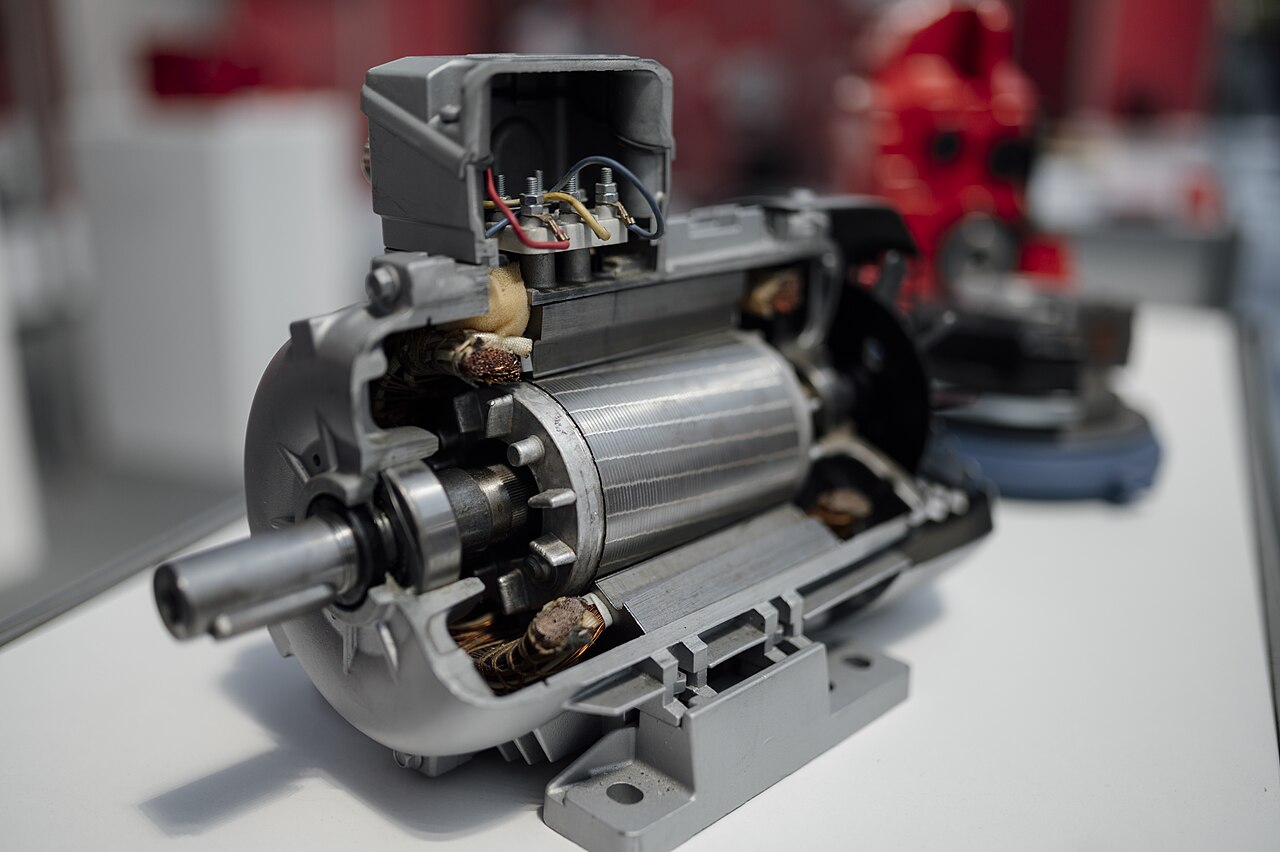
What you notice on the road
- The car feels the same to drive either way. Whether the motor uses magnets or not, you still get instant torque; a 200 kW unit pulls a family SUV to 100 km/h in about 7 seconds regardless of magnet type.
- On a long highway climb, a magnet-free car can lose a little pull. Externally excited motors give back 1–2 points of efficiency at part load, so at steady 130 km/h a magnet-free car may draw slightly more battery — typically 2–4 km less range from the same pack.
- In very cold weather the difference is smaller, not larger. Permanent-magnet motors actually lose a bit of efficiency when cold, so the magnet-free gap narrows in winter rather than widening.
- Your repair bill years later may differ. Magnet-free designs add carbon brushes and slip rings that wear and need service; magnet motors have fewer wearing contacts but a pricier rotor if it is ever heat-damaged.
How it works
Most EVs use a permanent-magnet synchronous motor (PMSM). Its rotor carries neodymium magnets that create a strong field for free, giving the best power density — but those magnets are made from rare-earth metals whose supply is concentrated in one country. So on the road, this means the lightest, most compact motor per kilowatt, at the cost of exposure to a single supply chain.
An induction motor has no magnets at all; it spins the rotor with a rotating magnetic field from the stator. It is robust and cheap to build, but it slips and runs a few points less efficient at partial load, and it feels slightly softer and less urgent at low speed. So on the road, this means a motor that is forgiving and free of rare earths, but drinks a little more energy around town.
A wound-rotor (externally excited) synchronous motor (EESM) is the magnet-free path BMW and Renault took. Instead of permanent magnets, it winds copper coils on the rotor and feeds them current through brushes and slip rings to make the field on demand. Renault has built this way since the 2012 Zoe; BMW ships it in the iX, i4, i5 and i7. So on the road, this means a motor that behaves close to a permanent-magnet unit but whose price never tracks a rare-earth spike.
A switched-reluctance motor (SRM) uses only a shaped iron rotor — no magnets, no rotor windings — which is cheap and nearly indestructible, but it is noisy and hard to control smoothly, so no mainstream 2026 car uses one as a primary drive yet. So on the road, this means a technology still waiting in the lab rather than in your driveway.
The numbers that matter
| Parameter | Typical range | Why you care |
|---|---|---|
| Peak efficiency | 93–96% (all types) | The difference between motor types is 1–3 points, not tens — your range barely moves |
| Rare-earth magnet content (PMSM) | ~1–2 kg NdFeB per motor | This is the weight exposed to commodity-price swings and export controls |
| Part-load efficiency gap (EESM vs PMSM) | ~1–2 points | At steady highway speed, 2–4 km less range from the same battery |
| 0–100 km/h (200 kW class) | ~6–7 s | Motor type does not change how quick a typical SUV feels |
| Added wearing parts (EESM) | Brushes + slip rings | A service item most magnet motors do not have |
Who makes it
- Materials: Neodymium and dysprosium — the rare earths inside PMSM magnets — are refined at a rate of roughly 85–90% in China. That concentration is the entire reason automakers worry about magnets in the first place, and it is why a magnet in your motor carries a geopolitical footnote.
- Key parts: Magnet makers such as Jingci (金力永磁) and Zhongke Sanhuan (中科三环) supply the NdFeB; EESM rotors and their excitation electronics come from specialist suppliers like Valeo and ZF. Their choice of architecture decides whether your motor needs a rare earth at all.
- Tier 1: Bosch, Valeo, Nidec, Jing-Jin Electric (精进电动) and UAES (联合汽车电子) build complete drive units. Nidec and Jing-Jin are the suppliers most likely to appear inside both Chinese and foreign EVs, so their design bets shape what you can buy.
- Carmakers: BMW and Renault mass-produce EESM; Tesla pairs a rear PMSM with a front induction motor; ZEEKR (Geely) and most Chinese brands still standardize on PMSM. Their sourcing is why a BMW iX and a Zeekr 001 feel similar but hedge supply risk differently.
Where the cost sits
A magnet-free motor does not automatically make the car cheaper to buy. The ~1–2 kg of NdFeB in a PMSM is only worth tens of dollars at stable prices, but during the 2022 and 2025 rare-earth price spikes that cost multiplied several times over — and those spikes flow straight into PMSM car prices. An EESM removes that exposure, which is why BMW and Renault accept its trade-offs. The offset is real but modest: EESM adds brushes and slip rings that need periodic service, and the rotor is slightly heavier, adding perhaps a few kilograms and a small manufacturing cost. Net, industry watchers describe magnet-free drives as a supply-chain insurance premium of low single-digit percentages on the motor, not a headline saving. The bigger consumer fact is stability: a magnet-free car's price is insulated from the next rare-earth panic, while a PMSM car's is not.
What breaks
- EESM brushes and slip rings wear → every few years the rotor excitation contacts need inspection or replacement; it is a workshop visit most magnet-motor owners never make, and skipping it can cause uneven rotor heating. Cost is typically a few hundred euros, and insurers do not usually raise rates for the motor type itself.
- PMSM rotor demagnetizes from heat or impact → a sustained thermal event or a hard crash can weaken the magnets, and a damaged rotor often means replacing the whole motor rather than a cheap part. That is a four-figure repair and a reason some insurers ask about the drivetrain on performance EVs.
- The inverter fails across every type → the power electronics, not the motor topology, are the most common electrical failure on any EV; it is a shared risk that motor choice does not change.
What's next
Expect more magnet-free motors, not fewer. Tesla has stated a goal to drop rare-earth content in its next motor generation, Valeo targets 2027 start of production for a higher-power-density EESM, and ZF's brushless i²SM and MAHLE's magnet-free unit are moving from prototype to production. By 2028–2030, a mid-range EV without rare-earth magnets will likely be the default rather than the exception, while PMSM stays in performance and value segments where its density still wins. The buyer benefit is quieter: fewer price jumps tied to commodity news, and a slightly more repairable rotor in some designs.
FAQ
- Will my EV feel slower if it has no rare-earth magnets? No. A 200 kW magnet-free motor accelerates a typical SUV to 100 km/h in about 7 seconds — the same as a magnet motor of equal power.
- Does a magnet-free motor hurt my range? Only a little. Expect 2–4 km less range from the same battery on steady highway drives; the gap nearly disappears in cold weather.
- Is one motor type more reliable? Magnet motors have fewer wearing contacts; EESM adds brushes that need periodic service. Both are far more durable than a petrol engine, and most outlast the battery.
- Does motor type change my insurance? Usually not. Insurers care more about repair cost after a crash; a damaged PMSM rotor can be a pricier single part, but the difference is small.
- Should I pay extra for one or the other? Not directly. Buy the car for its range, price and features; the motor topology is a behind-the-scenes supply-chain choice, not a showroom decision.
China Angle
China refines an estimated 85–90% of the world's neodymium and over 99% of the heavy rare earths used in EV magnets, which is precisely why Western carmakers hedge with magnet-free designs. But China is not only the source of the constraint — it is also developing the exit. Suppliers such as Jing-Jin Electric (精进电动) list rare-earth-free motors as a research direction, Yinjiang (英搏尔) has mass-produced copper- and aluminium-rotor AC induction motors since 2022, and Wolong and DMEGC (横店东磁) are pursuing magnet-free concepts. Most Chinese consumer EVs, including ZEEKR and BYD, still standardize on PMSM because China's own refining keeps those magnets cheap and stable at home. The consumer takeaway: Chinese-brand EVs tend to keep PMSM pricing steady domestically, while European and American buyers of magnet-free cars pay a small insurance premium to avoid a supply chain China controls.
中文简报
电动车驱动电机主要有四种:永磁同步电机(PMSM)、感应(异步)电机、电励磁同步电机(EESM,绕线转子)和开关磁阻电机。PMSM 功率密度最高,但转子里的钕铁硼磁体依赖稀土——中国精炼了全球约 85–90% 的钕和 99% 以上的重稀土,这正是欧美车企改用无稀土电机的原因。宝马(iX/i4)和雷诺(自 2012 年 Zoe 起)已量产 EESM,代价是碳刷与滑环会磨损、部分负载效率低 1–2 个百分点。感应电机没有磁体但低速偏软。
对消费者而言:无稀土电机并不会让车更便宜,但价格不受稀土价格波动影响;同电池下续航差异仅 2–4 公里。中国既是稀土精炼霸主,也在研发无稀土电机——精进电动将其列为方向,英搏尔自 2022 年量产铜/铝转子异步电机,卧龙与横店东磁也在推进。
Image credits: Electric motor cutaway via Wikimedia Commons (CC).
Sources
- AutoEdgeView — EV motor types, costs, rare-earth-free shift: https://autoedgeview.com/ev-reviews/electric-motors-ev-types-costs-guide
- RottenWiFi — Production EVs using magnet-free motors (BMW, Renault, Nissan, Audi, Tesla): https://rottenwifi.com/ev-motors-without-rare-earth-permanent-magnets-what-actually-works
- BrainDetox — Renault's rare-earth-free EESM explained (China refining share): https://braindetox.kr/zh/posts/renault_rare_earth_free_motor_2026.html
- Top10.dev — Renault EESM trade-off and China export controls: https://top10.dev/story/renault-built-an-ev-motor-with-zero-rare-earths-heres-the-trade-1684
- 中国能源网 — Tesla, 精进电动, 英搏尔, 卧龙, 横店东磁 rare-earth-free motor status: https://www.cnenergynews.cn/article/4TCf5usZaW9
Back to all articles · View comments & share on the interactive page