V2H in Japan 2026: Turn Your EV Into a Home Battery — Night Rates, Subsidies, and Real Costs
Japan is the world's most mature V2H (vehicle-to-home) market, and 2026 is a good year to take the plunge: national subsidies cover part of the equipment, several prefectures including Tokyo add top-ups, and night-time electricity is cheap enough that a 40 kWh EV can materially cut a household's daytime bill. This guide covers what V2H actually does, what it costs, which subsidies apply in 2026, and the compatibility checks to run before signing anything.
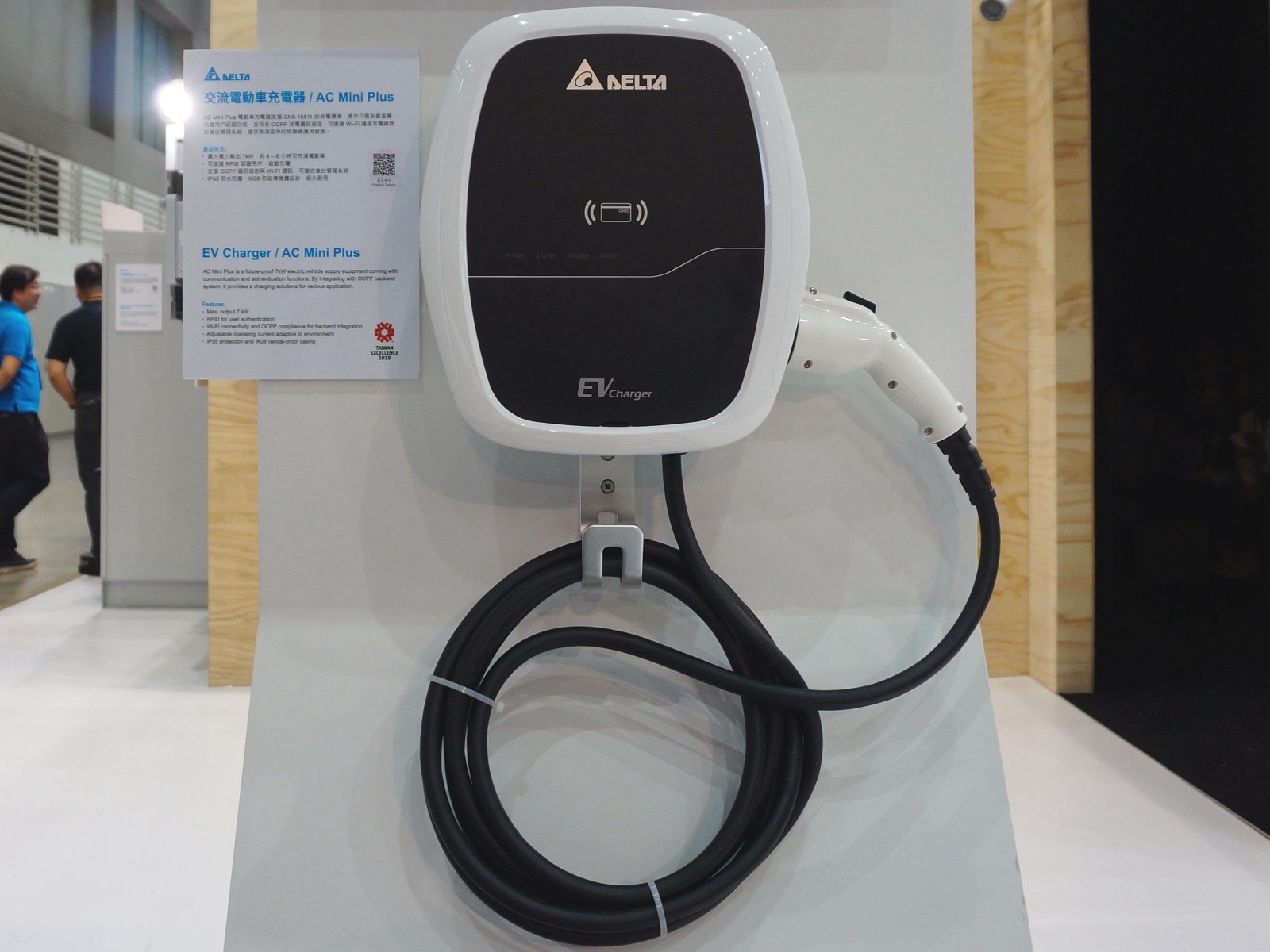
Delta Electronics V2H bidirectional unit — Solomon203, Wikimedia Commons, CC BY-SA 4.0
What V2H actually does
V2H is bidirectional charging: a dedicated unit between your car and your home's breaker panel lets power flow both ways. Charge at night when electricity is cheap, then either drive or discharge the pack into the house during the expensive daytime peak. Output reaches up to 6 kW through the panel — enough to run a 200 V induction cooktop and an air conditioner — and in a blackout a full EV battery can keep a typical household running for three to four days, which is the pitch that resonates most in an earthquake- and typhoon-prone country.
Why Japan is the V2H capital
Three things make V2H a mainstream topic in Japan rather than a niche:
- Detached housing. Most Japanese EV buyers live in single-family homes with a driveway, so the wall-to-panel wiring is straightforward.
- Time-of-use tariffs. Utilities sell night power (roughly 23:00–07:00) at roughly half to one-third the daytime unit price. With V2H, that spread becomes arbitrage: buy cheap at night, sell nothing — just don't buy during the day.
- Disaster culture. After the 2011 earthquake and repeated typhoon blackouts, an EV that can power the house is marketed as emergency infrastructure, not a gimmick.
The 2026 subsidy picture
- National (CEV charging-infrastructure subsidy): the 2026 program covers up to half the equipment cost, capped around ¥500,000, plus installation support capped around ¥150,000. Budgets are limited and applications close when funds run out, so the timing matters as much as the paperwork.
- Tokyo (and other prefectures): Tokyo's "V2H promotion" program stacks on top of the national grant for detached homes (two-generation households are excluded). Several other prefectures run similar local programs — always check your municipality before ordering.
- Practical effect: on a typical ¥1.5–1.8 million installed system, stacked national + municipal support can cut out-of-pocket cost to roughly half.
The night-rate math
A 40 kWh EV charged overnight at ~¥26/kWh costs about ¥1,040 for a full pack. Discharged at ~6 kW into the home during the 15:00–21:00 peak (¥45–60/kWh at many utilities), every kilowatt-hour you don't buy saves ¥20–35 versus the night price — roughly ¥800–1,400 per full-cycle per month for a typical 2-person household using 8–10 kWh of the car's power on weekdays. Add rooftop solar — charge from surplus PV during the day, discharge in the evening — and the self-consumption loop eliminates most of the remaining grid draw. Japan's feed-in-tariff era is over; self-consumption is now the profitable mode.
Real costs and compatibility checks
- System cost: a V2H unit plus installation runs from about ¥1.54 million (TEPCO HomeTech reference pricing, including the bidirectional unit, panel work, and commissioning). National + municipal subsidies usually bring the effective cost well under ¥1 million.
- Vehicle compatibility — check this first. Not every EV supports V2H. Japanese-market CHAdeMO cars (Nissan Leaf/Ariya, Mitsubishi Outlander PHEV) are the safest bet; CHAdeMO-spec V2H is the de facto standard. If you drive an imported EV, confirm the model is certified for V2H discharge before buying the unit — many AC-only imports can't feed the panel.
- Cable distance. The EV and the panel need to be reasonably close; long cable runs add cost and lose efficiency. Measure the driveway-to-panel distance before quoting.
- HEMS pairing. A Home Energy Management System lets the V2H unit decide automatically when to charge and discharge. It's optional, but it's what turns the system from "manual" into "set-and-forget."
China angle
As a Chinese writer, the contrast is striking: in China, V2L (external discharge for camping and appliances) went mainstream years ago — BYD and most Chinese EVs can power a kettle at the campsite — but true V2H/V2G bidirectional grid integration is only now being standardized, with pilot projects in Shenzhen and elsewhere. Japan shows what comes after: vehicle-to-home as a routine household feature, subsidized, tariffed, and normalized by disaster culture. The takeaway for Chinese EV owners is that the hardware gap is closing fast — the gap is in the electricity market design, not the cars.
Sources
- TEPCO HomeTech (Tokyo Electric Power Group) — V2H とは・費用・補助金
- 省エネドットコム — 2026年最新 電気自動車の電気代とV2Hの補助金事情
- Le Grand Plateau — Why V2H is the answer for rising electricity costs
- Wikimedia Commons — Delta Electronics EVPT3215MWE (CC BY-SA 4.0), Nissan Leaf home-charging (CC BY-SA 2.0)
Back to all articles · View comments & share on the interactive page