From Ferrari to 99,900 Yuan: How China's Variable-Damping Suspension Hit the Mass Market
Every car chassis faces the same irreconcilable trade-off: a soft suspension is comfortable over bumps but floats and rolls in corners; a hard suspension handles crisply but jars the occupants over expansion joints. For a century, a fixed-rate damper could only split the difference — tuned at the factory, locked in for the life of the car. Variable-damping suspension changes that, by changing how stiff the damper is, in real time, while the car is driving. The question, for the last thirty years, has been who gets to have it. China, in 2026, is answering: almost everyone.
Why variable damping matters
A typical fixed damper is a compromise that the engineer chose once on a test track. But the road is not one compromise. On a freshly resurfaced highway, the damper that is ideal is very different from the damper that is ideal over a frost-heaved rural road, or on a fast highway entry ramp, or on a freshly graded mountain pass. Variable damping is the technology that lets a single car carry multiple "characters" in its suspension, and switch between them.
The technology has three main implementations, with very different cost and performance.
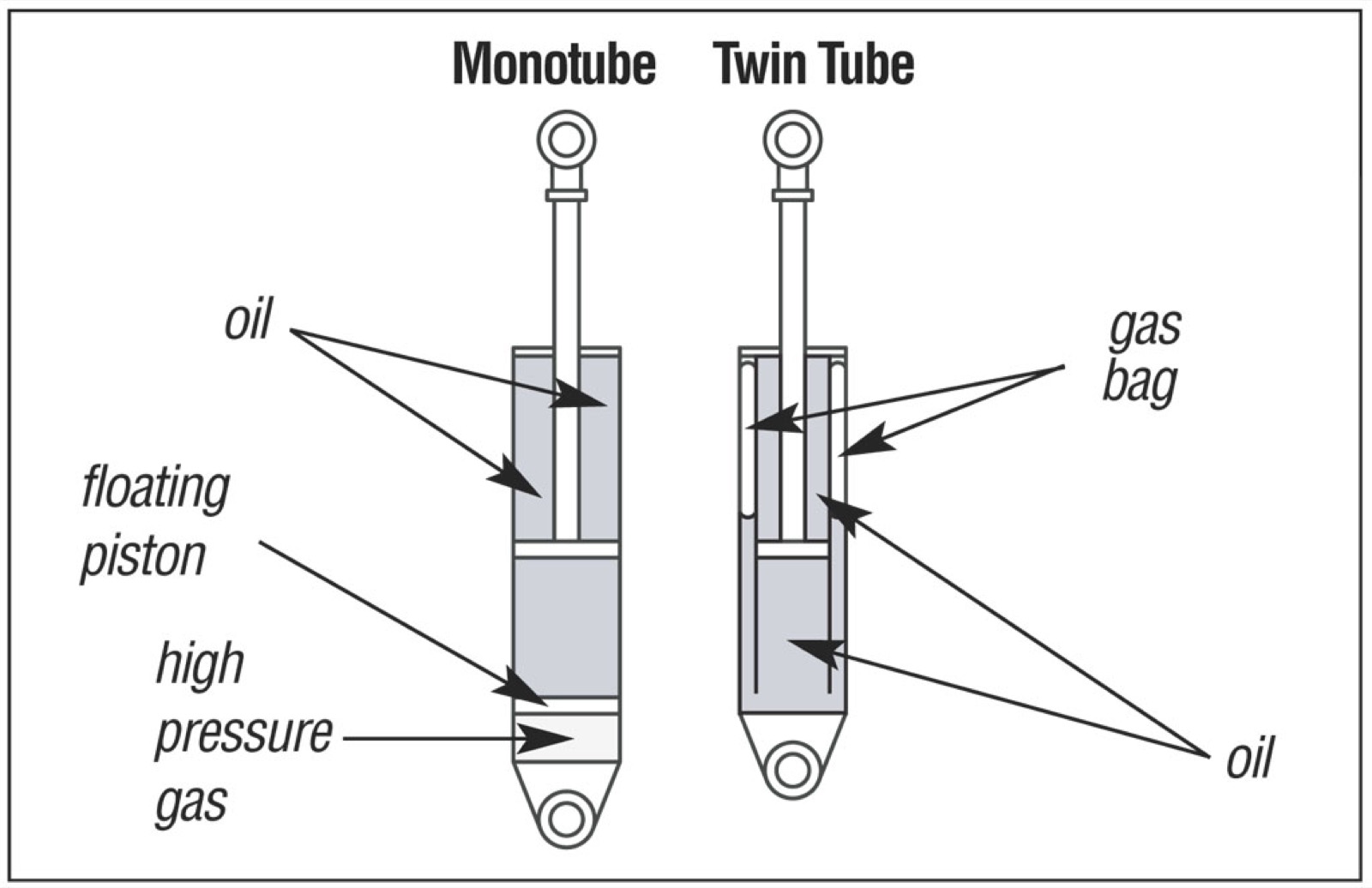 A technical cutaway of a monotube vs twin-tube shock absorber, the underlying hardware on which FSD, CDC, and MR dampers all build. Both designs use a piston inside an oil-filled chamber, but the geometry of the chamber and the location of the gas volume change the way the damper behaves across temperatures and inputs. (Image: Wikimedia Commons, public domain)
1. FSD (Frequency Selective Damping): passive, mechanical, cheap
FSD — Frequency Selective Damper — is a pure mechanical structure with no sensor and no electric control. Inside the damper is a passive frequency-sensing valve. When the suspension is moving slowly (low frequency), the valve stays closed, the damping is high, and the car feels stable. When the suspension is being excited at high frequency — a continuous broken surface, a corrugated road, a series of bumps at speed — the valve opens, more oil can flow, the damping drops, and the car feels softer.
There is a counter-intuitive consequence. If you only ever drive around town and occasionally hit a single speed bump, the FSD will barely feel different from a fixed damper. You will think the marketing was exaggerated. FSD only delivers its comfort benefit on continuous high-frequency inputs, and the higher the speed, the more obvious the difference. This is the first reason a lot of FSD owners never noticed the feature. The second is that, because it has no electronics, FSD is the cheapest of the three variable-damping technologies to build, and was the first one China could put in a 100,000-yuan car.
2. CDC (Continuous Damping Control): electric, fast, everywhere
CDC — Continuous Damping Control — is what a modern electrified damper looks like. A proportional solenoid valve sits inside the piston rod. The damper's electronic control unit feeds current into the solenoid, the valve opening changes continuously, and the damping can be adjusted steplessly from soft to hard.
Three things change relative to FSD:
- Response time drops from hundreds of milliseconds (mechanical) to 10–50 milliseconds (electrical).
- The adjustment is continuous, not "two positions". The damper can sit anywhere on the soft-to-hard spectrum.
- The ECU can pre-look. With a forward camera and accelerometer, the system can read a bump a few metres ahead and pre-soften the damper before the wheel arrives.
For the user, the difference is total. Over a single speed bump, a CDC system can soften the damper in milliseconds and let the impact through. Over a corner, it can harden it in the same time and support the body. CDC's comfort is full-scene, not a function that only helps on long corrugated roads. That distinction — over a single bump the CDC can feel different where the FSD cannot — is the most user-visible line in the industry.
3. MRC (Magnetic Ride Control): the magnetic-fluid ceiling
MRC — Magnetic Ride Control — is the current ceiling. The damper piston is filled not with ordinary oil but with magnetorheological fluid: a liquid that contains microscopic magnetic particles. A coil around the piston creates a magnetic field; the field lines up the particles into chains; the viscosity of the fluid — and therefore the damping force — changes with the field, in milliseconds.
Three numbers explain the gap.
- Response time is 1 millisecond — about ten times faster than CDC, and about a hundred times faster than FSD.
- The control loop runs at over 1,000 adjustments per second — for a single damper.
- The dynamic range of damping is roughly twice that of a solenoid CDC — meaning the softest and the firmest the damper can be are further apart.
For the user, this means a single bump is absorbed in near-silence, the body barely moves, and a long corrugated road becomes glass-smooth because the damper is correcting at every single peak and valley. The subjective difference between "MRC" and "CDC" is the difference between "noticeable" and "invisible".
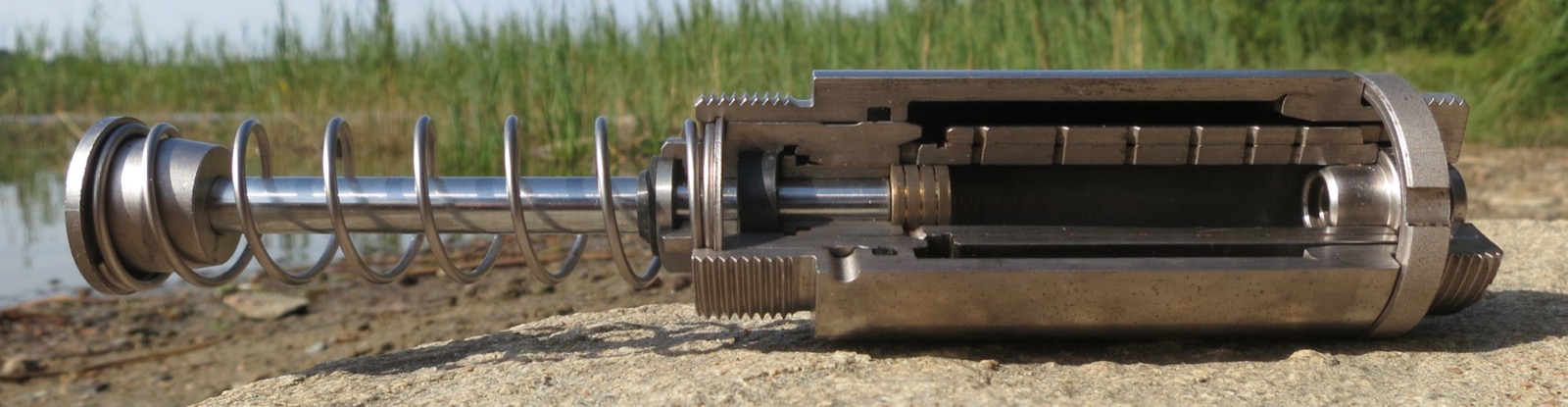 A cutaway demonstration shock absorber showing the piston, spring and internal valving — the physical hardware on which FSD, CDC and MRC variable-damping systems are built. (Image: Wikimedia Commons, CC BY 4.0, R. Henrik Nilsson)
Three steps down the price ladder
For most of the last 20 years, variable damping was the privilege of cars costing the better part of a million yuan: Ferrari, Lamborghini, the top-end Cadillac. China has, in roughly five years, walked it down three full price tiers.
2018–2023 — the FSD era: luxury tries, then mass-market tries
The first FSD-equipped cars sold in China were luxury imports (Volvo XC90, top-spec Cadillacs). In 2023, BYD began fitting its Han DM-i Champion Edition sedan with FSD variable damping as standard across the entire range. The car started at 189,800 yuan — the first time a mass-market Chinese brand had put FSD on a sedan in that price band. Shortly after, the smaller Landian E5 PLUS brought FSD into the under-120,000-yuan segment, putting a previously-premium technology on cars bought by commuters.
The significance was not that owners were floored by the FSD — many never noticed, because they did not drive on the kind of road where FSD shows up. It was that Chinese consumers were, for the first time, paying for "variable damping" at all. The feature was now a known thing.
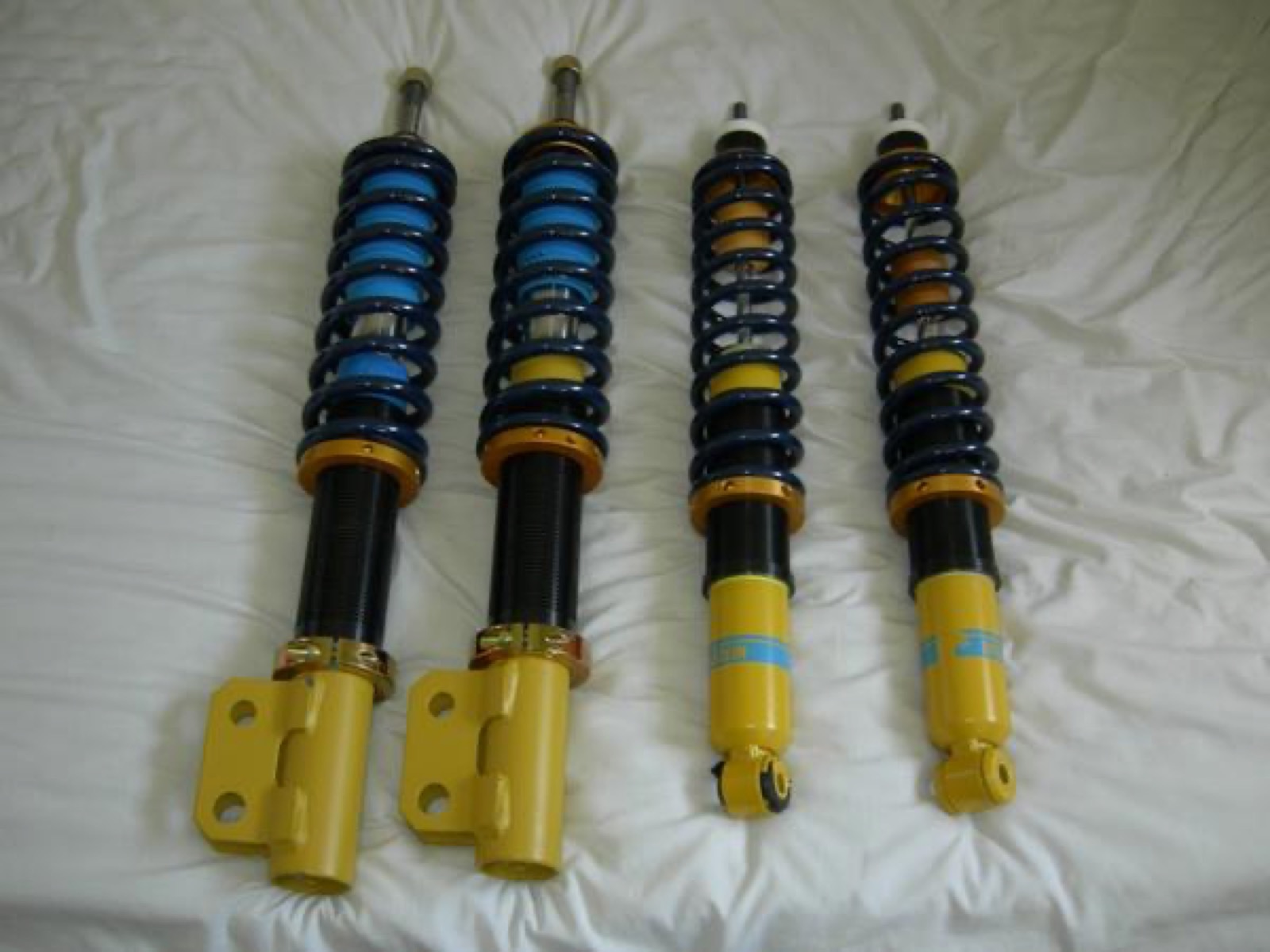 An aftermarket coilover assembly, the same family of components that sits inside a CDC or MRC damper in a modern factory-built car. China's CDC supply chain, led by the major OEM damper suppliers, has brought this kind of continuously variable hardware from the aftermarket into the showroom. (Image: Wikimedia Commons, CC BY 2.0, Cameron Chapman)
2024–2026 — the CDC explosion: 100,000-yuan cars get the technology that mattered
The CDC breakthrough is the more important one, because CDC is the technology that actually changes daily driving. Chinese suppliers broke through the single-valve CDC in 2024–2025; cost dropped into the low-thousands-of-yuan-per-set range, and CDCs moved from luxury options to standard equipment. In 2025, the Changan fourth-generation CS75 PLUS started at 109,900 yuan with CDC "magic carpet" damping as standard. The Jetour X70L offered CDC at a 99,900 yuan promotional price. The Chery Tiggo 9 shipped at 146,900 yuan with a standard CDC "magic carpet" suspension.
The most important psychological shift happened at the single-bump test. CDC's ability to soften over a single speed bump is what separates it from FSD, and it is something drivers feel on the first day. By 2026, the technology that, in 2015, sat only on cars costing over half a million yuan, was on the spec sheet of a sub-100,000-yuan Chinese SUV.
2025–2026 — the MRC year: a 22-year-old Ferrari technology goes Made in China
In January 2025, BWI Group (Jingxi Group), the Chinese-owned successor to Delphi's chassis business and the world's only independent supplier with a 22-year track record of magnetorheological damper production, declared the start of the "Magnetorheological Year". The company announced that its fourth-generation MagneRide damper — the same technology family that sits in the current Ferrari, Lamborghini, Porsche, Cadillac CT6 — was now 100% localised in China, with production lines in Shenzhen and Zhangjiakou, and a planned 2-million-damper annual capacity in 2025.
The localisation goals were explicit: 100% domestic content, mass production in Q1 2025 — the first time the technology would ship on a Chinese pure-electric platform — and a price below that of a solenoid CDC damper. The fourth-generation MagneRide can adjust damping at over 1,000 Hz, with a dynamic range roughly twice that of a CDC, and supports full software tuning plus OTA updates: OEMs can ship a single hardware and change the car's suspension character over the air.
The strategic consequence is that magnetorheological suspension, which sat in the price band of a Ferrari 296 GTB, is being aimed at the 100,000–200,000 yuan segment — and, on the supplier's roadmap, at the 150,000-yuan segment — by a Chinese supply chain that has now built, in the words of BWI's CEO, "from the chip to the car, an end-to-end development chain". The first major Chinese OEM customer has already been announced.
What the technology chain is really telling us
The history of variable-damping suspension in China, told as a price ladder, looks like a normal technology-diffusion story: a luxury feature gets localised, supply chain competition pushes the cost down, and it ends up in cheaper cars.
That framing misses the more important point. The reason FSD failed to change daily driving — and the reason CDC has — is not price, but range of activation. FSD only delivers its benefit on continuous high-frequency inputs, and most daily commutes are not that. CDC delivers it on every single event, which is why drivers actually feel the difference.
The same logic is about to play out at the MRC layer. BWI's fourth-generation MagneRide is not just a faster CDC; it is a different physical mechanism, with twice the dynamic range and millisecond response. In the cars that get it, drivers will stop noticing the suspension at all — which is the highest praise a suspension can earn.
The deeper lesson is the one the Chinese supply chain has now internalised: the value of a chassis technology is not what it costs the supplier, but how often the user actually feels it. FSD was a cheap technology that most users never felt. CDC was a slightly more expensive technology that every user feels every day. MRC is a more expensive technology still, that the user will stop feeling. The progression of variable damping in China is, in the end, a story about who controls the user-perceivable boundary between a feature being absent and a feature being present — and how the supply chain can move that boundary down the price ladder faster than anyone expected.
China-only context: the Han DM-i Champion Edition, the CS75 PLUS, the Jetour X70L, the Chery Tiggo 9 and the BWI MagneRide localisation discussed in this article are all China-market products and programmes. The Ferrari, Lamborghini and Cadillac CT6 reference points are international, cited only to explain the historical position of MRC as a technology tier.
Back to all articles · View comments & share on the interactive page